Morocco has two very different seas, and choosing a beach here starts with knowing which one you want. The Atlantic coast is a surf coast, cooled by the Canary Current, so the water stays cold even in August and the waves are the main event. The Mediterranean coast in the north is warmer, calmer and more seasonal, a summer swimming coast that wakes up in June and sleeps again by October.
This guide lists the eleven beaches that matter most, with the honest facts attached to each one, what the water is really like, when to go and how to reach it. Where a beach is better for surfing than swimming, we say so.
At a glance
| No. | Beach | Where | Best for | Known for |
|---|---|---|---|---|
| 1 | Agadir | Atlantic, south | Swimming, resorts | A sheltered bay of about 10 km |
| 2 | Taghazout | Atlantic, north of Agadir | Surfing | Anchor Point, Morocco’s most famous wave |
| 3 | Essaouira | Atlantic, centre | Kitesurfing, windsurfing | The alizé trade winds |
| 4 | Oualidia | Atlantic, south of Casablanca | Calm swimming, oysters | A sheltered lagoon |
| 5 | Asilah | Atlantic, south of Tangier | Town beach, history | Sand below Portuguese ramparts |
| 6 | Martil | Mediterranean, near Tétouan | Family swimming | A long, gently shelving beach |
| 7 | Al Hoceima, Plage Quemado | Mediterranean, the Rif | Clear water, scenery | A cliff-backed turquoise cove |
| 8 | Saïdia | Mediterranean, far north east | Warm-water swimming | 14 km of sand, the Blue Pearl |
| 9 | Legzira | Atlantic, near Sidi Ifni | Scenery, photography | Red cliffs and a natural arch |
| 10 | Mirleft | Atlantic, south of Agadir | Quiet surf, empty coves | Cliff coves with few visitors |
| 11 | Dakhla | Far south, Atlantic lagoon | Kitesurfing | A 40 km flat-water lagoon |
1. Agadir

Agadir is Morocco’s purpose-built beach resort, a modern city rebuilt after the earthquake of 1960 destroyed the old one, and its beach is the easiest swim on the Atlantic coast. The bay curves in a sheltered crescent of about 10 km of sand, which takes the force out of the Atlantic swell, so the water here is gentler than anywhere else on this coast. A long promenade runs behind the sand, lined with cafes, beach clubs and hotels, the city counts about 300 days of sunshine a year, and in summer the main swimming areas are patrolled by lifeguards working to a flag system.
The classic day trip is inland, to Paradise Valley, about an hour’s drive away, a palm-filled river gorge with rock pools, beautiful, but not a beach.
Swimming: The best on the Atlantic coast. The bay is sheltered, the entry is gradual, and in season you swim between the flags. The water is still Atlantic, roughly 17 to 21 C across the year.
The honest downside: This is a resort beach, with sunbed clubs, camel rides and sellers working the sand. Come for easy swimming and comfort, not for wild Morocco.
How to reach it: Agadir Al Massira Airport is about 30 minutes away by taxi or airport bus. There is no railway to Agadir, so from Marrakech most visitors take a bus, about 3 hours, or drive.
2. Taghazout

Taghazout is a former fishing village about 20 km north of Agadir that has become Morocco’s surf capital. The fame rests on Anchor Point, a long right-hand point break over rock just north of the village, which on a solid winter swell produces rides of several hundred metres. Other points, Killers, Boilers and La Source among them, work on the same swells.
Beginners are not left out. The sandy beach breaks in and around the village, at Panoramas, Devil’s Rock and Banana Point, are where the surf schools teach, and in summer, when the points go quiet, those beaches are the whole show. The village is now a strip of surf camps, cafes and board rentals.
Surf season: October to April, with the biggest and most consistent swell from December to February. Summer waves are small and best for learning.
The honest downside: The famous points are rocky, with difficult entries and sea urchins, and Anchor Point is crowded whenever it works in peak season. Booties are standard advice on the points.
How to reach it: Local buses and grand taxis run up the coast road from Agadir in about 30 to 40 minutes.
3. Essaouira

Essaouira’s beach is a wide arc of sand running south from the port, and its defining fact is wind. The alizé trade winds blow down this coast for much of the year, strongest from about April to September and peaking on summer afternoons, and they have made the bay one of Africa’s best-known kitesurfing and windsurfing grounds. Kite and windsurf schools line the southern half of the beach.
Swimming is possible but comes with conditions. The water is cold all year, the wind raises chop by midday, and the calmest, shallowest water is at the northern end of the bay near the medina walls, best in the morning. September and October are the sweet spot, when the wind eases and the sea is warmest. Sidi Kaouki, about 25 km south, is a wider, wilder version of this beach, with stronger surf and far fewer facilities. We cover the town itself in our guide to the best places to visit in Morocco.

The honest downside: On a summer afternoon the wind blows sand across the beach and sunbathing is a struggle. Plan beach time for the morning and watersports for the afternoon.
How to reach it: Buses run from Marrakech in about 3 hours, and the beach is a short walk from the medina gate.
4. Oualidia

Oualidia is the gentle exception on the Atlantic coast, a small town about 160 km south of Casablanca, between El Jadida and Safi, built around a lagoon. A sandbar holds the Atlantic back, and behind it stretches about 12 km of calm, shallow water, a Ramsar-listed wetland where flamingos and wading birds feed on the sandbanks in winter. The lagoon has been farmed for oysters since the 1950s, and eating them at the kiosks along the shore, opened to order with lemon, is half the reason to come.
The lagoon side is the swimming side, calm enough for children and nervous swimmers, though at low tide the inner lagoon drains to sandflats. The ocean side of the sandbar is a normal Atlantic beach with surf.
Cost: Oysters are sold by the dozen at the lagoon kiosks, and boat trips and kayak hire are arranged on the shore. Prices move with the season, so agree them before you order or set off.
The honest downside: Oualidia fills completely in July and August with Moroccan holidaymakers, and outside the season it is very quiet, with some restaurants closed. There is no train.
5. Asilah
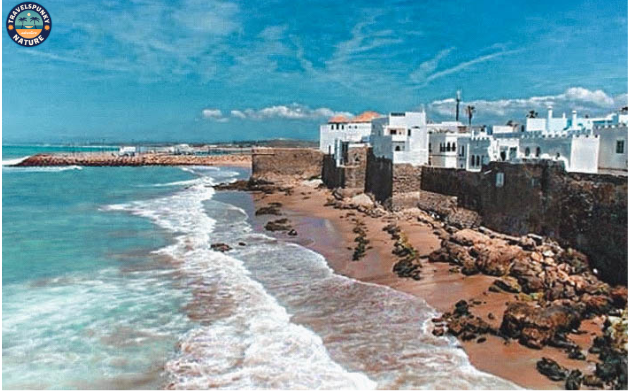
Asilah is a small whitewashed town about 45 km south of Tangier, and its town beach runs along the foot of the 15th-century Portuguese ramparts, where at high tide the waves break against the base of the walls. It is a long, open Atlantic beach, good for walking and for a swim where the local families are swimming, and it pairs naturally with the medina above it, famous for its painted murals and summer arts festival.
The beach most visitors aim for is Paradise Beach, also called Las Cuevas, a short taxi ride south of town, a wide sweep of sand under low cliffs with beach cafes in summer.
Swimming: Possible and popular in summer, but this is open Atlantic. Currents can be strong, so swim where others are swimming and respect the flags in season.
The honest downside: July and August bring crowds and a festival atmosphere. Outside summer the beach cafes close and the beach can feel windswept.
How to reach it: Asilah sits on the railway line, with trains from Tangier in under an hour, and the town beach is a walk from the medina.
6. Martil and the Tétouan Coast
Martil is the beach town of Tétouan, about 10 km from that city’s UNESCO-listed medina, and it is the classic Moroccan family beach. A long, wide, gently shelving strip of sand faces the warm Mediterranean, backed by a palm-lined corniche of cafes, ice cream counters and holiday apartments. The water is calm, the entry is shallow, and in summer the promenade fills every evening with families out walking.
North along the shore, the headland of Cabo Negro holds resorts and a golf course, and the small harbour town of M’diq continues the same pattern. This coast runs on the Moroccan summer, and it is at its best from June to September.
Swimming: Warm and calm by Moroccan standards, with the sea at its warmest in August and September. This is paddling and swimming water, not surf water.
The honest downside: In late July and August the sand is packed and the traffic slow. Many hotels and cafes close outside the season, so a winter visit is a walk, not a beach holiday.
How to reach it: Grand taxis run between Tétouan and Martil all day in about 15 to 25 minutes, and Tangier is about an hour away by road.
7. Al Hoceima, Plage Quemado
Al Hoceima is the beach town of the Rif, and Plage Quemado is its town beach, a crescent of sand in a cove below the centre, reached by a long staircase from the square above or by road and taxi. The water here is the clearest on this list, calm, turquoise and shallow at the entry, with lifeguards on duty in the summer season.

A short drive west, the cove of Cala Iris has rocky headlands that make it the best snorkelling on this coast.
Swimming: Excellent in summer, in clear, calm water. The cove is small, so arrive early in July and August, when it fills with Moroccan holidaymakers.
The honest downside: Al Hoceima is a long way from everywhere, hours by road from Tangier or Tétouan, and the nearest airport with a useful schedule is Nador, roughly 3 hours away by car.
8. Saïdia
Saïdia, in the far north east near the Algerian border, is Morocco’s Mediterranean resort, nicknamed the Blue Pearl. Its beach is one unbroken ribbon of fine golden sand about 14 km long, gently shelving into the warmest swimming water in the country, which reaches around the mid-20s Celsius in August. Behind the sand stand a marina, a promenade and resort hotels built under the Plan Azur programme in the 2000s, and the managed resort beach has held Blue Flag certification in recent seasons.
West of town, the Moulouya estuary is a protected Ramsar wetland.
Swimming: The easiest in Morocco. Calm, warm and shallow, with a proper summer season from June to September.
The honest downside: Saïdia is a summer town. From October to May much of it closes and the beach is empty and windswept. The Algerian border at the eastern end of the sand is closed, so do not wander past the marked end of the beach.
How to reach it: About 60 km north of Oujda. Oujda Angads Airport is about 45 minutes away, and buses and taxis run from Oujda.
9. Legzira

Legzira, about 10 km north of Sidi Ifni and about 150 km south of Agadir, is the most dramatic beach in Morocco, a long strip of sand under red sandstone cliffs cut by natural arches. There were two great arches here for decades, and photographs of the pair made the beach famous. One collapsed in September 2016, and the arch that remains is still extraordinary, a red stone span you can walk beneath at low tide.
A steep path leads down from the clifftop car park, and the classic visit is timed for late afternoon, when the cliffs turn deep red and the sun sets through the arch.
Swimming: Treat the sea here with respect. It is rough, open Atlantic, and swimming is only for confident swimmers in calm conditions, close to shore.
The honest downside: The cliffs are fragile, rockfalls are a real hazard, and the remaining arch must never be climbed or sheltered under. Check the tide before you go, because at high tide the base of the arch is in the water.
How to reach it: By road. Drive, or take a bus to Sidi Ifni or Mirleft and a grand taxi from there.
10. Mirleft
Mirleft is a small clifftop village about two and a half hours by road south of Agadir and about 30 minutes north of Sidi Ifni. Below the village, a string of coves and beaches runs along the cliffs, Imin Turga, the main beach, Aftas, and the rock-sheltered cove of Sidi Mohammed Ben Abdallah among them. Surfers have been coming quietly since the 1970s, and the line-ups are still emptier than around Taghazout.
Sheltered south-facing coves can be calm enough for a summer swim, while the open west-facing beaches carry real Atlantic surf, best from October to April. Facilities at most of the coves are minimal.
Swimming: Possible in the sheltered coves in summer. The open beaches have rip currents and powerful swell outside the season, so ask locally and swim where others swim.
The honest downside: You really need a car. There is no direct bus from Agadir, most visitors route through Tiznit, and in winter the village is very quiet.
11. Dakhla
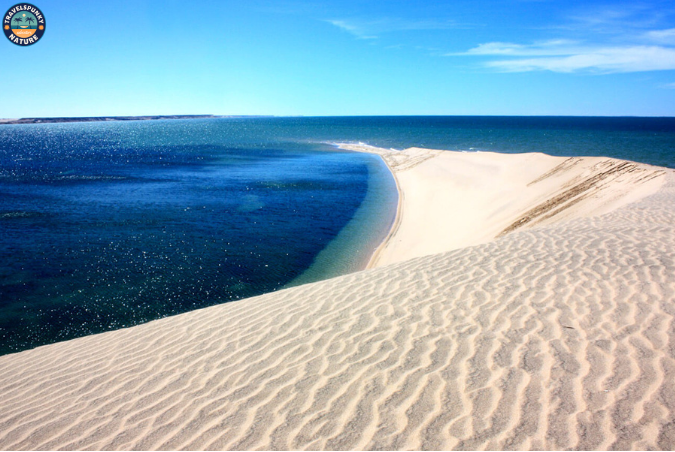
Dakhla sits on a narrow peninsula in the far south, with the open Atlantic on one side and a lagoon about 40 km long on the other, and the lagoon is one of the world’s great kitesurfing grounds. The water is shallow and flat, the wind blows on about 300 days a year, and the kite camps line the shore at PK25, 25 km from town. Beginners learn in waist-deep flat water while advanced riders train on glassy speed runs further along the lagoon.
The seasons split by sport. Kitesurfing peaks from April to October, when the trade winds blow steadiest, at 20 to 25 knots on a normal summer afternoon. The ocean side is for surfing, with point breaks such as Foum El Bouir working from October to April. Ordinary swimming is not really the point of Dakhla, the wind sees to that.
Cost: Most visitors book a camp package with lessons, equipment and transfers, and prices vary widely by camp and season. Confirm exactly what is included before you book.
The honest downside: Dakhla is a long way from everywhere, and it is a wind-sports trip with desert scenery, not a general beach holiday.
How to reach it: Fly. Royal Air Maroc flies from Casablanca in about 2 hours 15 minutes, and the camps arrange transfers from Dakhla Airport, about 40 minutes to PK25.
Best time to visit Morocco’s beaches
The two coasts run on different calendars. For Mediterranean swimming, at Martil, Al Hoceima and Saïdia, the season is June to September, with the warmest water in August and September and the biggest crowds in late July and August. June and the first half of September give the same sea with far more space.
On the Atlantic, swimming is best from July to October, when the sea is warmest, around 20 to 22 C in the south. The surf season runs the opposite way, October to April, and the kitesurfing winds are a spring and summer pattern, April to September at Essaouira and April to October at Dakhla.
How to reach the coast, and getting around
Most visitors fly into Tangier for the north, Casablanca for the centre, Agadir for the south, Oujda for Saïdia, or Dakhla itself for the far south.
By train: The ONCF network serves Tangier and Asilah in the north and Casablanca on the central coast. No railway runs to Essaouira, Agadir or anywhere south of Marrakech, so the southern beaches are reached by road or air.
By bus: CTM and Supratours coaches link the main coastal towns, including Marrakech to Essaouira and Marrakech to Agadir, each about 3 hours. Book a day or two ahead in busy months.
By car: The quiet south, Mirleft, Legzira and the coves between them, really needs a rental car or a driver. Coast roads take longer than the map suggests, so build in time.
Entry rules: Many nationalities, including visitors from the US, the UK and the EU, receive up to 90 days in Morocco without a visa. Rules differ by passport, so check yours before you book. The currency is the Moroccan dirham (MAD), roughly 10 to the US dollar.
Where to stay on the Moroccan coast
Match the base to the beach. Agadir is the resort base, with big hotels on the promenade. Taghazout runs on surf camps and apartments, Essaouira on riads, and Oualidia on small hotels and apartments along the lagoon shore, all booked out in August. Martil and Saïdia are apartment and resort towns built for the summer season, so book early for July and August. Mirleft has a handful of guesthouses, and Dakhla means a kite camp on the lagoon, usually booked as a package.
Prices swing too widely between August and February for one figure to mean anything, so compare options for your dates before you book.
FAQs
1. What is the best beach in Morocco for swimming?
On the Atlantic, the sheltered bay at Agadir and the lagoon at Oualidia. On the Mediterranean, Saïdia and Martil give warmer, calmer swimming still, but only in the summer season, June to September.
2. Can you swim in the sea in Morocco all year?
You can, but the Atlantic is cold all year, roughly 17 to 22 C, because of the Canary Current, and rough outside the sheltered bays. Most swimming happens from June to October. The Mediterranean is warmer in summer and too cold for most swimmers in winter.
3. Where is the best surfing in Morocco?
Taghazout, for the run of right-hand points around Anchor Point, with the season from October to April. Beginners learn on the beach breaks there in any season, and Mirleft and Sidi Kaouki offer quieter waves.
4. Is Essaouira a good beach for swimming?
It is a great beach for kitesurfing and a conditional one for swimming. The trade winds raise chop and blow sand, strongest on summer afternoons. Swim in the morning at the sheltered northern end of the bay, or come in September and October, when the wind eases and the water is warmest.
5. Which Moroccan beaches are best for families?
Agadir, for the sheltered bay and lifeguards in season. Oualidia, for the calm lagoon. Saïdia and Martil, for warm, shallow Mediterranean water in summer. On any open Atlantic beach, keep children in the supervised areas, because the currents are real.
6. How do you reach the far south beaches, Legzira, Mirleft and Dakhla?
Legzira and Mirleft are a road trip, about two and a half to three hours south of Agadir by car, or by bus and grand taxi through Tiznit and Sidi Ifni. Dakhla is reached by air, about 2 hours 15 minutes from Casablanca, and the kite camps meet their guests at the airport.
Researched and verified: November 2026. This guide is research-based, compiled from official visitor information, maps and traveller reports. Prices, hours and road conditions change, so confirm them locally before travelling.