
1. Oia, the sunset village
 Oia, on the island’s north-western tip, is the Santorini of the photographs, blue-domed churches, cave houses carved into the cliff, old windmills, and the ruins of a 15th-century Venetian castle (the Kastro) at its edge, the island’s most famous sunset seat. Between the landmarks, the marble main street is lined with galleries, bookshops like Atlantis Books, and the small Naval Maritime Museum.
Good to know: The village is free to wander. The castle ruins are free too. Come before 9 a.m. for empty lanes and photos. For sunset, arrive 45–60 minutes early in shoulder season and 60–90 minutes early in peak summer, or skip the castle crush and watch from the steps down towards Ammoudi Bay, or from Imerovigli or Pyrgos instead. Buses from Fira take 25–30 minutes (€2.20).
2. Fira, the capital on the caldera rim
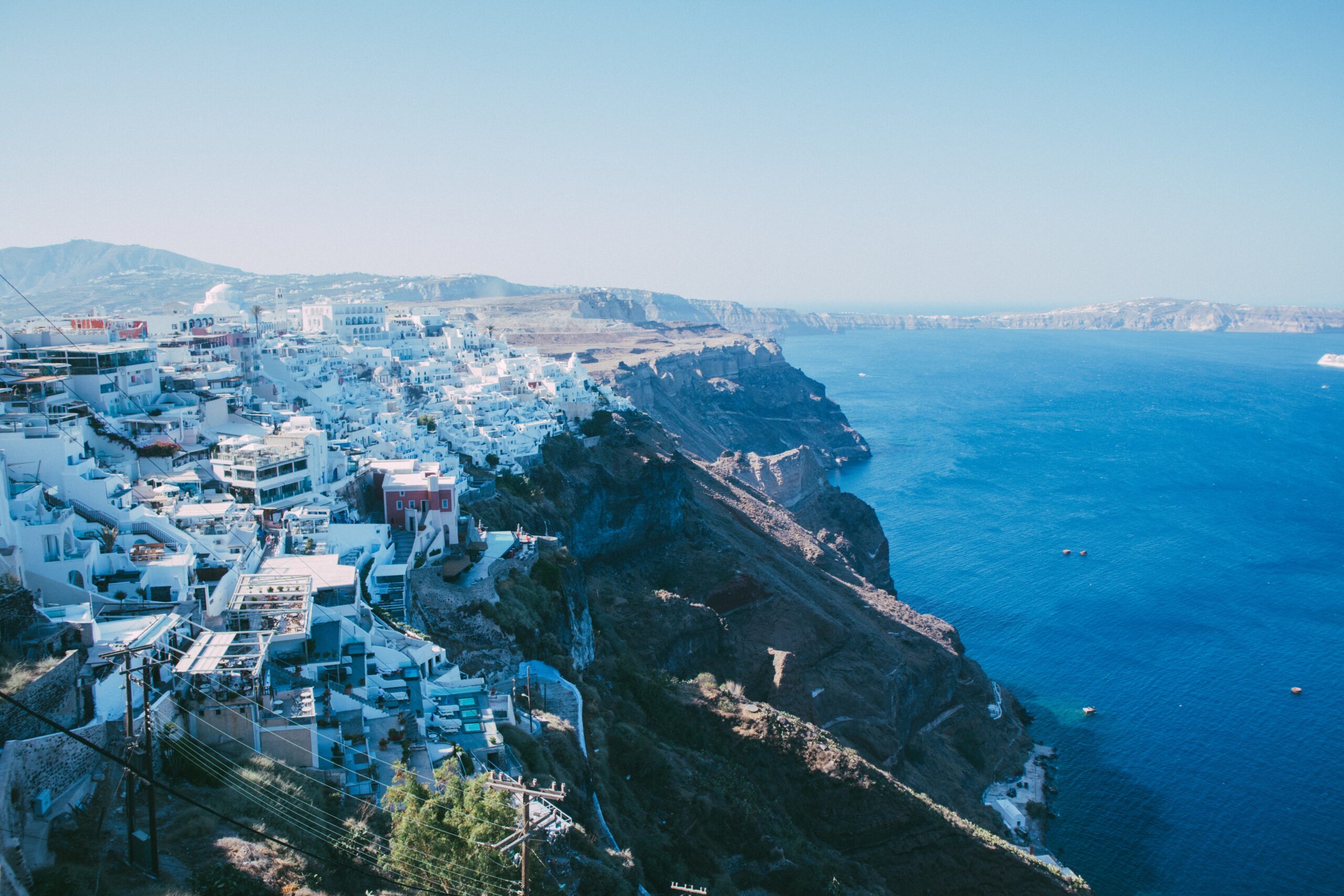
 Fira is the island’s working heart, the bus hub, the main shopping and dining town, and the best base if you’re not hiring a car. Its cliff edge sits about 220 m above the Old Port. Ride the cable car down to the port (€10 one-way for adults in 2026, most older guides still quote €6, €5 for children 6–12, about 3 minutes), or walk the roughly 600 Karavolades steps (the same steps the donkeys use, €10 a ride if you take one). The cliff-top path north through Firostefani and Imerovigli to Oia is the island’s great free walk (see the hiking note below).
Good to know: Cable-car queues can be long when several cruise ships are in, go early or late. Fira also holds both of the island’s big museums (number 11 below covers the best of them).
3. Akrotiri, the buried Bronze Age city
Akrotiri is Santorini’s Pompeii, a prosperous Minoan town preserved under volcanic ash from the eruption of around 1600 BC, excavated under a protective roof at the island’s southern end. Streets, squares and multi-storey houses survive, the famous frescoes are mostly in the Fira museum (number 11), which is why the two pair so well. The site was closed for safety checks after the 2025 earthquake swarm and reopened in April 2025.Good to know: Entry €20 (reduced €10). Summer hours are roughly 8:00–20:00, with shorter winter hours (8:30–15:30) and Tuesday closures in winter, check the day before you go, as hours step down through autumn. Allow 1–1½ hours. Free-admission days (6 March, 18 April, 18 May, the last weekend of September, 28 October and some winter Sundays) apply here as at other Greek state sites.
4. Red Beach, see it from the water
Red Beach (Kokkini Ammos) is a small cove of dark red sand under towering rust-red cliffs, a short walk from the Akrotiri site, and the most photographed beach on the island. Honesty matters here, the cliff path down to it has been officially closed since February 2025, after rockfalls during the earthquake swarm, and “Danger, No Entry” signs are posted. People still ignore them. We don’t recommend joining them.Good to know: The sanctioned way to enjoy Red Beach now is from the water, a water taxi from Akrotiri harbour (about 10 minutes, €5–8) or a catamaran cruise that stops offshore (number 10). The viewpoint above the beach is still reachable from the Akrotiri car park and gives the classic photo safely. The beach itself has no sunbeds or shade.
5. Kamari, the island’s best organised beach
Kamari is Santorini’s largest and best-equipped beach resort, a long crescent of black volcanic sand and pebbles on the south-east coast, under the Mesa Vouno cliff, with sunbeds, beach bars, showers, water sports and a car-free promenade of tavernas behind it. It holds a Blue Flag award (two sections of the beach were flagged in 2026) and even has an open-air cinema in the village for summer evenings.Good to know: Two sunbeds and an umbrella typically cost €15–25 a day, and many bars waive the charge if you eat and drink there, ask before you settle. The sea deepens quickly, so it’s best for confident swimmers, and water shoes help on the pebbles. Black sand gets extremely hot underfoot at midday in July and August. Bus from Fira: €2.20, about 10 minutes.
6. Ancient Thera, the city on the ridge
High on the Mesa Vouno ridge between Kamari and Perissa stands Ancient Thera, a Dorian city founded in the 9th century BC, temples, an agora, a theatre and houses laid out along one ridge-top street at 369 m, with views down both coasts. It’s the quiet counterpart to Akrotiri, where Akrotiri is the preserved town, Thera is the panoramic ruin.Good to know: Entry €10 (reduced €5). Hours are 8:30–15:30, and it closes on Wednesdays in season, with very limited winter opening, check before climbing up. There is no shade. Take water, and combine it with a Kamari or Perissa beach afternoon. Allow about 1½ hours.
7. Imerovigli and Skaros Rock, the quiet caldera village
 Imerovigli, about 2 km north of Fira at the highest point of the caldera rim, is the balcony of the Aegean, the same cliff views as Fira and Oia with a fraction of the people. Its landmark is Skaros Rock, the offshore promontory that held the island’s medieval fortified capital until earthquakes ruined it. A path from the village (starting near Agios Georgios church) leads out to it and to the hidden Theoskepasti chapel on its far side.
Good to know: Skaros Rock is free. Allow about 45 minutes return from the village square. The path is steep and loose in places and fully exposed to wind and sun, go early or late, and wear real shoes. Imerovigli sits on the Fira–Oia hiking path, so you can see it on the walk even if you don’t stay here.
8. Pyrgos, the former capital
Inland and often skipped, Pyrgos was Santorini’s capital until 1800, a hill village of lanes winding up to a 15th-century Venetian castle, from which the whole island spreads out. Locals still outnumber visitors, tavernas charge local prices, and it makes a calmer sunset alternative to Oia. Two of the island’s best wineries sit on the caldera rim nearby (number 9), and the villages of Megalochori and Emporio reward a wander on the same day.Good to know: The village and castle ruins are free. Come in the late afternoon for the castle views, then stay for dinner in the village square.
9. Santo Wines, wine tasting above the caldera
Santorini’s volcanic soil produces Assyrtiko, one of Greece’s great white wines, and the island’s basket-trained vines are a sight in themselves. Santo Wines, the island’s cooperative winery, founded in 1911 and representing around 1,200 local growers, is the easiest introduction, tastings on a vast caldera-view terrace near Pyrgos, about 4 km south of Fira. Neighbours like Venetsanos and estates like Argyros and Sigalas make good alternatives or second stops.Good to know: A short winery tour costs about €12 including two tastings. Tasting flights run €18–55. Walk-ins are fine most of the year, but sunset terrace tables in July and August book out, reserve those. Buses on the Fira–Perissa/Akrotiri routes stop nearby.
10. A caldera cruise, the volcano and the hot springs
 Seeing Santorini from the water explains it, the villages are the rim of a drowned volcano, and a cruise is the way inside it. The classic trip sails from the Old Port or Vlychada to the volcanic island of Nea Kameni (walk to the crater, €5 landing fee, paid in cash and usually not included in the tour price), the warm iron-rich shallows at Palea Kameni, the “hot springs”, honestly only a few degrees warmer than the sea and rust-orange enough to stain light swimwear, and swim stops off Red and White beaches, finishing with sunset below Oia.
Good to know: Budget wooden-boat volcano tours start around €30. Five-hour catamaran cruises with a BBQ meal, open bar and hotel pick-up typically cost €120–150 per person (€70–100 for budget shared boats, up to €200 for premium semi-private). Note that most catamarans swim near the volcano but don’t land on it, if walking the crater matters, book the classic boat tour instead.
11. Museum of Prehistoric Thera, Fira
This small museum in Fira holds what Akrotiri gave up, the extraordinary wall paintings, the Fishermen, the Saffron Gatherers, the fleet fresco, plus pottery, tools and furniture casts from the buried city. An hour here first makes the Akrotiri site itself twice as meaningful, because you can picture the frescoed rooms you then walk through.Good to know: Entry €10 (reduced €5). Open 8:30–15:30 year-round and closed on Tuesdays. Allow 1–1½ hours. (Fira’s other museum, the Archaeological Museum of Thera, reopened in June 2025 after renovation, same €10 price, closed Mondays.)
12. Ammoudi Bay, lunch below Oia
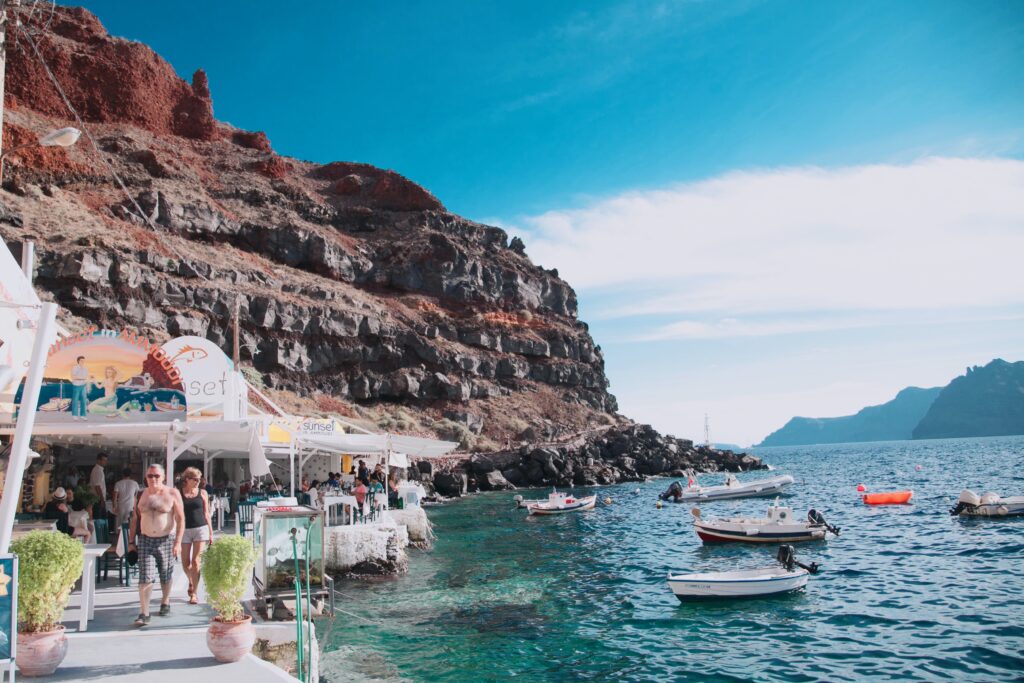 Directly beneath Oia, down about 300 steps, Ammoudi is a tiny fishing port where a handful of tavernas set their tables at the water’s edge and the catch comes straight off the boats. Swim from the rocks out towards the islet of Agios Nikolaos if the path is open, then climb back up for sunset in the village above.
Good to know, a 2026 change: The road down to Ammoudi is closed to private cars until March 2027 under current Civil Protection measures, and the shore path round to the swimming islet is also closed. Use the steps or the municipal shuttle, and check the path status on the day. Don’t plan on driving down for a sunset dinner.
The Fira to Oia hike
The caldera-rim walk from Fira to Oia, about 10 km through Firostefani and Imerovigli, 3–5 hours with photo stops, is the single best free thing to do on the island. Walk it in the Fira-to-Oia direction, start around 8 a.m. or after 6 p.m. in summer, carry at least 1–1½ litres of water per person, and expect no shade after Imerovigli. It is moderate rather than difficult, uneven in places, but not technical.Where to stay in Santorini
| No. | Area | Best for | The trade-off |
|---|---|---|---|
| 1 | Fira | First-timers, nightlife, no car | The bus hub and widest choice. Caldera-view rooms cost about 30–40% less than Oia’s |
| 2 | Oia | Honeymoons and splurges | The famous sunset and cave suites (€300–1,000+ a night), and heavy evening crowds |
| 3 | Imerovigli | Quiet luxury | Oia’s views with far fewer people, typically 10–30% cheaper. Fewer restaurants, many steps |
| 4 | Kamari | Families, beach-first trips | Organised beach and flat promenade. Summer rates often under €200 a night |
| 5 | Perissa | Best value | The island’s cheapest beds on the longest black-sand stretch |
Getting around
- Buses: Every route runs through Fira’s central station. Most fares are €2.20 (Oia, Kamari, Akrotiri, the airport), with Perissa and the Athinios ferry port at €2.70. Cash to the conductor. There are no online tickets. In summer, Fira–Oia runs about every 30 minutes.
- Airport: Santorini (JTR) is about 6 km from Fira, 10–15 minutes. The bus costs €2.20. A taxi is roughly €20–35 (sources vary, agree the price before you get in, and expect queues at late-evening arrival peaks).
- Cable car and steps: Fira to the Old Port costs €10 by cable car (see number 2). The donkeys working the steps charge about €10. Greek law caps their loads, and walking or the cable car are kinder choices.
- ATVs and scooters: Everywhere, at €25–95 a day depending on engine and season. Helmets are legally required for rider and passenger (fines of €350+ are reported, and insurance is void without one), and check in writing which licence the renter requires before you pay, because Greek licence rules for quads are interpreted differently by different operators and the wrong licence can void your cover.
Best time to visit
Late May, June, September and early October are the sweet spots, warm sea (swimmable from June, peaking around 24 °C in August), open businesses, thinner crowds. July and August bring the highest prices, the meltemi wind (which can make boat trips choppy) and the densest cruise days. From November to March much of the island shutters, Oia empties after mid-December while Fira stays open year-round, and the sites keep short winter hours with weekly closures.New rules to know for 2026
- Cruise levy: Cruise passengers now pay a “Sustainable Tourism Fee” through their cruise line, €20 per person from June to September, €12 in April, May and October, €4 in winter. Ferry passengers don’t pay it.
- Cruise cap: Santorini limits cruise passengers to 8,000 per day, which has already cut scheduled ship arrivals for 2026.
- Access restrictions (Civil Protection measures, in force to March 2027): The Ammoudi road and shore path closures above, plus controlled traffic at Athinios port on ship days. The cable car, the Fira footpath and volcano boats are not restricted, and the rest of the island operates normally. These measures followed the 2025 earthquake swarm. The island has been open and operating normally since, but rules can change at short notice, a quick check before you travel is wise.
- Hotel tax: Greece’s Climate Crisis Resilience Fee adds €2–15 per room per night depending on hotel class in the April–October season, it’s in most quotes, but check.