Changa Manga at a glance
| No. | ||
|---|---|---|
| 1 | Location | Near Chunian, Kasur District, Punjab, Pakistan |
| 2 | Area | About 12,510 acres (≈5,065 hectares) |
| 3 | Planted | 1866, by British foresters for railway fuel |
| 4 | Distance from Lahore | About 75–80 km (roughly 1–1.5 hours by road) |
| 5 | Best time to visit | October to March (November–February is most comfortable) |
| 6 | Entry | Traditionally free, confirm at the gate, as arrangements can change |
| 7 | Known for | Hand-planted forest, Lunar Lake boating, forest train, wildlife park |
A short history of the forest
Changa Manga’s story begins with the railways. In the 1860s, steam locomotives crossing Punjab needed enormous quantities of firewood, so in 1866 British foresters began planting a forest on this land in Chunian Tehsil to guarantee the supply. The plantation worked, it fed the North-Western Railway for decades, and the narrow-gauge forestry railway built to move timber inside the forest still survives today. The name is older than the trees. Local tradition says the area was once the hideout of two brother dacoits, Changa and Manga, who sheltered in the scrub here and robbed travellers passing through, and their names stuck to the place long after they were captured. Over time the working plantation became a protected green space. A 40-acre Wildlife Park and breeding centre was added in 1983–84, and the forest is now also home to a Gyps Vulture Conservation Centre, part of the restoration programme for the critically endangered white-rumped vulture, run with WWF Pakistan and the Punjab Wildlife & Parks Department. Because of deforestation over the decades, the area still under tree cover today is smaller than the full plantation boundary, one more reason the forest is protected and worth visiting responsibly.Things to do in Changa Manga
1. Ride the forest train

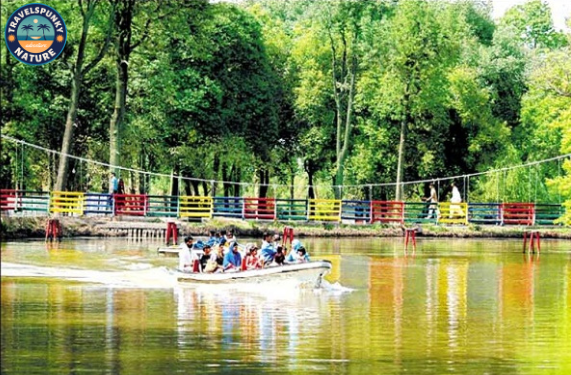
2. Go boating on Lunar Lake
3. Visit the Wildlife Park
Inside the forest, the 40-acre Wildlife Park and breeding centre keeps animals such as hog deer, nilgai, spotted deer and monkeys, along with peafowl, pheasants and other birds. A deer safari improvement scheme was completed in 2020. It is the easiest place in the forest for children to see animals up close, and the Punjab Forest Department lists entry to the Wildlife Park as free, with visiting hours of 8:00 in the morning until sunset.4. Spot wildlife and birds in the forest itself
Beyond the enclosures, the forest itself supports wild nilgai, hog deer, jackals, wild boar and Indian peafowl, along with dozens of resident and migratory bird species, around 50 bird species have been recorded here. Early morning is the best time for birdwatching, when the forest is coolest and quietest. The vulture conservation centre works with critically endangered white-rumped vultures in a secluded part of the forest. It is a working conservation facility rather than a public attraction, so ordinary visitors should not count on entering it.5. Camp, or stay in a forest hut

6. Picnic, walk and cycle under the trees
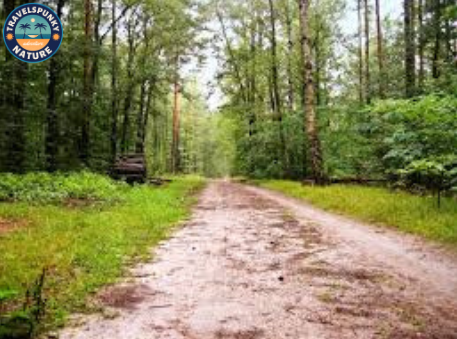
Sometimes the simplest plan is the best one here, the recreation park (about 134 acres of developed parkland inside the forest) has lawns, shaded picnic spots, a cafeteria, a swimming pool and pagodas by the lake, and the forest roads are made for long walks and cycling. Families from Lahore and Kasur come simply to spend a day under some of the densest tree cover in Punjab.How to reach Changa Manga
By car (recommended). From Lahore, take the N-5 (Multan Road) south-west towards Bhai Pheru (Phool Nagar) and Chunian, the forest is signposted from the Chunian side, around 15 km north of Chunian town. The full trip is about 75–80 km and usually takes 1 to 1.5 hours depending on traffic. A private or hired car is by far the most straightforward way to visit, as no published bus timetable serves the forest directly.
By train. Changa Manga has its own small station on the Karachi–Lahore main line, a legacy of the plantation’s timber days, but do not rely on it, no regular passenger train is currently listed as stopping there, and route planners send rail travellers to Kot Radha Kishen station and then on by taxi. If you want to travel by rail, confirm the current stops with Pakistan Railways (helpline 117) before setting out.
Entry, hours and costs, what to expect
- Entry: Official department pages list entry to the Wildlife Park as free, and entry to the wider forest park has traditionally been free as well. One recent private guide lists a small fee, so treat entry as free or nominal, and confirm at the gate.
- Hours: The Wildlife Park is listed as open 8:00 a.m. to sunset. Plan to arrive in the morning, you get the coolest hours, the best wildlife activity, and (on Sundays and holidays) the forest train.
- Activity charges: The train, boating and other activities are charged at the site. No authority currently publishes these rates online, and figures on older websites (such as Rs 40 train or boating fares) are years out of date, budget a modest amount of cash and confirm each price on the day.
- A note on changes: A government scheme to upgrade the TDCP resort and visitor facilities was under way in 2025–26, so some facilities may be improved, moved or temporarily closed. Checking the Punjab Forest Department’s Changa Manga page before a trip is a good habit.
Best time to visit
Visit between October and March, when Punjab’s weather suits a full day outdoors. November to February is the most comfortable period, with January daytime highs around 20°C. Avoid May and June if you can, average daytime highs reach 41–42°C, and expect July to September to be hot, humid and muddy in the monsoon. For the forest train, aim for a Sunday or public holiday within that October–March window.Tips for visitors
- Start early: Mornings are cooler, quieter and better for wildlife.
- Carry cash, Card payment cannot be assumed for activity tickets or snacks.
- Carry water and sun protection Even in winter. The picnic areas are shaded, the lake is not.
- Keep to marked areas, Do not feed the animals, and take litter back out, the forest’s tree cover has already shrunk over the years.
- If seeing the vultures or staying overnight matters to you, Contact the forest office in advance. Both need arrangement.