Venezuela holds a set of natural landmarks that few countries can match. The tallest waterfall on earth, a lost-world mountain plateau, a Caribbean archipelago of white cays and a sky that flashes with lightning on half the nights of the year.
This guide lists the eleven landmarks that matter most, with how each one is actually reached, the season it needs and where it falls short. Read the travel conditions note that follows before the list, because it shapes every trip in this guide.

Before you plan, the travel conditions
Venezuela’s landmarks are world class, and its travel conditions need plain words. As of November 2026, the United States rates the country at Level 3, Reconsider Travel, with some areas at Level 4, Do Not Travel. The United Kingdom advises against all travel to the border areas, Amazonas state and the Orinoco Mining Arc, and against all but essential travel to most of the rest of the country. Canada advises avoiding all travel.
Read your own government’s current advice before you book anything, and again before you travel. If you go, go with established local operators, and make sure your insurance covers the trip you are actually taking.
At a glance
| No. | Landmark | Where | Known for |
|---|---|---|---|
| 1 | Angel Falls and Canaima National Park | Bolívar state | The tallest waterfall on earth, at 979 m |
| 2 | Mount Roraima and the Gran Sabana | Bolívar state | The lost-world tepui, a trek of about six days |
| 3 | Los Roques | The Caribbean Sea | A national park of cays and clear water |
| 4 | Mérida and the Mukumbarí cable car | The Andes | The highest cable car station in the world |
| 5 | Morrocoy National Park | The Falcón coast | Cays reached by boat from two gateway towns |
| 6 | El Ávila and the Humboldt, Caracas | Caracas | The green wall above the city, by cable car |
| 7 | The historic centre of Caracas | Caracas | Bolívar’s birthplace, tomb and old plaza |
| 8 | Coro and the Médanos dunes | Falcón state | A UNESCO old town beside a desert |
| 9 | The Catatumbo lightning | Lake Maracaibo | The most lightning-struck place on earth |
| 10 | Los Llanos | The central plains | Safari country on cattle ranches |
| 11 | Mochima National Park | The northeast coast | Island beaches reached by boat |
1. Angel Falls and Canaima National Park

Angel Falls, Salto Ángel in Spanish, is the tallest waterfall on earth. The water drops 979 m off the flat top of Auyán-tepui, and the longest single plunge runs 807 m before the spray breaks on the rocks below. In the Pemón language the falls are Kerepakupai Merú. The wider world learned of them through the pilot Jimmy Angel in the 1930s.
The falls stand deep inside Canaima National Park, about 30,000 km² of tepui country, UNESCO listed in 1994. There is no road to Canaima camp, the lagoon village that serves as the base. You fly in by small plane, then travel by river.
How the trip works: From Canaima camp, motorised canoes called curiaras run up the Carrao and Churún rivers, a journey of about four hours, then a forest walk reaches the Mirador Laime viewpoint, facing the falls. Most trips sleep one night in a hammock camp, and the standard package runs three days and two nights.
Season: The river trip needs high water. From about June to November the boats can reach the base trails. In the driest weeks they may not get up the river at all.
Cost: Trips are sold as packages in US dollars, and there is no standard published rate, so get quotes from two or three established operators, who normally handle the park paperwork.
The honest downside: This is a remote, weather-led trip, not a day out. Cloud can hide the top of the falls for hours, and rain is part of most days in season. The camp itself is worth a spare day, though, for its lagoon waterfalls, including Salto El Sapo, where the path runs behind the water.
2. Mount Roraima and the Gran Sabana

Mount Roraima is the most famous of the tepuis, the flat-topped sandstone mountains of the Gran Sabana. It rises to 2,810 m where Venezuela, Brazil and Guyana meet, and its plateau covers about 31 km² of black rock, quartz-lined streams and plants found almost nowhere else.
The trek: The only walking route to the top starts on the Venezuelan side, at the Pemón village of Paraitepuy. The standard trek takes about six days, two days in, a day or two on the plateau, two days out. The one way up is a natural ledge called La Rampa. No technical climbing is needed, but the days are long and the trails are often wet.
Guides and permits: A licensed Pemón guide is mandatory, and groups register with Inparques, the national parks authority, before setting out. Tours are arranged in Santa Elena de Uairén, the border town that bases the region.
Season: December to April is the usual window, with lower rivers to cross and the best chance of clear views from the top.
The honest downside: Reaching the trailhead is a journey in itself. Santa Elena is about ten hours by road from Puerto Ordaz, and the trek is a real expedition, with cold nights on top.
The Gran Sabana repays slower travel on the same trip, because the Troncal 10 road runs south past waterfall after waterfall. Salto Kamá drops about 50 m beside the road, the Quebrada de Jaspe runs red over jasper rock, and Salto Kawi ends in a wide swimming pool.
3. Los Roques
Los Roques is a national park archipelago about 160 km north of the mainland, more than 300 islands, cays and sandbars scattered over a turquoise lagoon. The park was declared in 1972, and only one island, Gran Roque, is inhabited. Its village of sandy streets and small guesthouses, called posadas, bases every visit.
Days here run on boats. From Gran Roque, local boats take you out to the cays for the day. Madrisquí and Francisquí lie close by, and Cayo de Agua, a narrow sandbar between two seas, is the prized long trip. The water is shallow, warm and clear, over coral and seagrass.
How to reach it: The only way in is by air, a flight of about 40 minutes from the Caracas area in a small propeller plane. There is no regular ferry to plan a trip around.
Cost: Return flights cost about $250 to $350 per person. A park entry fee is paid in cash dollars on arrival at Gran Roque, and it changes often, so confirm the current figure when you book. Baggage is capped at about 10 kg per person.
The honest downside: Los Roques is the most expensive stop in this guide. Flights have changed departure points in the past year, so confirm which airport yours leaves from.
4. Mérida and the Mukumbarí cable car
Mérida is Venezuela’s Andean city, a university town in a high valley. Its landmark is the Mukumbarí cable car, which climbs from the Barinitas station in the city to Pico Espejo at 4,765 m. That top station is the highest cable car station in the world, and the line runs about 12.5 km through five stations.
Each station is a different world. La Montaña stands in cloud forest, La Aguada opens onto the high grassland called páramo, and Loma Redonda starts the walks. At the top you face Pico Bolívar, the highest peak in the country.
History: The original cable car opened in 1960, closed in 2008, and reopened in 2016 as Mukumbarí after a full rebuild. It has stopped for stretches since then, so confirm it is running before you build a trip around it.
Cost: Tickets are priced in US dollars, at about $20 to $40 depending on the current tariff and your residency. Confirm the price and the timetable before you go.
The honest downside: The top station sits at 4,765 m, and most visitors arrive from a city that is already high. Altitude sickness is a real risk if you rush. Ride up in stages, and keep the top stop short. The highway above the city adds a roadside landmark, Pico El Águila, a monument-topped pass.
5. Morrocoy National Park
On the Falcón coast, Morrocoy protects about 32,090 hectares of mangroves, channels and low cays. It is the beach park Venezuelans themselves use most, and its pattern is simple. You sleep in a gateway town, hire a boat in the morning, and spend the day on a cay.
The two gateways are Tucacas and Chichiriviche. From their docks, boats called lanchas run out to the cays. Cayo Sombrero is the famous one, two beaches back to back under the palms. Cayo Sal is known for its reef, and Los Juanes is a shallow natural pool.
Cost: A lancha is hired per boat, not per person, and a half or full day runs about $30 to $80 depending on the cay and the season. Agree the price, the stops and the return time before you board, and pay in cash.
Season: December to April brings the calmest seas. Weekends and public holidays fill the cays, so go on a weekday if you can.
The honest downside: The cays have almost nothing on them. Shade, food, water and a rubbish bag all travel with you.
6. El Ávila and the Humboldt, Caracas
Caracas sits in a valley, and its northern wall is El Ávila, the green ridge of Waraira Repano National Park, which has guarded the city since 1958. The classic way up is the Teleférico, the cable car from the Maripérez station in the city.
The ride climbs about 3.5 km in roughly 15 minutes, to a top station at about 2,150 m beside the Hotel Humboldt. The hotel is a landmark of the 1950s in its own right, built in the same years as the first cable car, which opened in 1956. From the top, Caracas spreads out on one side and the Caribbean lies on the other.
Worth knowing: The cable car runs on limited days and has closed for long stretches in the past. Check that it is operating before you plan the day, and carry a jacket, because the top is far cooler than the city.
Cost: A return ticket for foreign visitors costs about $30. Confirm the current price at the station.
The honest downside: Cloud often covers the ridge by afternoon, which can erase the view entirely. Go in the morning, and treat the Ávila as a half day.
7. The historic centre of Caracas
Caracas was founded in 1567, and its colonial heart is a small grid around Plaza Bolívar. The equestrian statue of Simón Bolívar, raised in 1874, stands at the centre. The cathedral faces the square, first built in 1614 and rebuilt after earthquakes.
A short walk away stands the Casa Natal, the house where Bolívar was born on 24 July 1783. It is a low colonial house around a courtyard, now a museum with period furniture and some of his belongings, declared a National Monument in 2002. Uphill from the square, the Panteón Nacional holds his remains, which have rested there since 1876 in a former church filled with murals of the independence wars.
Cost: The plaza is open public space, and entry to the Casa Natal and the Panteón is free. Opening days change, so check before you set out.
How to visit: Go in the morning, when the centre is busy and the museums are open. Two to three hours covers the square, the house and the Panteón.
The honest downside: The old centre is a government district that empties early. Visit by day, and do not linger after the offices close.
8. Coro and the Médanos dunes
Coro is one of the oldest Spanish towns in South America, founded in 1527, and for a time the first capital of Venezuela. Its old centre is built of earth, adobe brick and clay walls under tiled roofs, a style found almost nowhere else in the Caribbean. UNESCO listed Coro in 1993.
The town is compact and walkable. A morning covers the cobbled streets, the cathedral, among the oldest in the country, and the old houses around the plazas. Then the landscape changes completely. At the edge of town begins Los Médanos de Coro National Park, a field of moving sand dunes, some 40 m high, driven by the trade winds. It is the only desert landscape in Venezuela.
How to visit: The dunes are minutes from the centre by road. Go early or late in the day, when the sand is cooler and the light turns the ridges gold. The old town itself is free to walk.
The honest downside: Coro is hot, dry and windy all year, and the old centre is quiet rather than lively. It is a half day of history and a sunset on the sand, and it pairs naturally with the Morrocoy coast.
9. The Catatumbo lightning
Over the mouth of the Catatumbo River, at the southwestern corner of Lake Maracaibo, the sky flashes on about 140 to 160 nights a year. Storms build after dark and can run for up to ten hours. Guinness World Records recognises this as the place with the highest concentration of lightning on earth, at about 250 flashes per square kilometre per year.
You watch it from the water. The bases are the stilt villages of Ologá and Congo Mirador, where the houses stand on posts over the lake. Tours are sold in Maracaibo as multi-night trips.
Season: The lightning runs from about April to November and peaks in September and October. In the dry months it can fade for weeks.
Worth knowing: Stay at least two or three nights. The show is frequent but never promised on a given night, and the villages are simple, with everything arriving by boat.
The honest downside: This is the most remote trip in the guide after Angel Falls, in a border state where official advice is at its strictest. Read the travel conditions note above with care before you consider it.
Most trips pass through Maracaibo, crossing the General Rafael Urdaneta Bridge, 8.7 km of cable-stayed concrete over the outlet of the lake. Opened in 1962 and designed by Riccardo Morandi, it was for years the longest bridge of its kind in the world. It carries vehicles only, so you see it from a car window.

10. Los Llanos
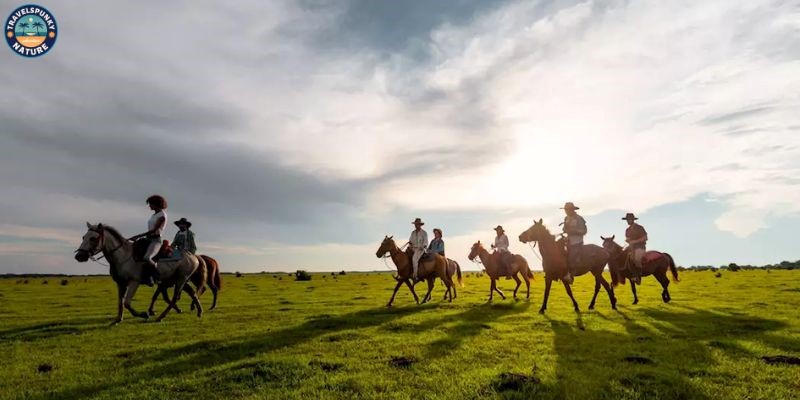
Los Llanos are the great seasonally flooded plains of the Orinoco basin, shared between Venezuela and Colombia. For half the year the grasslands stand under water. Then they dry out, and the wildlife gathers at the water that remains.
A visit means staying at a hato, a working cattle ranch that takes guests. The best known is Hato El Cedral, which has received visitors since 1987. Days run as safaris, by truck, on horseback and by boat. Capybaras graze in herds, caimans line the banks, giant anteaters cross the grass, and guides search the marshes for green anacondas. The bird list runs to hundreds of species.
Season: December to April is the wildlife season. The plains are dry and the animals are concentrated. From May to November the floods return, and travel is by boat.
How to reach it: Most visitors fly from Caracas to Barinas, then transfer by road to the hato, a journey the ranch usually arranges. Book the whole stay as one package.
The honest downside: The Llanos are hot, humid and full of insects, and the ranches are rustic working farms, not resorts. An anaconda sighting is hoped for, never guaranteed.
11. Mochima National Park
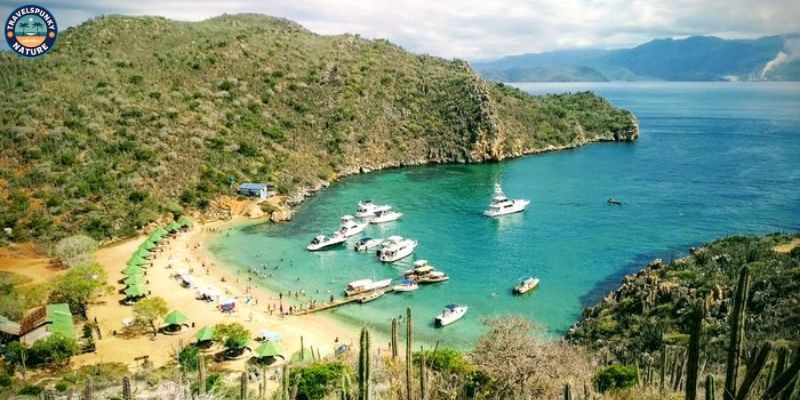
Mochima protects about 94,935 hectares of coast and sea in the northeast, between Puerto La Cruz and Cumaná. Set up in 1973, the park takes in dry hills, deep bays and 32 islands, with beaches in sheltered coves.
The pattern matches Morrocoy, with a flavour of its own. Boats called peñeros leave from the village of Mochima, from Santa Fe and from Puerto La Cruz and Guanta, priced per boat and shared between passengers. Playa Blanca is the best known beach, pale sand in a quiet bay. Playa Colorada, on the mainland road, is famous for its red-gold sand. Dolphins often travel with the boats.
Cost: Boats are negotiated at the dock. Agree the price, the beaches and the return time before you leave.
Season: December to April gives the calmest water. Go on a weekday, because the popular beaches fill with local families at weekends.
The honest downside: Mochima is a local favourite more than an international stop. Facilities on the beaches are basic, and almost everything runs on cash and Spanish.
Best time to visit Venezuela’s landmarks
Venezuela divides into a dry season, roughly December to April, and a rainy season from about May to November. Most of this guide belongs to the dry months, when the cays are calmest, the Roraima trek runs and the Llanos wildlife gathers at the water.
Two landmarks reverse the rule. Angel Falls needs the rainy season, when the rivers carry the boats, and the Catatumbo lightning peaks in September and October. A trip built around the falls should aim for June to November.
How to reach Venezuela, and getting around
Almost every international trip starts at Caracas and its airport at Maiquetía, on the coast below the city. Domestic flights link the capital with Puerto Ordaz and Ciudad Bolívar for the southeast, and with Barinas for the Llanos. Schedules change often, so build slack into every connection.
The southeast: Canaima is reached only by air, on small planes from Ciudad Bolívar or Puerto Ordaz. Santa Elena de Uairén, the base for Roraima and the Gran Sabana, is about ten hours by road from Puerto Ordaz, so most travellers fly to Puerto Ordaz first and ride from there.
Money: US dollars in cash are the working currency of tourism. Tours, posadas and boat captains quote in dollars, card machines are unreliable outside the big hotels, and small notes are essential.
Guides and operators: For Canaima, Roraima, the Llanos and the Catatumbo, an established operator is not a luxury. They hold the permits, the boats and the current picture on the ground. Book before you arrive, and note that English is limited outside the main hotels.
Where to base yourself for each landmark
Caracas: The hub for flights, and the base for the Ávila and the historic centre. Stay in the eastern districts and travel into the centre by day.
Canaima camp: The lodges around the lagoon, booked as part of the Angel Falls trip.
Santa Elena de Uairén: The base for Roraima and the Gran Sabana road, with simple hotels and the trek operators.
Gran Roque: Every Los Roques stay is a posada on this one island, usually with meals included.
Mérida: The Andean base for the cable car, with hotels in the city and inns above it.
Tucacas or Chichiriviche: The twin gateways to Morrocoy, a short boat ride from the cays.
FAQs
1. What is the most famous landmark in Venezuela?
Angel Falls. At 979 m it is the tallest waterfall on earth, and the trip most visitors build around. It is also the most demanding landmark here, needing about three days in the rainy months.
2. How do you get to Angel Falls?
You fly by small plane from Ciudad Bolívar or Puerto Ordaz to Canaima camp, because no road reaches it. A motorised canoe then runs upriver for about four hours to the viewpoint walk. Trips are sold as packages of about three days.
3. How many days do you need for Venezuela’s landmarks?
A week covers Caracas and one region well. The southeast on its own, Canaima plus the Roraima trek, takes about ten days. Los Roques needs three or four days, the Llanos three.
4. When is the best time to visit Venezuela?
For most landmarks, December to April, the dry season. For Angel Falls, June to November, when the rivers are high enough for the boats. For the Catatumbo lightning, September and October.
5. Do I need a visa for Venezuela?
It depends on your passport. Visitors from the United Kingdom and most of the European Union can usually enter visa-free for up to 90 days, while United States citizens need a visa arranged before travel. Confirm yours before you book.
6. Is it safe to travel in Venezuela in 2026?
Official advice is restrictive, and this guide will not soften it. The United States advises reconsidering travel, the United Kingdom advises against all but essential travel to most of the country, and Canada advises avoiding all travel. Read your own government’s current advice before you decide.
Researched and verified: November 2026. This guide is research-based, compiled from official visitor information, maps and traveller reports. Prices, hours, flight schedules and travel conditions change fast in Venezuela, so confirm them locally before travelling.