- A Journey Through Mexico's Rich Heritage
- Mexico: A Land of Natural and Architectural Wonders
- Where to base yourself for each landmark
- 15 Famous Landmarks in Mexico
- 1. Chichen Itza: A Marvel of Ancient Times
- 2. Teotihuacan: The City of the Gods
- 3. Monte Albán: A Timeless Ancient City
- 4. Palenque: The Maya City in the Jungle
- 5. Uxmal: The Jewel of Puuc Architecture
- 6. Great Pyramid of Cholula: A Hidden Ancient Treasure
- 7. Tulum Ruins: A Seafront Gem of History
- 8. Museo Nacional de Antropología: Mexico's Cultural Treasure
- 9. The Zócalo: The Heart of Mexico City
- 10. Templo Mayor: The Aztec Great Temple
- 11. Palacio de Bellas Artes: Mexico's Palace of Fine Arts
- 12. Castillo de Chapultepec: A Historic Treasure in Mexico City
- 13. Museo Subacuático de Arte: A Hidden Underwater Wonder
- 14. Monumento a la Revolución: A Symbol of Freedom
- 15. Museo Frida Kahlo: La Casa Azul
- Conclusion
- FAQs
A Journey Through Mexico’s Rich Heritage
Mexico is a land of vibrant cultures and stunning landscapes that beckon visitors from around the world. Its long, dynamic history tells the story of a nation that has seen the rise of civilizations like the Maya and Olmec, the arrival of Conquistadors, and the challenges of the modern era. For those who travel to explore its historic attractions, Mexico offers a window into an amazing past. From the pre-Columbian relics to the Spanish colonial era, every corner of the country invites you to learn a great deal about its heritage and accomplishments.
The country’s legacy is reflected in its ability to celebrate its rich culture and cultural achievements. As you walk through Mexico City, you can visit the National Museum, which pays homage to the long-ago eras of civilizations with an immense collection of important artifacts. Behold treasures like the Aztec calendar stone and giant stone heads, pieces that tell stories of a fascinating world that first populated this southern region of North America over 13,000 years ago. It’s a must-see attraction, offering a breathtaking opportunity to explore how life has dramatically altered across centuries.
Mexico: A Land of Natural and Architectural Wonders
For travelers seeking beauty and inspiration, Mexico is far more than its natural sites and beautiful beaches. It’s a treasure trove of unique landmarks and incredible buildings that showcase the country’s architectural styles and rich traditions. Whether you’re drawn to the serene monuments or the majestic ruins of the Mayan era, you’ll find something for every type of explorer. The capital itself is a vibrant hub of fine arts and museums that inspire awe and spark wanderlust. This diverse land offers a blend of the ancient and the contemporary, with masterpieces spanning over 2,000 years. A trip of a lifetime here might include a visit to the historic attractions, a stroll along stunning landscapes, or an opportunity to immerse yourself in the cultures and traditions that make Mexico a unique destination. Whatever your itinerary, the country’s ability to ignite a sense of adventure never fails to amaze.
A note on prices before you plan (2026): Mexico changed how its landmark tickets work this year. At the biggest archaeological sites and museums, international visitors now pay more than Mexican nationals and residents (typically 210 vs 105 pesos at INAH sites), “free Sundays” apply only to nationals and residents with ID, and the Yucatán sites add a state fee on top of the national one. Every price below is the 2026 figure we verified, and where a state fee was still moving, we say so.
Where to base yourself for each landmark
| No. | Base | Landmarks | Good to know |
|---|---|---|---|
| 1 | Mexico City | Anthropology Museum, Chapultepec Castle, Zócalo, Templo Mayor, Bellas Artes, Monumento a la Revolución, Frida Kahlo Museum | All in the city, Bellas Artes is a 10-minute walk from the Zócalo |
| 2 | Mexico City (day trip) | Teotihuacan | ~50 km, bus from Terminal Central del Norte, about 1 hour each way |
| 3 | Puebla | Great Pyramid of Cholula | 20–40 minutes from Puebla centre |
| 4 | Valladolid | Chichen Itza | The closest base, 30–45 minutes |
| 5 | Mérida | Chichen Itza, Uxmal | Chichen ~1½ hours, Uxmal ~1¼ hours, buses stop at the entrance |
| 6 | Tulum / Cancún | Tulum Ruins, MUSA underwater museum | Stay in Tulum for the ruins, MUSA boats leave from Cancún and Isla Mujeres |
| 7 | Oaxaca City | Monte Albán | 20–30 minutes by road, shuttles from Calle Mina |
| 8 | Palenque town | Palenque | Stay overnight in the town, San Cristóbal is 5–6 hours away, not a day trip |
15 Famous Landmarks in Mexico
1. Chichen Itza: A Marvel of Ancient Times
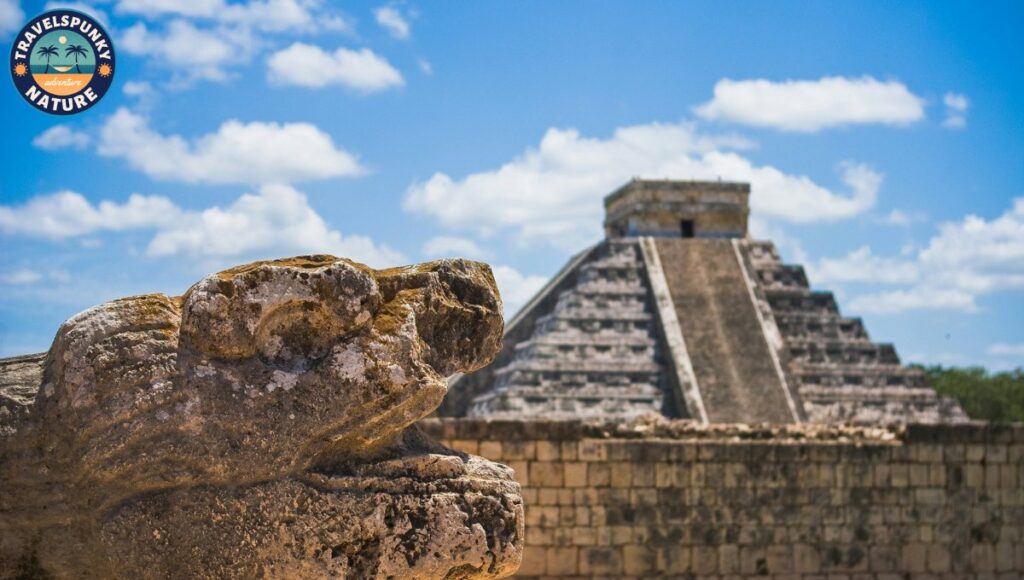
Chichen Itza is one of the most iconic historical sites in Mexico, attracting millions of visitors every year. As an ancient Mayan city, it was built between 350 AD and 900 AD but later abandoned after the collapse of the mighty Maya civilization. Located on the Yucatán peninsula, this UNESCO World Heritage Site is remarkably intact, showcasing a network of well-preserved temples, intricate carvings, and the notable El Castillo, a towering stepped pyramid that stands proudly at the heart of the jungle. It’s no wonder Chichen Itza is listed as one of the New Seven Wonders of the World.
A visit here offers a fascinating day out where you can explore the monuments and celestial calendar carvings created by the Mayans to track the movements of planets. For the best experience, it’s recommended to arrive early to beat the crowds or stay after sunset to view the nightly light show. The name “Chichen Itza” translates to “at the mouth of the well of Itza,” reflecting the cultural and historical depth of the site. Whether you’re gazing at the monuments or imagining its vibrant past, Chichen Itza is a must-visit landmark in Mexico.
Good to know: Open daily 8:00–16:00 (last entry 15:00). Since spring 2026 there is a single combined ticket, 697 MXN for international visitors, 310 for nationals and residents, and entry is only through the new visitor centre. You cannot climb El Castillo (climbing has been banned since 2006). Base: Valladolid (30–45 min) or Mérida (~1½ hours).
2. Teotihuacan: The City of the Gods
Teotihuacan was one of the largest cities of the ancient Americas, a vast, grid-planned metropolis laid out along the 2 km Avenue of the Dead, anchored by the Pyramid of the Sun (the third-largest pyramid in the world by volume, about 65 m tall) and the Pyramid of the Moon. Who built it remains unknown, the city was already abandoned and in ruins when the Aztecs found it, and “Teotihuacan”, “the place where the gods were created”, is the name they gave it. It has been a UNESCO World Heritage Site since 1987.
Good to know: Open daily 8:00–17:00 (last entry 16:30), 210 MXN for international visitors, 105 for nationals and residents. Important: you cannot climb either pyramid, the Sun pyramid has been closed to climbing since 2020, and the Moon pyramid climb closed in April 2026 until further notice. Buses leave Mexico City’s Terminal Central del Norte every 15–20 minutes (~1 hour, about 60 MXN). Arrive at opening time to walk the avenue before the heat and crowds build.
3. Monte Albán: A Timeless Ancient City
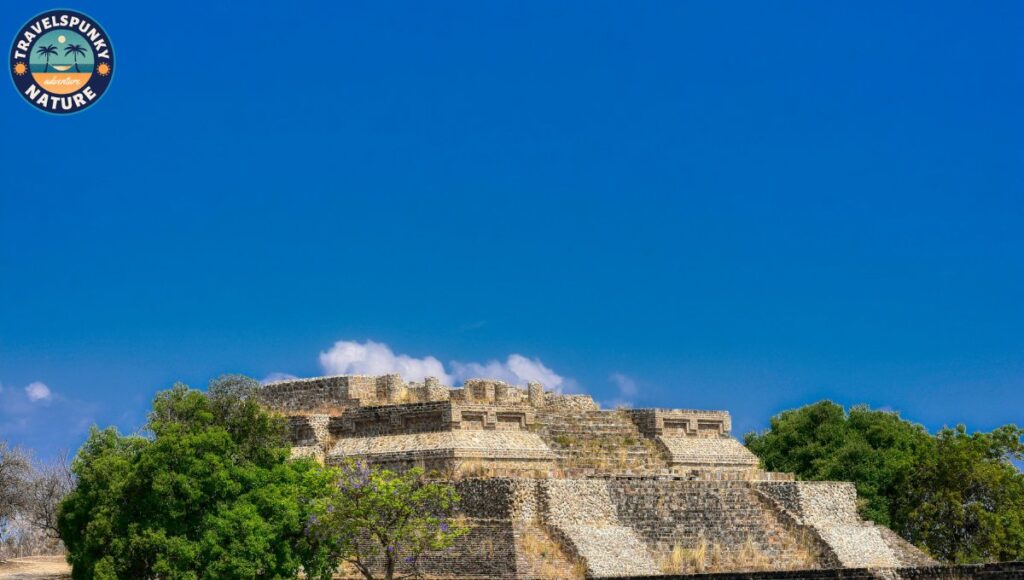
Monte Alban is an expansive site of historical ruins that perfectly captures the Zapotec period. Situated on a high ground overlooking the breathtaking Oaxaca valley, this ancient center was inhabited by many different peoples for more than a thousand years. Built around 500 BC, it features pyramids, temples, and an impressive acropolis, all connected by canals and adorned with intricate carvings. The site also served as a form of defense for the Zapotec people who lived, worked, and worshipped on the hillside, protecting it from attacking tribes.
A visit to Monte Alban offers not only an opportunity to explore its terraces and symbols representing sacred texts, but also incredible views of the surrounding landscapes and the Oaxaca de Juárez historical center. Once a hub for Mixtec and Zapotec civilizations, this site allows you to step back in time and experience a city that seems to emerge directly out of the mountain. It’s a trip worth taking for those staying in Oaxaca and looking to connect with ancient history.
Good to know: Open daily 8:00–17:00 (last entry 16:00), 210 MXN for international visitors, 105 for nationals and residents, the site museum is included. Base: Oaxaca City, 20–30 minutes by road, with shuttle buses from Calle Mina.
4. Palenque: The Maya City in the Jungle
Palenque is the connoisseur’s Maya site, a Classic-period capital folded into jungle foothills in Chiapas, admired for the elegance of its architecture and the fineness of its carved reliefs. Its landmarks are the Temple of the Inscriptions, the funerary temple of King K’inich Janaab’ Pakal, and the Palace, a sprawling complex with a unique four-storey tower found nowhere else in Maya architecture. A UNESCO site since 1987, it feels wilder and more intimate than the big Yucatán sites, with howler monkeys in the trees above the ruins.
Good to know: Open daily 8:00–17:00 (last entry 16:00), the site museum is closed on Mondays. Two fees apply: INAH entry (210 international / 105 nationals-residents) plus the national park fee of roughly 215–225 / 110–115, budget about 430 MXN total as an international visitor and confirm at the gate. Base: Palenque town, 10 minutes away, stay overnight and enter at 8:00 for the misty, monkey-loud first hour. San Cristóbal de las Casas is 5–6 hours away. Do not treat Palenque as a day trip from there.
5. Uxmal: The Jewel of Puuc Architecture
Uxmal is the showpiece of the Puuc style, Maya architecture at its most decorated, with stone-mosaic façades of latticework, masks and serpents covering the Governor’s Palace and the Nunnery Quadrangle. Its signature building is the Pyramid of the Magician, unique among Maya pyramids for its rounded, elliptical base, which rises about 35 m over the site. A UNESCO World Heritage Site since 1996, Uxmal draws a fraction of Chichen Itza’s crowds, many visitors rate the experience higher for exactly that reason.
Good to know: Open daily 8:00–16:00, with last entry at 15:00, it closes earlier than most sites, so come in the morning. Two fees apply (INAH plus a Yucatán state fee), the state fee rose during 2026, so expect a total of roughly 590 MXN as an international visitor (about 270 for nationals) and confirm at the gate. Base: Mérida, ~1¼ hours, ADO buses stop right at the site entrance, and Uxmal pairs well with the other Ruta Puuc sites.
6. Great Pyramid of Cholula: A Hidden Ancient Treasure
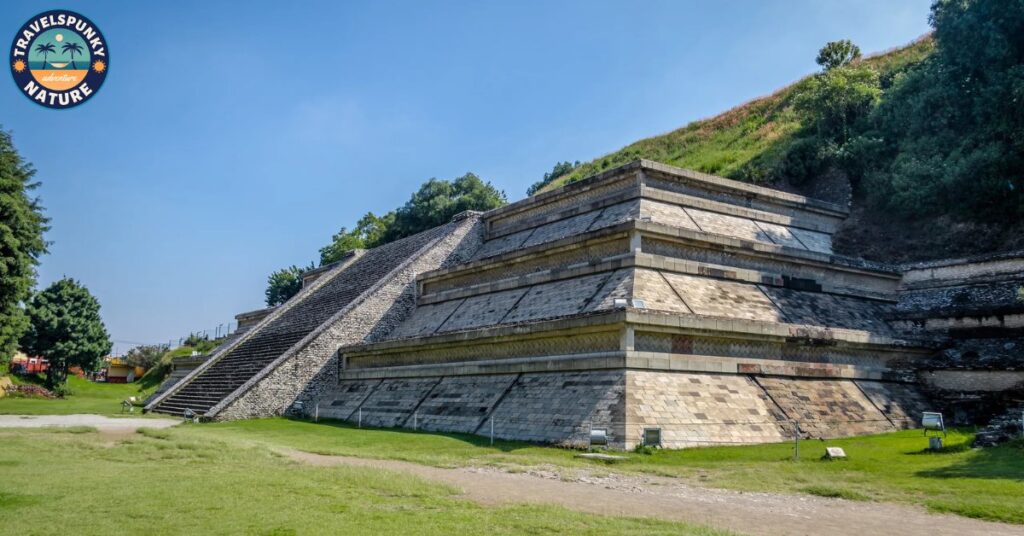
The Great Pyramid of Cholula is another of Mexico’s most popular visitor attractions and one of the biggest landmarks in the country. Built by humans in Cholula, a town in the state of Puebla, it is believed to be the largest pyramid in the world by volume. Though wider than the Great Pyramid of Giza in Egypt, it is much shorter. The structure was built more than 2,000 years ago, possibly by the El Tajin or Teotihuacan people. Over time, it was often mistaken for a hill as it became buried under earth and grass, and a Spanish chapel was constructed on its very top in the 16th century.
Fascinatingly, archaeologists have uncovered a network of tunnels, altars, and platforms beneath the site during recent excavations. These spaces were likely used during religious ceremonies. Visitors today can explore this once-great pyramid, now open to the public, through guided tours. The pyramid not only offers insight into ancient civilizations but also stands as a testament to how history can lie hidden beneath layers of time. It’s an unforgettable experience for anyone exploring Mexico’s great landmarks.
Good to know: Open Wednesday to Sunday only (closed Monday and Tuesday), 9:00–17:00, 210 MXN for international visitors, 105 for nationals and residents, including the site museum and the tunnels. News for 2026: the famous tunnels under the pyramid reopened in late July 2026 after being closed since 2020, with new lighting, if an older guide tells you they’re shut, it’s out of date. Base: Puebla, 20–40 minutes.
7. Tulum Ruins: A Seafront Gem of History
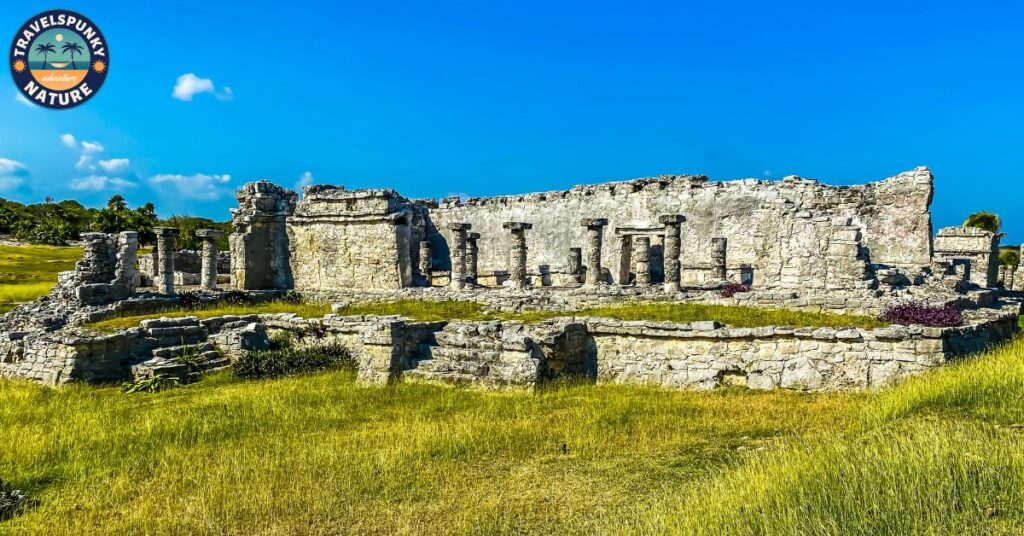
The Tulum ruins, located in Quintana Roo, stand out as the only ones by the sea, making them one of Mexico’s most fascinating historical sites. Once a bustling port settlement during the Mayan empire, Tulum served as a gateway for trade in goods like copper, cacao, beans, and cotton. The main pyramid, known as El Castillo, was used as a lighthouse during ancient times, with its positioning of windows on the top tower guiding sailors along the coast. Visitors today can marvel at the impressive views over the sea and enjoy the company of native iguanas, which still call the place home.
A trip to Tulum offers more than just the remains of this seaport. Beyond its 10 complete structures, the area is surrounded by stunning deep blue waters and nearby bonus landmarks. You can explore Cenote Dos Ojos, a network of underground caves perfect for diving or snorkeling, and the beautiful Sian Ka’an Biosphere Reserve, a UNESCO-protected stretch of land. With its unique seafront location and historical significance, Tulum is a destination that invites travelers to immerse themselves in both natural beauty and ancient history.
Good to know: Open daily 8:00–17:00 (last entry 15:30). Prices were reset in July 2026 under the “Tulum Renace” plan, a unified 265 MXN for international visitors and 80 for nationals, older pages quoting around 630 are out of date. The ruins sit inside the Jaguar Park area, a few minutes from Tulum town.
8. Museo Nacional de Antropología: Mexico’s Cultural Treasure
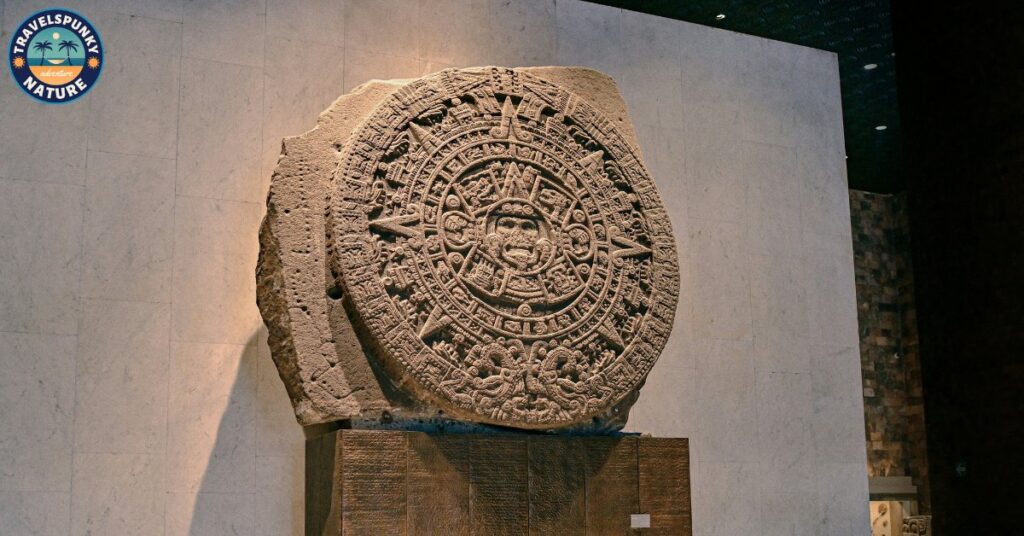
The Museo Nacional de Antropología, or Mexico’s National Museum of Anthropology, is one of the most popular museums in the country’s capital, Mexico City. Since it opened in 1964, this architectural treat has become a hub for those visiting to explore Mexico’s rich culture and history. The museum’s unique style combines large courtyards, minimalist buildings, and pristine gardens, creating a serene environment. Inside, an impressive collection of artifacts tells the story of indigenous peoples, from the Aztec ceremonial headdresses to the celestial calendar and a huge carved head of the fire serpent.
A visit here is an incredible experience for anyone eager to learn more about Mexican culture. The items, gathered over centuries, include treasures from many rulers and highlight the depth of Mexico’s history. When you take some time to admire its architecture, you’ll find a space that mirrors the culture it strives to protect inside its walls. To make the most of your trip, be sure to skip the line and book your ticket in advance to explore this great place without delays.
Good to know: Open Tuesday to Sunday, 9:00–18:00 (closed Mondays), 210 MXN general, 105 for Mexican nationals and residents. Note the 2026 rule: Sunday entry is free only for nationals and residents with ID, international visitors pay on Sundays too.
9. The Zócalo: The Heart of Mexico City

The Zocalo, located in Mexico City, is the capital’s iconic center and one of the largest squares in the world. This majestic place is surrounded by some of the city’s oldest and grand buildings, including the Catedral Metropolitana and the National Palace. These structures have been declared National Monuments and showcase the rich history of Mexico. The cathedral, in particular, is an incredible building that has been standing at the very heart of the city since 1573. It boasts architectural styles that seamlessly blend Gothic, Neoclassical, and Baroque elements.
Visitors are drawn to the highlights of this historical square, which serves as a hub for culture and tradition. Walking through The Zocalo, you feel the grandeur of a space that reflects Mexico’s journey through time. The cathedral’s grand design and the National Palace’s historic charm make this square an unforgettable part of any trip to Mexico City.
Good to know: The square is open free around the clock. Time a visit for the flag ceremonies, soldiers raise the monumental flag at 6:00 and lower it at 18:00 daily. The square was built over the Aztec capital, Tenochtitlan, which is exactly what the next landmark uncovers.
10. Templo Mayor: The Aztec Great Temple
In 1978, utility workers digging beside the Metropolitan Cathedral uncovered a carved stone disc, and beneath the modern city, archaeologists found the Great Temple of Tenochtitlan, the Aztec capital. The Templo Mayor was the religious heart of the Aztec world, twin shrines to Huitzilopochtli and Tlaloc atop a pyramid that was rebuilt and enlarged seven times, each version encasing the last. The excavated ruins and the excellent on-site museum, home to the Coyolxauhqui monolith that started it all, sit right beside the Zócalo, so the colonial square and the Aztec city it replaced can be seen in a single visit.
Good to know: Open Tuesday to Sunday, 9:00–17:00 (closed Mondays), 210 MXN for international visitors, 105 for nationals and residents. Allow 1½–2 hours including the museum, and pair it with the Zócalo and Cathedral next door.
11. Palacio de Bellas Artes: Mexico’s Palace of Fine Arts
The Palacio de Bellas Artes is Mexico City’s most beautiful building, a white-marble palace in Art Nouveau style outside and Art Deco inside, opened in 1934 as the country’s first art museum and still its premier cultural venue. Inside are the murals every Mexican schoolchild grows up with, by Diego Rivera, José Clemente Orozco, David Alfaro Siqueiros and Rufino Tamayo, plus rotating exhibitions, and a stage famous for its Tiffany glass curtain depicting the Valley of Mexico volcanoes. It stands in the Alameda Central, a 10-minute walk from the Zócalo.
Good to know: Museum open Tuesday to Sunday, 10:00–18:00 (closed Mondays), entry 95 MXN, and uniquely among the big Mexico City museums, Sundays are free for everyone, international visitors included.
12. Castillo de Chapultepec: A Historic Treasure in Mexico City
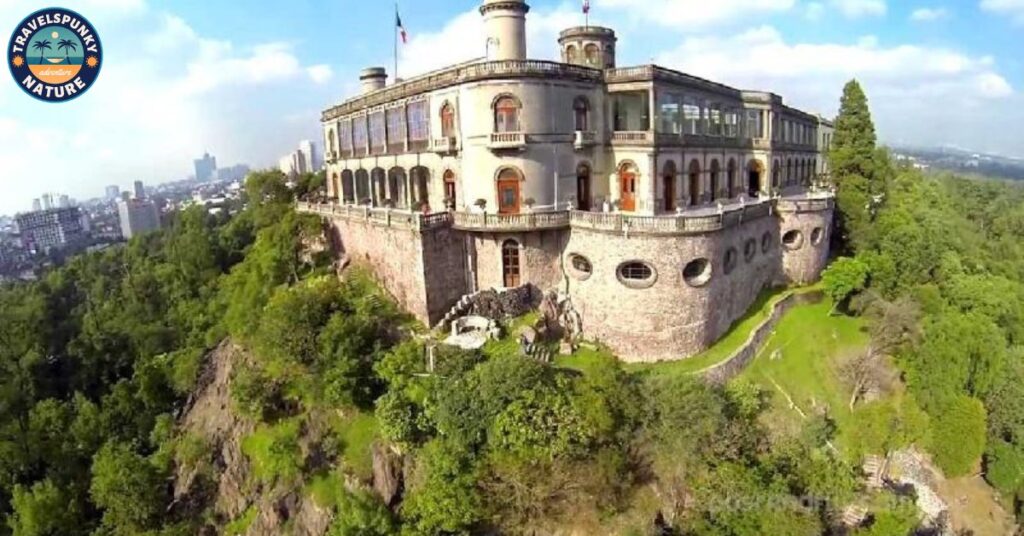
If you’re staying in Mexico City, a visit to the Castillo de Chapultepec is a must. Perched on Chapultepec Hill, this grand castle was built in 1785 and offers stunning views of the city below. The castle has had a long life, serving as a lavish presidential home and a military academy before becoming a national museum of history. Today, it attracts thousands of visitors every year who come to explore its unique charm and Mexican history.
After marveling at the exterior, step inside to discover its colorful corridors, luxurious gold embellishments, and skillfully carved statues. The exquisite mural paintings and quirky checkerboard pavement add even more character. The castle features twelve impressive showrooms, each showcasing items from various key periods, including the Mexican War of Independence, the Revolution of 1910, and even the foundation of the Spanish Empire. It’s a place where history comes alive, offering a glimpse into everything that shaped the nation.
Good to know: Open Tuesday to Sunday, 9:00–17:00 (closed Mondays, including holiday Mondays), 210 MXN general, 105 for nationals and residents. It pairs naturally with the Anthropology Museum, both are in Chapultepec Park.
13. Museo Subacuático de Arte: A Hidden Underwater Wonder
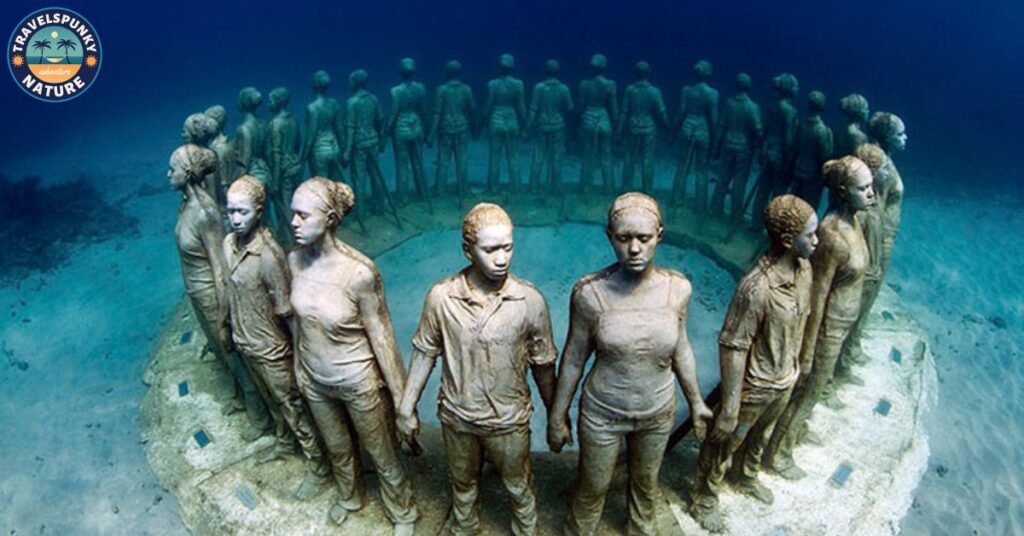
The Museo Subacuático de Arte (MUSA) is one of the most spectacular landmarks in Mexico, located in the waters surrounding Cancun and Isla Mujeres. Known as the world’s largest underwater museum, this unique attraction features an underwater world with over 500 life-size statues and sculptures. Created by British sculptor Jason deCaires Taylor, the museum is best explored through scuba diving or a snorkeling excursion. For a quieter experience, you can catch a glimpse of this wonder on a glass-bottomed boat tour. Beyond its beauty, MUSA serves a practical purpose by helping conserve the Mesoamerican Reef, the second-largest barrier reef in the world.
The sculptures, made from marine-grade cement, are designed to allow algae and corals to grow on their surfaces, creating habitats for local marine life. This initiative also aims to draw tourists away from the reef to protect it. The museum’s important conservation work has resulted in a stunning space where visitors can marvel at art and nature combined. Whether you’re a diver or prefer a guided trip, this ambitious attraction offers an essential experience that supports environmental efforts while captivating the imagination.
Good to know: There is no walk-up museum, MUSA is visited only on boat tours from Cancún’s Hotel Zone marinas or Isla Mujeres. Snorkel tours (over the shallow Punta Nizuc sculptures) start around US$58 plus a marine-park/dock fee, certified divers can visit the deeper Manchones gallery. Prices are set by operators, so compare two or three before booking.
14. Monumento a la Revolución: A Symbol of Freedom
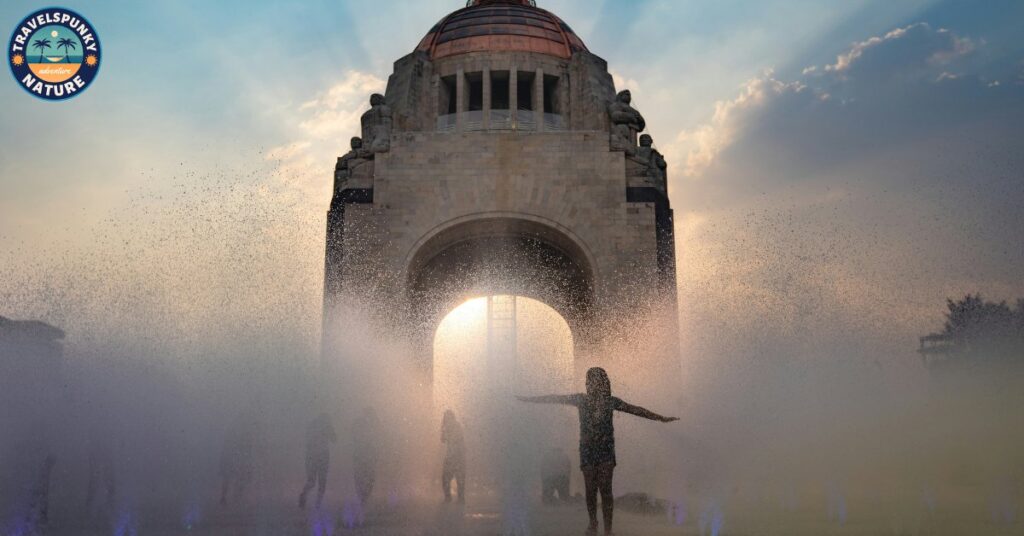
The Monumento a la Revolución is a striking monument in the heart of Mexico City that tells the story of the Mexican Revolution. This huge, domed triumphal arch stands near Plaza de la República and was built over a period of 28 years, finally being finished in 1938. The monument commemorates the Mexican Revolution, which began in 1910, almost 90 years after Mexico had won its independence from Spain in 1821. The monument’s design makes it an unusual and powerful reminder of Mexico’s fight for freedom.
The monument also serves as a mausoleum and contains the remains of notable revolutionary leaders, including Pancho Villa, Venustiano Carranza, and Lázaro Cárdenas. Visitors spending time here can explore its rich history and admire its grandeur. With its iconic architecture and deep historical significance, the Monumento a la Revolución is a must-see for anyone visiting Mexico City.
Good to know: The glass elevator to the 360° viewpoint (about 65 m up) runs Monday–Thursday 12:00–20:00, Friday–Saturday 12:00–22:00 and Sunday 10:00–20:00, tickets are 170 MXN. Sunset is the best slot, arrive before the last entry, 30 minutes before closing.
15. Museo Frida Kahlo: La Casa Azul
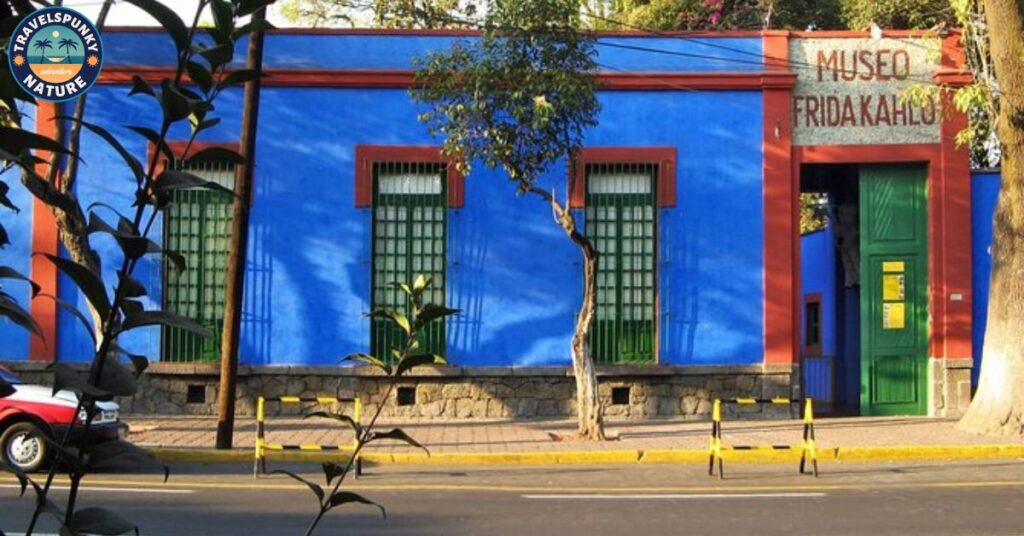
The Museo Frida Kahlo, also known as La Casa Azul, is a cultural treat for any fan of the internationally renowned Mexican artist, Frida Kahlo. Located in the leafy Coyoacán suburb of Mexico City, the house is easily recognized locally for its electric blue walls. This was the home where Kahlo was born and later died, and it has since been transformed into a museum that is dedicated to her life and work.
Inside, visitors will find rooms carefully restored to reflect how Kahlo lived, along with exhibitions showcasing some of her most celebrated works. From her personal belongings to the creative spaces where she painted, every corner tells a story of her vibrant artistry and passion. For those who are thrilled at the idea of visiting a space that deeply connects to her legacy, this is a landmark that truly brings her world to life.
Good to know: Closed Mondays. Tuesday 10:00–18:00, Wednesday 11:00–18:00, Thursday until 21:00, Friday–Sunday 10:00–18:00. Tickets are 320 MXN (160 for Mexican residents) and are online only, with timed entry, there is no box office, and weekend slots sell out a week or more ahead. Book before you fly.
Conclusion
A trip to Mexico is incomplete without visiting its famous landmarks. From the iconic Chichen Itza to the Great Pyramid of Cholula, this country offers an incredible journey through its large list of sites. Whether you plan to explore everything or just a few, this guide will help you navigate the most stunning attractions. Hopefully, these landmarks will leave you fired up to experience the culture and history that are never too far away in this vibrant destination.
Researched and last verified: November 2026, using INAH, INBAL and museum sources. Prices and opening days change, a quick check on the official site before you go is always worth it.
FAQs
1. What is the most famous landmark in Mexico?
Chichen Itza, a New Seven Wonders of the World site and the most visited archaeological zone in the country, ahead of Teotihuacan and Tulum.
2. Can you climb the pyramid at Chichen Itza?
No. Climbing El Castillo has been banned since 2006. The same applies at Teotihuacan, the Pyramid of the Sun has been off-limits since 2020, and the Pyramid of the Moon climb closed in April 2026 until further notice.
3. How much does it cost to visit Chichen Itza in 2026?
697 MXN for international visitors and 310 for Mexican nationals and residents, a single combined ticket since spring 2026 that covers both the INAH and Yucatán state fees. Pages quoting 648–676 are out of date.
4. Are Mexico’s landmarks free on Sundays?
Only if you are a Mexican national or a resident with ID, at INAH sites and museums, international visitors pay full price on Sundays. The exception in this list is the Palacio de Bellas Artes, where Sunday entry is free for everyone.
5. Do I need to book Frida Kahlo Museum tickets in advance?
Yes. Tickets are sold online only, with timed entry, and there is no box office at the museum. Weekend slots sell out a week or more in advance.
6. Which city is the best base for visiting Chichen Itza?
Valladolid is closest (30–45 minutes) and quieter, Mérida (about 1½ hours) has the widest choice of hotels and onward connections, and puts Uxmal within reach too.