Poland’s biggest cities are not variations on one theme. A rebuilt capital, a royal old town, a Baltic port, a textile giant and a coal city turned culture hub all sit inside one small country, and fast trains link the lot.
This guide ranks the thirteen cities worth a traveller’s time by size, using the official Statistics Poland (GUS) figures for the end of 2025. The first twelve follow the ranking exactly. The last place goes to Toruń, 15th by population, because it gives visitors more than the two larger cities above it.
At a glance
| No. | City | Population (end of 2025) | Known for |
|---|---|---|---|
| 1 | Warsaw | About 1.87 million | The capital, its rebuilt Old Town and the Rising Museum |
| 2 | Kraków | About 817,000 | The royal Old Town, Wawel Castle and the largest medieval square in Europe |
| 3 | Wrocław | About 673,000 | Islands, bridges and hundreds of bronze dwarfs |
| 4 | Łódź | About 640,000 | Textile mills, Piotrkowska Street and film history |
| 5 | Poznań | About 534,000 | The Renaissance town hall and its noon goats |
| 6 | Gdańsk | About 489,000 | The Baltic port, amber and the birthplace of Solidarity |
| 7 | Szczecin | About 384,000 | The Oder terraces and the closest big Polish city to Berlin |
| 8 | Lublin | About 327,000 | The hilltop Old Town and the Majdanek memorial |
| 9 | Bydgoszcz | About 321,000 | Mill Island and the canal between two river systems |
| 10 | Białystok | About 289,000 | Branicki Palace and the gateway to Białowieża Forest |
| 11 | Katowice | About 277,000 | A coal city turned centre of culture and music |
| 12 | Gdynia | About 239,000 | The modernist port city of the Tricity |
| 13 | Toruń | About 193,000 | Copernicus, gingerbread and a Gothic old town |
1. Warsaw
Warsaw is the capital and home to about 1.87 million people, more than twice the population of Kraków. German forces destroyed about 85 percent of the city in 1944, and the Poles rebuilt it. UNESCO listed the reconstructed Old Town in 1980 as a monument to that rebuilding itself. The sights run from the Royal Castle and the Old Town Market Square to Łazienki Park, the POLIN Museum of the History of Polish Jews and the Warsaw Rising Museum, which covers the 1944 uprising.
How to reach it: Chopin Airport is the country’s main gateway, about 10 km from the centre with trains and buses into town. Warszawa Centralna is the rail hub, and the fastest Pendolino trains reach Kraków in about 2 hours 25 minutes.
Best months: May to June and September bring mild weather and thinner crowds. December fills the Royal Route with lights and a Christmas market.
Good to know: The Palace of Culture and Science stands 237 m tall and has a public viewing terrace on its 30th floor. It was the tallest building in Poland until the 310 m Varso Tower passed it in 2022.
The honest catch: The sights spread across a big, businesslike city, and the Old Town is a careful rebuild rather than a survivor. Give Warsaw two full days and use the metro and trams.
2. Kraków
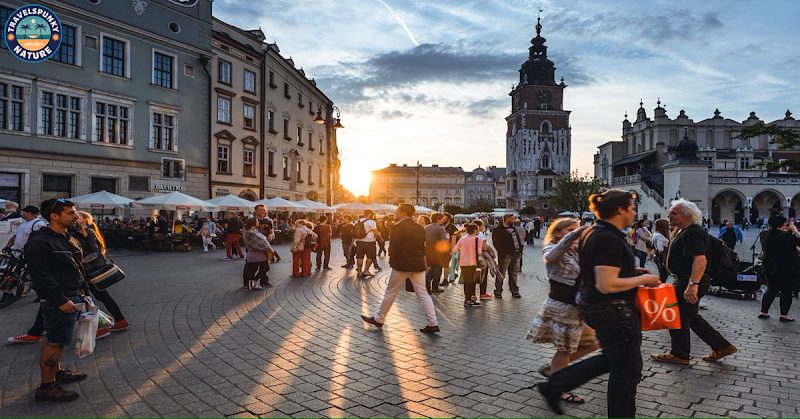
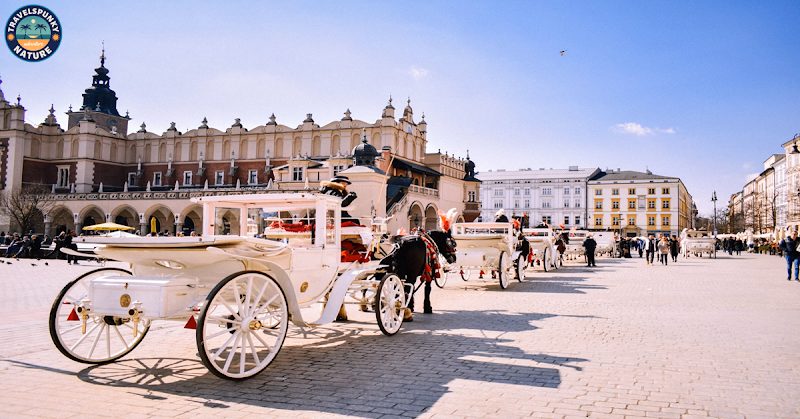
Kraków was the royal capital of Poland for centuries, and its Old Town joined the very first UNESCO World Heritage list in 1978. The Main Market Square, laid out in 1257 at about 200 m a side, is the largest medieval town square in Europe. The Cloth Hall trades in the middle of it, a trumpeter plays the hejnał call from St Mary’s Basilica every hour, and Wawel Castle and Cathedral crown the hill at the square’s southern end. The old Jewish quarter of Kazimierz adds a second, quieter centre.
How to reach it: Kraków Główny station stands at the edge of the Old Town, and the airport train reaches the same station in about 20 minutes. Fast trains from Warsaw take about 2 hours 25 minutes.
Best months: April to June and September to October suit the city best. In December the Christmas market fills the main square.
Good to know: The two classic day trips are the Wieliczka Salt Mine, about 15 km away, and the Auschwitz-Birkenau Memorial, about 70 km west. Entry to the memorial is free, but every visitor needs a booked entry pass, and most people join a guided tour.
The honest catch: The Old Town is the busiest visitor stage in Poland, and weekend nights draw stag parties. Come midweek, or base yourself in Kazimierz for a calmer Kraków.
3. Wrocław
Wrocław has climbed past Łódź to become Poland’s third city, and it is built on water. The Oder splits around 12 islands linked by more than 100 bridges. The Market Square holds one of the largest Gothic town halls in Poland, and Ostrów Tumski, the cathedral island, is the oldest part of the city. The Centennial Hall, a concrete pioneer of 1913, is a UNESCO site. What visitors remember most, though, are the small bronze dwarfs hidden on pavements all over the centre.
How to reach it: Wrocław Główny, the main station, is a short walk south of the Old Town. The fastest trains from Warsaw take about 3 hours 30 minutes, and the airport bus reaches the centre in about half an hour.
Best months: May to September for the river islands and outdoor cafés. In December the Christmas market takes over the Market Square.
Good to know: The dwarfs began in 2005 as a nod to the Orange Alternative, the protest movement that used absurdity against the communist regime. There are now hundreds of them, the tourist office sells a map, and hunting them is the city’s favourite walk.
The honest catch: Wrocław was the German city of Breslau until 1945 and was badly damaged in the siege of that year, so much of the charm is rebuilt. The dwarf total also changes constantly, and no two guides agree on it.
4. Łódź
Łódź grew rich almost overnight in the 19th century on textiles, and the mills still shape the city. Piotrkowska Street runs straight through the centre for about 4.2 km, one of the longest commercial streets in Europe, lined with the palaces of the factory owners. At its northern end, Manufaktura fills a huge old mill complex with shops, museums and open squares. The Księży Młyn estate preserves a whole factory district of workers’ housing, mill buildings and the mill owner’s palace, and the city’s film school trained some of Poland’s greatest directors.
How to reach it: Trains from Warsaw reach the rebuilt Łódź Fabryczna station in under an hour and a half, which makes Łódź the easiest big city day trip from the capital.
Best months: May to September, when the courtyards and beer gardens off Piotrkowska are in full use.
Good to know: Manufaktura covers 27 hectares of the Poznański mill complex and opened in 2006. The film school’s graduates include Roman Polański and Andrzej Wajda, and UNESCO named Łódź a City of Film in 2017. The Jewish cemetery in the north of the city is one of the largest in Europe.
The honest catch: Łódź is gritty, and its sights string out along one very long street. It rewards travellers who like industrial history more than postcard squares.
5. Poznań
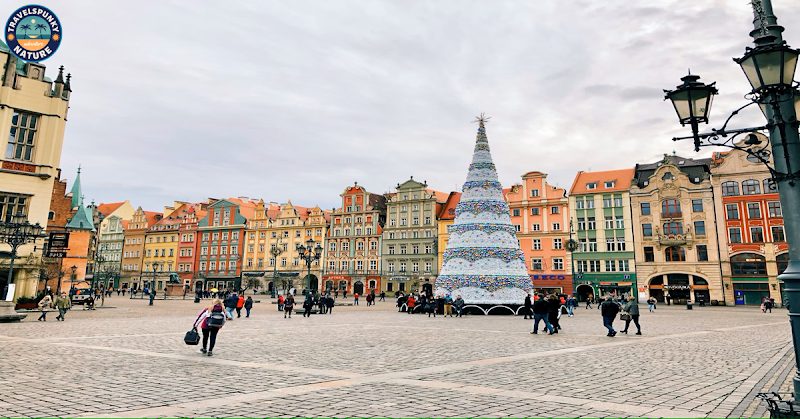
Poznań is one of the oldest cities in Poland, and the Polish state itself began here. The cathedral stands on Ostrów Tumski, the river island where the first rulers of Poland are said to be buried. Across the river, the Old Market Square is ringed with colourful merchant houses and watched over by a Renaissance town hall. The Stary Browar centre mixes shopping with art inside a 19th century brewery, and the city’s trade fairs keep its hotels and restaurants sharp all year.
How to reach it: Poznań Główny is a short tram ride from the Old Town. The city sits on the Warsaw to Berlin rail line, about 2 hours 30 minutes from Warsaw and about 3 hours from Berlin.
Best months: May to June and September. On 11 November the city celebrates St Martin’s Day, and the famous croissants appear in every bakery.
Good to know: Two mechanical goats butt heads above the town hall clock at noon each day, and a crowd gathers below to watch. The St Martin’s croissant, filled with white poppy seed, has protected status and its own small museum by the square.
The honest catch: Poznań is a business and trade fair city first, so it can feel quiet on a Sunday. There is no single world famous sight, and the pleasure lies in the square and the slow evenings.
6. Gdańsk
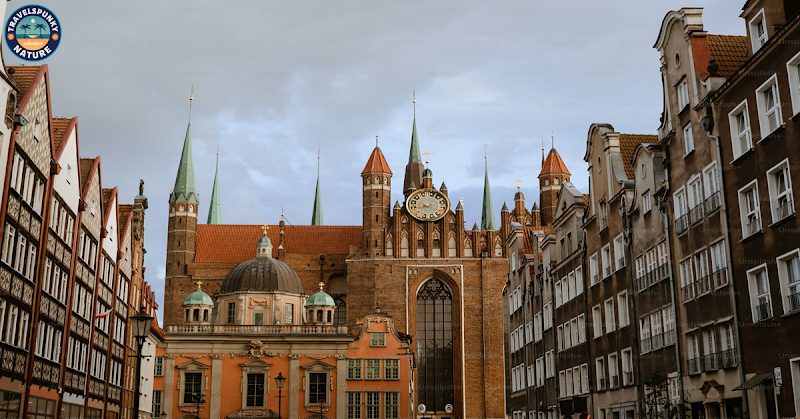
Gdańsk is Poland’s great Baltic port, a Hanseatic trading city rebuilt street by street after its destruction in 1945. The Main Town packs the Long Market, the Neptune Fountain and the Artus Court into a few golden streets. St Mary’s Church, one of the largest brick churches in the world, towers over all of it, and Mariacka Street sells the city’s amber. Two chapters of European history start here. The first shots of the Second World War fell at Westerplatte on 1 September 1939, and the Solidarity movement was born at the shipyard in 1980.
How to reach it: Gdańsk Główny stands at the top of the Main Town. Lech Wałęsa Airport has its own rail station, and the fastest trains from Warsaw take about 2 hours 30 minutes.
Best months: May to September for the coast. July and August are the warmest months and the busiest.
Good to know: Gdańsk forms the Tricity with Sopot and Gdynia, and the SKM suburban railway links all three through the day. Sopot and its wooden pier, at 511.5 m the longest in Europe, are about 20 minutes away by train.
The honest catch: The Main Town is a post-war rebuild, so its merchant houses are younger than they look. Baltic weather can also turn a planned beach day cold in any month of the year.
7. Szczecin
Szczecin is the big port of the north west, spread along the Oder close to the German border. Its grandest set piece is the Chrobry Embankment, a long terrace above the river built in the early 1900s, with the National Museum and the voivodeship offices behind it. The Pomeranian Dukes’ Castle watches from its hill, the old town below it is small and partly rebuilt, and wide boulevards and parks give the city a green, spacious feel that the other cities on this list do not have.
How to reach it: Szczecin Główny is the main station. Berlin is about 140 km away, and trains between the two cities take roughly two to three hours depending on the service, so the two pair well on one trip.
Best months: May to September, when the river terraces, the lakes and the sailing season come into their own.
Good to know: The white Philharmonic hall, opened in 2014, won the European Union Prize for Contemporary Architecture in 2015, and its ice-like shape divides opinion in the city. The underground routes under the station area tell the story of the wartime shelters.
The honest catch: Szczecin was German Stettin until 1945 and sits apart from Poland’s other big cities. It takes effort to reach, and it feels calmer and less visited than its population suggests.
8. Lublin
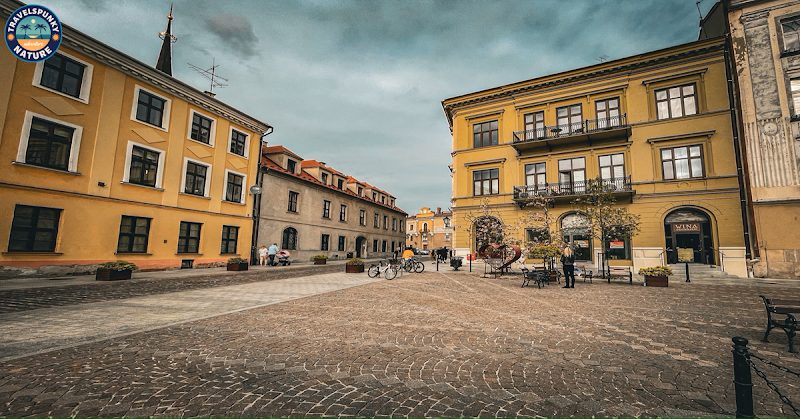
Lublin is the largest city of eastern Poland and the biggest east of the Vistula. Its Old Town climbs a hill of cobbled lanes, merchant houses and churches to Lublin Castle. Inside the castle, the Chapel of the Holy Trinity holds frescoes painted in a Byzantine style for a Catholic chapel in the 15th century. Lublin was a meeting point of Polish, Jewish and Ruthenian cultures for centuries, and its large student population keeps the old streets lively. The Majdanek memorial stands at the city’s south eastern edge.
How to reach it: Trains from Warsaw to Lublin Główny take about two hours. The Old Town is a short bus or taxi ride from the station.
Best months: May to June and September. In June the Night of Culture fills the Old Town with free events for one long evening.
Good to know: The Majdanek State Museum stands on the site of the German camp that operated here from 1941 to 1944, and entry is free. Its barracks, gas chambers and crematorium survive in open ground, preserved as they were left.
The honest catch: Majdanek sits in full view of modern housing estates, which makes the visit harder rather than easier. Give it half a day, and do not squeeze it between lighter sights.
9. Bydgoszcz
Bydgoszcz is a river city that most foreign visitors skip, and that is part of its appeal. The Brda river runs through the centre, and Mill Island, a green island of old mills and granaries, is its front room. The red brick granaries and the modern Opera Nova face each other across the water. Bydgoszcz also has a serious music scene built around its philharmonic and its music academy, and a small museum devoted to soap and the history of dirt that is better than it sounds.
How to reach it: Bydgoszcz Główna is about 20 minutes on foot from Mill Island. Trains link the city with Gdańsk and Poznań in about an hour and a half each, and with Toruń in under an hour.
Best months: May to September, when the riverfront paths and the Mill Island lawns fill up.
Good to know: The Bydgoszcz Canal, dug in the 1770s, joins the Brda to the Noteć river and so links the Vistula and Oder river systems. That link made the city an inland port, and it is the fact the old version of this guide garbled beyond recognition.
The honest catch: Bydgoszcz is a working city with few international visitors, so English runs thinner and some sights keep short hours. It pairs best with Toruń rather than standing alone.
10. Białystok
Białystok is the largest city of the north east and the capital of the Podlasie region. Its showpiece is the Branicki Palace, a grand 18th century residence with formal gardens that is often called the Versailles of Podlasie. The Sybir Memorial Museum, opened in 2021, tells the story of Poles deported to Siberia and the east. For most travellers, though, the city matters as the gateway to Białowieża Forest, the last large fragment of the primeval forest that once covered the European plain.
How to reach it: Intercity trains from Warsaw reach Białystok in about two hours, and the station is a short walk from the market square. Buses and tours cover the 62 km south east to Białowieża village.
Best months: May to September for the forest, when the bison show reserve and the trails are at their best. Winter trips are quiet, but the daylight is short.
Good to know: Ludwik Zamenhof, who created the Esperanto language, was born in Białystok in 1859, and the city’s mix of languages and faiths shaped the idea. The forest holds more than 800 European bison, and its strict reserve can only be entered with a licensed guide.
The honest catch: Białystok itself fills half a day. The forest is the main event, and it deserves its own night in Białowieża village rather than a rushed day return.
11. Katowice
Katowice ranks only 11th by city population, yet it sits at the heart of the Metropolis GZM, 41 towns and cities holding about 2.3 million people. That is why some rankings place it second in Poland. The city grew on coal and steel, and it has turned that past into its culture. The Silesian Museum stands inside a former coal mine, the Spodek arena still looks like a landed flying saucer, the Nikiszowiec estate preserves a whole district built for miners’ families, and the NOSPR concert hall is among the finest in Europe.
How to reach it: Katowice station sits in the city centre under a shopping gallery, and fast trains from Warsaw take about 2 hours 30 minutes. Katowice Airport at Pyrzowice is under an hour away by bus.
Best months: April to October. Summer brings the OFF Festival and the Tauron Nowa Muzyka festival for music travellers.
Good to know: Trams and buses across the whole metropolis run under one transport authority, so a single ticket logic covers trips into the neighbouring towns. The Culture Zone around the Silesian Museum and the concert hall stands on the old Katowice mine site.
The honest catch: There is no medieval old town here and no market square of the Kraków kind. Katowice rewards an interest in industry, design and music rather than a sightseeing checklist.
12. Gdynia
Gdynia is the youngest city on this list. Poland built it from a fishing village in the 1920s and 1930s, when the country needed a port of its own on the Baltic. The centre is a grid of white modernist buildings unlike anywhere else in Poland. The harbour is still a working one, and the Southern Pier holds two museum ships, the wartime destroyer ORP Błyskawica and the tall ship Dar Pomorza. The Emigration Museum, in the old Marine Station, tells the story of the millions who left Poland from this port.
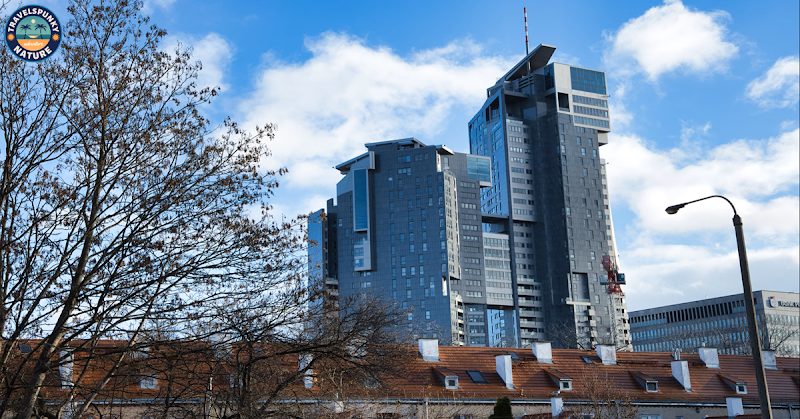
How to reach it: Gdynia Główna is on the SKM line, about half an hour from Gdańsk Główny. The fastest trains from Warsaw end their run here, passing through Gdańsk.
Best months: June to August for swimming and harbour life. May and September are quieter and still mild.
Good to know: With Gdańsk and Sopot, Gdynia forms the Tricity, and one suburban railway ticket covers hops between all three. The viewpoint on Kamienna Góra hill, reached by a short free funicular from Plac Grunwaldzki, gives the best view over the port.
The honest catch: Gdynia is plain beside Gdańsk for classic sightseeing. Come for the sea, the ships and the modernist streets, not for old town charm.
13. Toruń
Toruń takes the last place in this guide on merit. It is 15th in Poland by population, but its medieval town survived the Second World War almost untouched, and UNESCO listed it in 1997. The Gothic Old Town Hall, the cathedral and the leaning tower all stand where the Teutonic Knights left them. Nicolaus Copernicus was born here in 1473, and his birthplace is now a museum. The city has also baked its spiced gingerbread, pierniki, since the 14th century, and visitors can bake their own in its gingerbread museums.
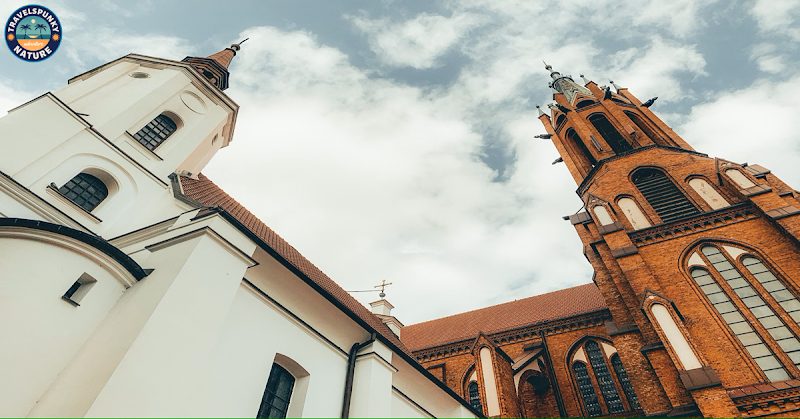
How to reach it: Toruń Główny stands across the Vistula from the Old Town, a walk over the bridge or a short bus ride. Trains from Warsaw take about two and a half hours, and Bydgoszcz is under an hour away.
Best months: April to October. The gingerbread workshops run all year, which makes Toruń a fair winter stop too.
Good to know: Toruń takes this place ahead of two larger cities, Częstochowa and Rzeszów, because travellers simply get more from it. The Old Town Hall tower gives the best view over the rooftops and the river.
The honest catch: Toruń is small, and one full day covers the sights. It works best as a stop between Warsaw and Gdańsk, or paired with Bydgoszcz.
Best time to visit Poland
Late spring and early autumn suit most of these cities. May, June and September bring warm days, long evenings and thinner crowds than high summer. July and August are the warmest months, the Baltic coast fills up, and the big cities empty a little as residents leave on holiday.
December is market season, and Kraków, Wrocław, Gdańsk, Poznań and Warsaw all fill their main squares with Christmas stalls. January and February are cold, often below freezing, with short days and the cheapest hotel rates of the year. Poland’s cities work in every season, but the shoulder months give the best balance of weather, price and space.
How to reach Poland and getting around
Most visitors fly into Warsaw Chopin Airport, the country’s largest. Kraków, Gdańsk, Katowice, Wrocław and Poznań all take international flights as well, and Warsaw’s second airport, Modlin, handles many budget routes.
By train: PKP Intercity runs the long distance network, and its Pendolino trains, sold as EIP, are the fastest at up to 200 km/h. Warsaw to Kraków takes about 2 hours 25 minutes and Warsaw to Gdańsk about 2 hours 30 minutes. Tickets go on sale 30 days ahead on the Intercity site, and booking early cuts the price a lot.
In the cities: Only Warsaw has a metro, with two lines. Every other city here runs on trams and buses, and most sell tickets through apps and machines with an English option. The Tricity has its own suburban railway, the SKM.
By road: Motorways link Warsaw with Poznań and Berlin, with Kraków and Katowice, and with Gdańsk. Long distance buses cover the gaps the trains miss. Driving between cities is easy, but parking in the old town centres is not.
FAQs
1. What is the largest city in Poland?
Warsaw, with about 1.87 million people in the official Statistics Poland figures for the end of 2025. It is more than twice the size of Kraków, the second city.
2. Which Polish cities should a first time visitor choose?
Warsaw, Kraków and Gdańsk cover the classic first trip, the capital, the royal old town and the Baltic port. Add Wrocław or Toruń if you have a second week.
3. How many days does each city need?
Give Warsaw two to three days and Kraków three, including a day trip. Gdańsk needs two days. Most other cities on this list fill one full day well.
4. Is it easy to travel between Polish cities by train?
Yes. PKP Intercity links every city here, the Pendolino trains are fast and comfortable, and booking ahead on the Intercity site brings the fare down. Tickets usually go on sale 30 days before travel.
5. Which large cities did this list leave out?
Częstochowa, 13th by population, draws pilgrims to the Jasna Góra monastery and its Black Madonna icon, and Rzeszów, 14th, is the growing hub of the south east. Famous smaller places such as Zakopane and Sopot are not large cities, whatever older lists claim.
6. What is the best month to visit Poland’s cities?
June and September are the strongest all round choices. The weather is warm, the days are long, and the summer crowds and prices have either not peaked yet or just fallen away.
Researched and verified: November 2026. This guide is research-based, compiled from official statistics, official visitor information, maps and traveller reports. Populations, prices and train times change, so confirm them locally before travelling.