Islamabad, the planned capital under the hills

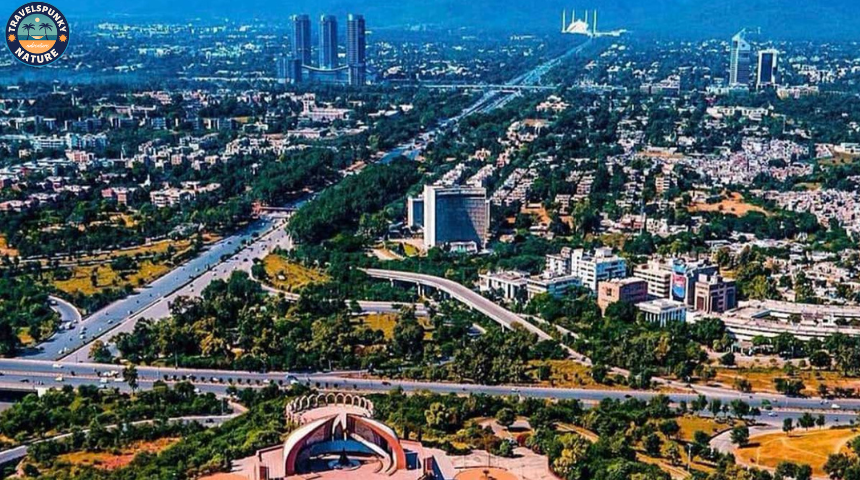
Islamabad is a purpose-built capital, laid out in the 1960s on a grid of wide avenues and numbered sectors at the foot of the Margalla Hills. The name means City of Islam, and the city took over as Pakistan’s capital from Karachi, helped by its cooler, greener setting next to Rawalpindi, the older garrison city that still works as its twin. The Capital Territory covers about 906 square kilometres, and a large share of it is green, because Margalla Hills National Park wraps along the northern edge of the city.
Two honest corrections before the list. Older versions of this post sent readers to dinner at Monal, the famous terrace restaurant on the Pir Sohawa ridge, and that restaurant no longer exists. It closed in September 2024 under a Supreme Court order against restaurants inside the national park, and the building was demolished, and it has not reopened despite a court ruling in 2026. The second correction is about distances. Islamabad’s sights are spread across a big, low-rise city, so sightseeing here means short taxi rides between stops rather than one walkable old town.
At a glance
| No. | Place | Where | Cost | Known for |
|---|---|---|---|---|
| 1 | Faisal Mosque | Sector E-7, foot of the Margalla Hills | Free | The tent-shaped national mosque |
| 2 | Margalla Hills trails | Trailheads on Margalla Road, below the hills | Free | Trail 3, the classic city hike |
| 3 | Daman-e-Koh | Pir Sohawa Road, Margalla Hills | Free | The classic viewpoint over the city |
| 4 | Pir Sohawa | Top of the Margalla road | Free | The highest road views, Monal now closed |
| 5 | Pakistan Monument | Shakarparian Hills | Free grounds, museum ticketed | The flower-petal national monument |
| 6 | Lok Virsa Museum | Garden Avenue, Shakarparian | Paid, small local fee, higher foreign fee | Pakistan’s folk heritage museum |
| 7 | Saidpur Village | Margalla foothills, below Daman-e-Koh | Free | A 500-year-old heritage village |
| 8 | Rawal Lake and Lake View Park | Murree Road, near Malpur | Free or a small fee, activities extra | Boating and the big family park |
1. Faisal Mosque
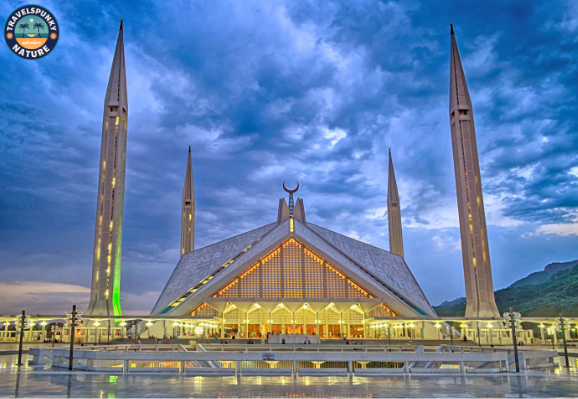
Faisal Mosque is the symbol of Islamabad, a vast white tent of folded concrete set against the green wall of the Margalla Hills at the northern end of Faisal Avenue. It was designed by the Turkish architect Vedat Dalokay, funded by King Faisal of Saudi Arabia, and built between 1976 and 1986. There is no dome. Four tall, slender minarets stand at the corners, and the sloping shell of the main hall holds about 10,000 worshippers, with the porticoes, courtyard and grounds taking the total capacity to roughly 300,000.
The size claims need care. On completion in 1986 it was the largest mosque in the world, and it held that position until 1993. It is still the largest mosque in Pakistan, and by capacity it now sits among the largest few in the world rather than at the top. The interior is calm and largely unadorned.
Cost: Free. It is a working mosque rather than a ticketed attraction.
Worth knowing: Visitors are welcome outside prayer times, and Friday midday is busiest. Dress modestly, women need to cover their hair before entering the hall, and shoes come off at the hall entrance.
2. Hike the Margalla Hills trails
The Margalla Hills are a forested limestone ridge inside a national park of about 17,000 hectares, and their marked trails start a short drive from the city centre, something very few capitals can offer. A network of numbered, marked trails climbs the ridge, and Trail 3 is the one most visitors need to know. It starts at a car park on Margalla Road, opposite sector F-6, and climbs steeply through pine forest for about 5 kilometres, gaining roughly 600 metres, until it meets the Pir Sohawa road near the top. Most walkers take about one and a half to two and a half hours to go up, and the reward is a panorama of the whole city grid, Faisal Mosque below and Rawal Lake in the distance.
Trail 5 is the gentler alternative, a quieter path that follows a stream valley towards the Shahdara side. Monkeys live throughout the hills and are part of the walk.
Cost: Free, the trails are open public paths.
Worth knowing: Start early, before the heat builds, and carry all the water needed, because there are no reliable shops on Trail 3 itself. Wear shoes with grip, keep food out of sight around monkeys, and skip the trails straight after heavy monsoon rain.
3. Take in the city from Daman-e-Koh

Daman-e-Koh is the viewpoint that appears in almost every photograph of Islamabad. It sits in a terraced garden on the lower slopes of the Margalla Hills, partway up the Pir Sohawa road, and from its railings the whole planned city spreads out below, the avenue grid, the white spike of Faisal Mosque, and Rawal Lake off to the east. The garden has shaded sitting areas and small refreshment stalls.
How to reach it: By car or ride-hailing taxi up the winding Pir Sohawa road, a short drive from the F sectors, with parking at the viewpoint.
Cost: Free.
Worth knowing: The resident monkeys are bold and treat unguarded snacks as an invitation, so keep food in a closed bag. Sunset is the popular hour and the car park fills at weekends, so a weekday visit or an early arrival makes life easier.
4. Drive up to Pir Sohawa
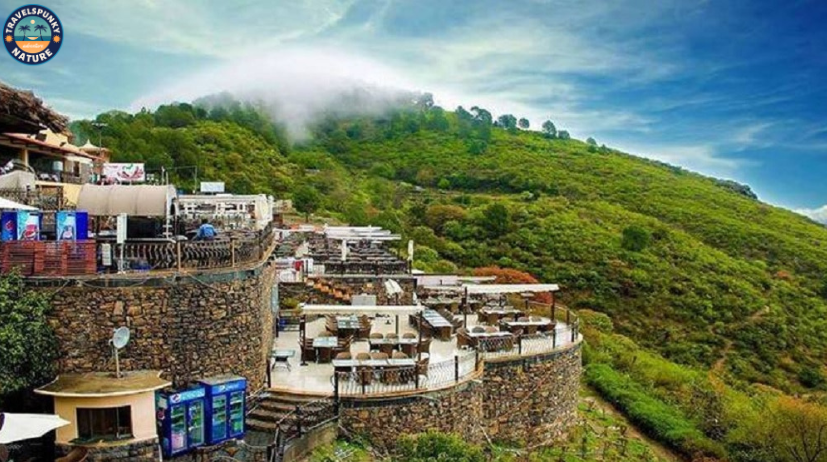
Pir Sohawa is where the Margalla road tops out, a ridge-top stretch of viewpoints above Daman-e-Koh with the widest views on this side of the hills. On one side the whole of Islamabad lies below, and on the other the road drops away towards Haripur and the hills of Khyber Pakhtunkhwa. The bends and pull-offs along the top are worth the trip on their own, especially in the clear air after rain.
This entry replaces the Monal restaurant section in the old version of this post, and the change needs explaining. Monal’s terrace here was for years the most famous dinner view in Pakistan, and older guides still recommend it. In June 2024 the Supreme Court ordered the restaurants inside the national park to close, the wildlife board took over the sites that September, and Monal and its neighbours were demolished. A 2026 court ruling set that judgment aside, but a demolished building cannot reopen on a judgment, and as of late 2026 there is no Monal at Pir Sohawa and no announced reopening. Dinner with that famous view is, for now, a memory.
How to reach it: Continue up the same road past Daman-e-Koh, roughly half an hour from the city in normal traffic.
Cost: Free, apart from the taxi.
5. Pakistan Monument
The Pakistan Monument, the national monument of Pakistan, stands on the western Shakarparian hills, south of the city centre. Seen from above it is a blooming flower. Four large granite petals represent the four provinces, and three smaller petals represent the three territories, curving over a central platform engraved with a star and crescent. Designed by the architect Arif Masoud and inaugurated on 23 March 2007, its petals carry relief work showing landmarks from across the country, and the platform is a good viewpoint in its own right.
Next to the monument, the Pakistan Monument Museum tells the story of the independence movement and the country’s early years, with a waxworks section showing key scenes and figures. It is run by Lok Virsa, and it pairs naturally with the heritage museum a few minutes away.
Cost: The monument grounds are free. The museum charges a ticket, recently listed at about Rs 150 to 200 for local adults, students less, children under 7 free, and foreign visitors around Rs 2,000. Rates change, so confirm at the gate. The museum keeps the same hours as Lok Virsa below.
6. Lok Virsa Museum
Lok Virsa is Pakistan’s national museum of folk and traditional heritage, and for many visitors it is the best museum in the country. Its full name is the Pakistan National Museum of Ethnology, and its galleries walk through the living cultures of Pakistan’s regions, embroidered and block-printed textiles, carved wood and pottery, jewellery, musical instruments, and recreated scenes of village and tribal life. The museum sits on Garden Avenue in Shakarparian, and its complex also hosts craft bazaars and the Lok Mela, a folk festival of crafts, food and music usually held in the autumn.
Cost: Tickets are inexpensive for Pakistani visitors, recently listed between about Rs 100 and Rs 250 for local adults, students less, children under 7 free, and foreign visitors paying more, recently around Rs 1,000 to 2,000. Rates have moved several times in recent years, so confirm at the gate.
Hours: Generally 10 in the morning to 8 in the evening, with a Friday prayer break around 12.30 to 2 in the afternoon on older listings. The museum historically closed on Mondays, and the 2026 seven-day opening announcement may have changed that, so check before a Monday or Friday visit.
7. Saidpur Village

Saidpur is one of the oldest villages in the Islamabad area, founded in 1530 and tucked into a ravine in the Margalla foothills below the Daman-e-Koh road. In the 1580s the Mughal commander Raja Man Singh developed it as a Hindu pilgrimage place and built ponds named after figures from the Ramayana, Rama, Sita, Lakshman and Hanuman. Local tradition holds that Rama stayed at the site briefly during his 14 years of exile, and the small 16th century Ram Mandir still stands in the village centre, alongside a Sikh gurdwara and a Sufi tomb. The temple has not been used for worship since 1947, and it spent the decades from 1960 to 2006 as a girls’ school.
In 2006 the Capital Development Authority remodelled Saidpur as an arts and crafts village, restoring the old buildings, and its lanes now hold cafes, galleries and craft shops between the historic buildings. It is an easy half hour of wandering, and it pairs well with Daman-e-Koh, just off the same road.
Cost: Entry to the village is free, visitors pay only for food, parking and shopping.
Worth knowing: The village is a living neighbourhood as well as a heritage site, so keep to the lanes and courtyards that are clearly open to visitors.
8. Rawal Lake and Lake View Park

Rawal Lake is the reservoir behind Rawal Dam, completed in 1962 across the Korang River, and it covers about 8.8 square kilometres on the eastern side of the city. The lake supplies drinking water to Rawalpindi and Islamabad, and its wooded shore is the city’s favourite picnic and sunset ground. The visitor facilities sit at Lake View Park, the large CDA park on Murree Road near Malpur village, with lawns and terraced viewpoints over the water, a bird aviary, play areas and rides, food stalls and the boating jetties.
Boating is the main activity, with paddle boats and motorboats for hire by the round, and the calm end of the day is the best time for it. One correction to the old post matters here. The lake is a working drinking water reservoir, so swimming is not a visitor activity, and the cliff jumping and scuba diving the old post listed do not exist.
Cost: Entry to the lake shore is free, and Lake View Park charges either nothing or a small fee depending on current CDA policy, recently listed around Rs 20 to 50 per person. Boating and rides are paid separately, with short boat rounds commonly listed from about Rs 100 to 200 per person and family boats costing more. Confirm prices at the counters.
Hours: Daily, about 10 in the morning to 10 in the evening, and boating finishes around sunset.
Best time to visit
Islamabad has a real winter, a fierce early summer and a monsoon, so the month matters.
For the best all-round weather: Mid-October to early December, and late February to mid-April. These windows bring mild days, roughly the high teens to the high twenties Celsius, low humidity and clear views from the hills. The autumn window also usually catches the Lok Mela folk festival at Lok Virsa.
For winter: December to February is cold, with daytime highs in the mid-teens, nights near freezing and spells of fog, with the clearest hill views of the year when the fog lifts.
Months to avoid if possible: May and June bring the peak heat, with highs regularly around 38 to 42 degrees Celsius, and July and August bring the monsoon, the wettest months of the year, when trails turn slippery.
How to reach Islamabad
Islamabad International Airport (ISB) opened in May 2018 and sits about 25 kilometres south-west of the city centre, near the motorway. The drive into the city usually takes about 40 minutes to an hour depending on traffic, by taxi, by ride-hailing apps such as inDrive and Yango, or by hotel pickup. A Metro Bus branch has linked the airport with the city network since 2022 and is the cheapest ride in, although a taxi is simpler with luggage.
Inside Pakistan, most visitors arrive by road or air. The M-2 motorway runs from Lahore in roughly four hours of driving, and domestic flights connect the capital with Karachi, Lahore, Skardu and Gilgit for the northern mountains. Long-distance trains use Rawalpindi station, about half an hour from central Islamabad. Once in the city, ride-hailing is the practical way to move between sights, because the sectors are spread out and the Metro Bus, while good along its corridors, does not pass most trailheads and viewpoints.
Where to stay
Blue Area: The business spine of the city along Jinnah Avenue, with the widest choice of mid-range and upscale hotels and easy taxi access to everything.
F-6 and F-7: The leafy sectors under the hills, built around the Jinnah Super and Kohsar markets, with guesthouses, cafes and the Trail 3 trailhead almost on the doorstep. This is the base we would pick for a sightseeing trip.
The top end: The city’s luxury hotels, including the Serena and the Marriott, sit near the Diplomatic Enclave and the Margalla foothills, with prices to match the setting.
Good to know before going
- Most of Islamabad’s headline sights are free. Faisal Mosque, the trails, both viewpoints, Saidpur Village and the Monument grounds charge nothing, and the two museums are the only ticketed stops on this list.
- Do not plan around Monal. Older guides still recommend its terrace at Pir Sohawa, but it closed in September 2024 and was demolished. Pir Sohawa is still worth the drive for the views, just not for dinner.
- Monkeys at Daman-e-Koh and on the trails are confident around food. Keep snacks in a closed bag and do not feed them.
- The sights sit in clusters. Group the Margalla stops, Faisal Mosque, the trails, Daman-e-Koh and Pir Sohawa, into one day, and the Shakarparian pair, Pakistan Monument and Lok Virsa, into another half day.
- Carry water on the trails. Islamabad’s summer heat is serious, and even in spring the Trail 3 climb is a proper workout rather than a stroll.
- Expect routine security checks at major sights, and carry photo identification to make them quicker.
Frequently asked questions
1. How many days do visitors need in Islamabad?
Two full days cover this list comfortably, one for the Margalla side, the mosque, the trails and the viewpoints, and one for Shakarparian’s monument and museums, with Saidpur or the lake fitted in. A third day allows a day trip to Murree, or a slower second hike.
2. What is the best month to visit Islamabad?
October and November are the safest single answer, with mild days, clear views and the Lok Mela folk festival usually falling in the autumn. March and April run them close. Avoid May and June for heat and July and August for the monsoon.
3. Is Islamabad expensive to sightsee?
No. Almost every headline sight is free, the two museums charge small fees, and the real costs are taxis, food and the hotel.
4. Can non-Muslims visit Faisal Mosque?
Yes. Visitors of all backgrounds are welcome outside prayer times. Dress modestly, women should cover their hair before entering the main hall, and shoes are left at the entrance to the hall. Friday midday is best avoided, as the mosque fills for the main weekly prayers.
5. Is the Monal restaurant open?
No. Monal closed in September 2024 after a Supreme Court order against restaurants inside Margalla Hills National Park, and the building was demolished. A 2026 court ruling set the old judgment aside, but the site has not been rebuilt and the restaurant has not reopened.
6. How do visitors get around Islamabad?
Ride-hailing apps, mainly inDrive and Yango, are the practical default, because the sights are far apart. The Metro Bus is cheap and reliable along its fixed corridors, but it does not serve the trailheads, the viewpoints or Shakarparian directly.
If your trip pairs the capital with Punjab, our guide to the best places to visit in Lahore covers the old city, the fort and the food street.
Last updated, November 2026. Researched and verified from official visitor information and current travel guides.