Rarotonga is the largest of the Cook Islands, a green volcanic island in the South Pacific, about 3,400 km northeast of New Zealand. One coast road circles the whole island in 32 km, a reef rings the shore, and almost everything worth seeing sits along that one road.
The island is small enough to feel easy and full enough to fill a week. You can snorkel over coral in the morning, cross the jungle interior on foot the next day, and finish the week with a church service, a night market and a cultural show. About 10,900 people live here, and Avarua, on the north coast, is the capital.
This guide lists the eleven experiences that matter most, with what each one costs, how it works and where it falls short. Prices are in New Zealand dollars. Tour prices change, so treat every figure as a guide and confirm it before you book.

At a glance
| No. | Experience | Where | Best for | Known for |
|---|---|---|---|---|
| 1 | Muri Lagoon and a lagoon cruise | Southeast coast | Swimming and a first boat trip | The widest lagoon on the island and its four motu |
| 2 | Titikaveka snorkelling | South coast | Snorkelling from the beach | Coral heads and giant clams at Tikioki Beach |
| 3 | Aroa Marine Reserve | Southwest coast | Easy, safe snorkelling | A ra’ui reserve with no fishing and no boats |
| 4 | Punanga Nui Market and the Muri Night Market | Avarua and Muri | Food and local life | The Saturday morning market and night food stalls |
| 5 | Avarua and the CICC Sunday service | North coast | Culture and an easy day | Coral stone church and famous hymn singing |
| 6 | The cross-island track and the Needle | The interior | Hiking | The walk from coast to coast under Te Rua Manga |
| 7 | Te Vara Nui over-water night show | Muri | A big cultural night out | The Legend of Tongaiti show over the water |
| 8 | Black Rock and the west coast sunsets | Northwest coast | Sunsets and a sacred site | Tuoro, the departure point of spirits |
| 9 | Highland Paradise | Arorangi hills | A smaller, personal island night | A 600-year-old village site and an umu feast |
| 10 | Raro Safari Tours and Wigmore’s Waterfall | The interior | Seeing the inland island | 4WD tracks, a marae and a waterfall swim |
| 11 | The Aitutaki day trip | Aitutaki, by air | One unforgettable day | A famous lagoon and One Foot Island |
1. Muri Lagoon and a lagoon cruise

Muri, on the southeast coast in the Ngatangiia district, holds the widest and shallowest lagoon on Rarotonga. Four small islets sit offshore. From north to south they are Motutapu, Oneroa, Koromiri and Taakoka. The lagoon is calm and sandy, and it is where most visitors swim, kayak and paddleboard.
The classic way to see it is a glass-bottom boat cruise. The boats stop for snorkelling over coral, then land on a motu for a barbecue lunch. Captain Tama’s Lagoon Cruizes has run since 1992 and leaves at 11 AM, Sunday to Friday, with a fresh fish barbecue on Motu Koromiri. Koka Lagoon Cruises leaves at 10 AM, Sunday to Friday, runs for about three and a half hours, and includes hotel transfers.
Cost: Captain Tama’s costs about NZ$115 per adult and about NZ$49 per child. Koka costs about NZ$79 per adult and about NZ$40 per child, and children under six go free. Confirm the current price before you book.
The honest downside: Muri is the busiest stretch of coast on the island, and at low tide parts of the lagoon are too shallow to swim. Plan your swims around the tide, and expect company on the water.
2. Titikaveka snorkelling

Titikaveka is a village on the south coast, and its beach at Tikioki, in front of the Fruits of Rarotonga cafe, is widely rated the best shore snorkelling on the island. Coral heads rise close to the beach, giant clams sit in the sand, and reef fish are everywhere. You simply walk in from the sand with a mask.
The beach itself is long, white and quiet, with far fewer people than Muri. There is no entry fee and no tour to book.
Cost: Free from the public beach. You only pay if you hire gear, so bring your own mask and snorkel if you have them.
The honest downside: The lagoon here is shallow at low tide, so mid to high tide is best. Keep well away from the reef passages, where currents run out to sea, and wear reef shoes, because the coral is sharp.
3. Aroa Marine Reserve
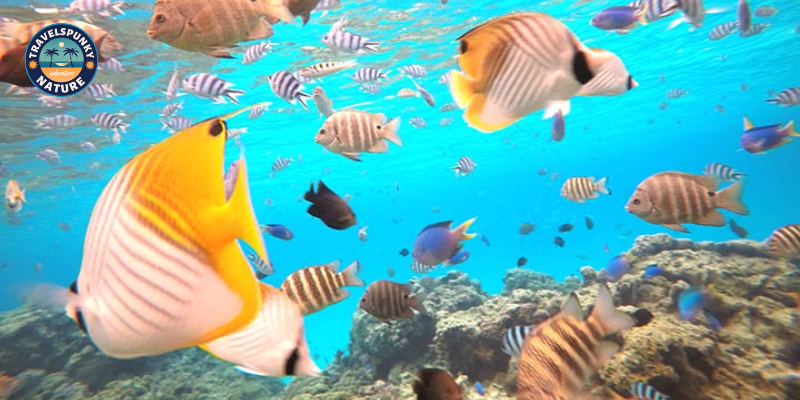
Aroa Beach, on the southwest coast, fronts the Aroa Lagoonarium Marine Sanctuary, one of the longest-established reserves on the island. The lagoon here is a ra’ui, a traditional protected area declared more than twenty years ago by the local community. Fishing, boating and jet skis are all banned inside it.
That protection is why the snorkelling is so good. The lagoon works as a fish breeding ground, and butterflyfish, parrotfish, angelfish and wrasses are common close to shore. The water stays deep enough to snorkel at most tides, which is not true of every Rarotonga lagoon. There is public access along the shore beside The Rarotongan Beach Resort.
Cost: Free. The reserve is open to everyone from the public beach access points.
The honest downside: Gear hire on this beach is aimed at resort guests, so bring your own snorkel gear. And take care where you put your feet, as stonefish are a rare possibility here.
4. Punanga Nui Market and the Muri Night Market
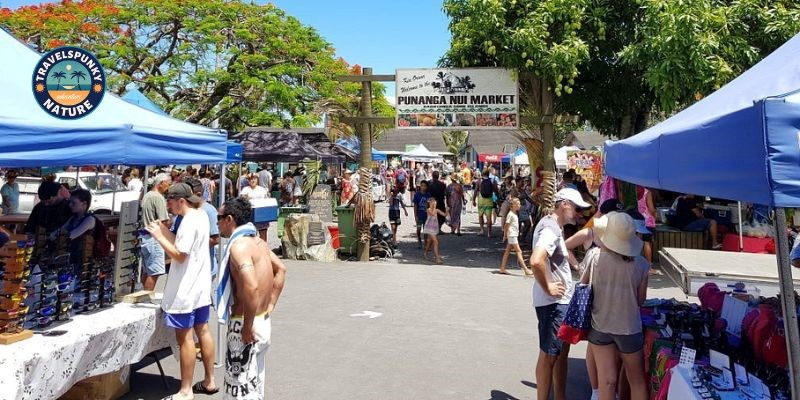
Punanga Nui Market stands on the waterfront at the west end of Avarua, near Avatiu Harbour. Saturday is the big day, when the full market runs from 7 AM to midday. Stalls sell tropical fruit, cooked food, black pearls, carvings, pareu cloth and flowers, and there is usually music and dancing. A much smaller market runs Monday to Friday, from 7 AM to 3 PM.
For food in the evening, the Muri Night Market runs on Tuesday, Wednesday, Thursday and Sunday from 5 PM. Local families run the stalls, and it is the easiest cheap dinner on the island.
Cost: Free to enter both markets. You pay only for what you eat and buy, and carrying some cash helps at the smaller stalls.
The honest downside: The Saturday market is finished by midday and the popular food stalls sell out early. Go in the morning, hungry, rather than near the end.
5. Avarua and the CICC Sunday service
Avarua is the capital, a small town along the north coast. Its main street holds the shops, cafes and banks, Cook’s Corner is the hub for the island buses, and the Saturday market sits at its western end. It is a working town rather than a resort, and it is worth a slow half day.
The highlight of the week here is the Sunday service at the Cook Islands Christian Church. The Avarua church is built of coral stone and dates back to 1853. The service starts at 10 AM, and most of it is in Cook Islands Maori. Visitors come for the singing, the imene tuki hymns, sung in rich harmony by the whole congregation. Visitors are genuinely welcome, and many mention being invited to morning tea in the hall afterwards.
Cost: Free. A small donation in the collection is a kind gesture.
Good to know: Dress modestly out of respect. Women wear a skirt or dress of a decent length, with shoulders covered.
The honest downside: Sunday is the island’s quiet day. Many shops shut and some tours do not run, so do your shopping and tours on other days and keep Sunday for church and the beach.
6. The cross-island track and the Needle
No road crosses Rarotonga, so the only way over the island is on foot. The cross-island track runs about 6 km, from Avatiu Valley on the north side, over the ridge, and down to Wigmore’s Waterfall, also called Papua Waterfall, on the south coast. Most walkers take three to four hours.
The track passes below Te Rua Manga, the Needle, a basalt spire 413 m high. You walk to its base and look up. Climbing the spire itself is not permitted. The walk is steep and muddy in places, with stream crossings, and the views from the ridge reach both coasts.
Cost: Free if you walk it on your own. A guided walk with Maunga Tours costs about NZ$80 per person, runs on Monday, Wednesday and Friday, takes about three to three and a half hours, and includes transfers and a light lunch. Its guides trained under Pa, of the famous Pa’s Cross Island Trek.
The honest downside: The track is easy to lose in places, and it ends on the opposite coast from where it starts, so arrange a pickup at the waterfall end or take the guided option. After heavy rain the streams can be hard to cross, so skip it in wet weather.
7. Te Vara Nui over-water night show
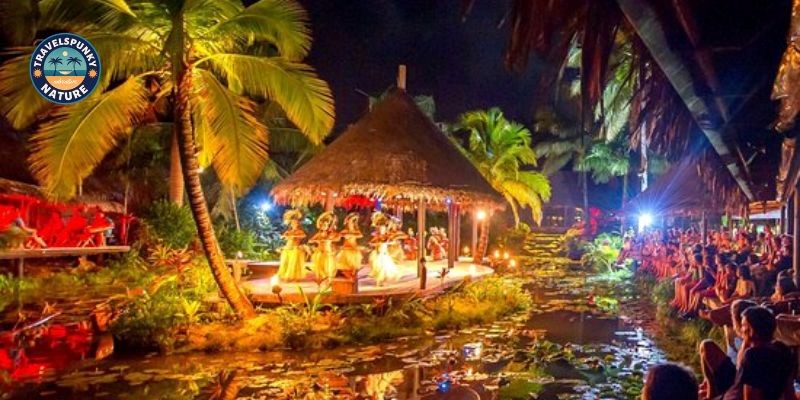
Te Vara Nui Village sits on the lagoon edge at Muri, and its night show is the biggest cultural production on the island. The show, The Legend of Tongaiti, is performed on stages over the water, telling an old voyaging legend. It runs on Tuesday, Thursday and Saturday evenings, from 5:30 PM to 9 PM from April to November, and from 6 PM to 9:30 PM from December to March.
By day, the village tour walks you through traditional life, with carving, weaving and medicine plants. Many visitors combine the tour and the show on the same day.
Cost: The night show with the buffet dinner costs about NZ$155 per adult. A combined ticket with the village tour costs about NZ$185, and the village tour on its own costs about NZ$55. Prices change, so confirm before you book.
The honest downside: This is a polished, large-scale show and it is priced like one. It is a splurge night, not a budget one, and in the main season it is wise to book ahead.
8. Black Rock and the west coast sunsets

Black Rock, called Tuoro in Cook Islands Maori, is a cluster of dark basalt rocks on the northwest coast, in Nikao, a few minutes from the airport. The rock is about 1.9 million years old and rises out of a shallow, clear lagoon. People swim and snorkel here, and the rocks are a natural seat at the end of the day.
Tuoro means the departure point of spirits. In Cook Islands Maori belief, the spirits of the dead gather here before beginning their journey to Avaiki, the ancestral homeland. An information board at the site tells the story. The coast faces northwest, so this is one of the best sunset spots on the island, and in whale season, from about July to October, whales are sometimes seen beyond the reef.
Cost: Free.
The honest downside: The beach here is rocky rather than soft sand, and this is a sacred place for local people. Treat it as a spot to sit quietly and watch the light, and take any rubbish away with you.
9. Highland Paradise
Highland Paradise stands in the hills above Arorangi, on the site of a 600-year-old village of High Chief Tinomana Ariki. The centre is run by the chief’s descendants, and the visit combines a walk through the reconstructed village with an evening of food and performance.
Its Ka’ara Island Night runs on Monday, Wednesday and Friday. Pickups start at about 5 PM and drop-offs end at about 9:45 PM, so the evening runs about four and a half hours. The night includes the village tour, a welcome cocktail, an umu feast cooked in an earth oven, and a cultural show, and transfers are included in the ticket.
Cost: About NZ$165 per adult, with transfers, the feast and the show included. Confirm the current price before you book.
The honest downside: It runs only three nights a week, so it needs planning. And if you only have room for one island night, choose on style. This one is smaller, personal and set in the hills, while Te Vara Nui is bigger and staged over the water.
10. Raro Safari Tours and Wigmore’s Waterfall

Raro Safari Tours runs half-day 4WD trips into the island’s interior, on back roads that the bus never sees. The tours run Monday to Friday, with an afternoon tour on Sunday, and last about three to three and a half hours. The morning tour includes a barbecue lunch, and hotel transfers are part of the deal.
Stops include Wigmore’s Waterfall, where there is time for a swim, and a marae, a traditional sacred meeting ground. From the inland tracks you also get the best ground-level views of the Needle, without hiking the cross-island track.
Cost: About NZ$100 per adult. Older brochures show lower prices, so confirm the current price before you book.
The honest downside: The waterfall depends on rain, and in a dry spell it can shrink to a trickle. The inland tracks are rough, so expect a bumpy ride.
11. The Aitutaki day trip
Aitutaki lies about 260 km north of Rarotonga, and its wide turquoise lagoon is often called one of the most beautiful in the world. Air Rarotonga’s day tour is the way to see it without moving islands. The flight takes about 45 to 50 minutes each way, leaving Rarotonga at 8 AM and returning at 5:30 PM, or 6 PM from April to September.
The price covers return flights, hotel transfers and a short tour of Aitutaki. The heart of the day is a six-hour Vaka Cruise on the lagoon, with a barbecue buffet lunch on board. The cruise stops at One Foot Island, where a tiny post office will stamp your passport.
Cost: About NZ$749 per adult and about NZ$375 per child aged two to eleven. It is one of the most expensive day trips in the South Pacific, so confirm the price and the date before you book.
The honest downside: It is a long day and a serious price. If your budget stretches to a night or two on Aitutaki instead, the lagoon rewards the slower stay. The Vaka Cruise on its own costs about NZ$299 for visitors already on the island.
Best time to visit Rarotonga
Rarotonga is warm all year, with two seasons. The dry season runs from about May to October. Days sit around 24 to 27 degrees, the air is less humid, and the southeast trade winds keep things fresh. The wet season runs from November to April. Days reach about 29 degrees, the rain falls in heavy bursts, and this is also the South Pacific cyclone season.
July and August are the busiest months, in step with the New Zealand and Australian school holidays, and flights and rooms fill early. Humpback whales pass the island from about July to October. The shoulder months of May, June, September and October give the best balance of dry weather, warm water and breathing room, and the cross-island track is at its best in the dry months.
How to reach Rarotonga and getting around
Most visitors arrive by air at Rarotonga International Airport, just west of Avarua. Air New Zealand and Jetstar fly direct from Auckland in about three hours and fifty minutes, and Jetstar flies direct from Sydney in about five hours and fifty minutes. Flights cross the International Date Line, so you land the day before the day you took off.
Entry rules: Your passport must be valid for at least six months beyond your departure date. New Zealand and Australian passport holders receive 90 days on arrival, and all other passport holders receive 31 days. You must be able to show an onward or return ticket and proof of accommodation.
The island bus: Cook’s Island Bus runs two routes around the one coast road. The clockwise bus leaves Cook’s Corner in Avarua on the hour, from 7 AM to 10 PM, Monday to Saturday. The anticlockwise bus leaves on the half hour, from 8:30 AM to 4:30 PM, Monday to Friday, and to 1:30 PM on Saturday. On Sunday only the clockwise bus runs, with reduced hours. A full loop takes about one hour, and you can flag the bus down anywhere.
Bus fares: A single ride costs NZ$5 for an adult and NZ$3 for a child. A return costs NZ$8, a full circle island ride costs NZ$10, an all-day pass costs NZ$20, and a ten-ride pass costs NZ$35 and can be shared. The buses are cash only.
Driving: Traffic drives on the left. A full overseas licence covers you for up to six months, but only for the vehicle classes printed on it, so a car licence does not cover a scooter. If your licence has no motorcycle class, you need a visitor licence from the police station in Avarua, with a theory test at NZ$10, a practical test at NZ$10 and the licence card at NZ$20, and it lasts about a month. Helmets are compulsory for the rider and the passenger. Some hire companies ask to see the local visitor licence whatever your home licence says, so check when you book.
By car or scooter: The coast road is 32 km and the full loop takes about 45 minutes by car. There is no road across the island. An older inland road, the Ara Metua, rings most of the island behind the coast road, and parts of it are paved with stone slabs laid centuries ago.
Where to stay
Muri: Best for the lagoon. Most resorts and holiday homes sit along this stretch, the lagoon cruises leave from here, and the night market is on your doorstep.
Titikaveka and the south coast: Best for quiet stays and snorkelling. This side is mostly self-catering houses and small properties, with the island’s best shore snorkelling in front of you.
Arorangi and the west coast: Best for sunsets and larger resorts. Aroa Beach and its marine reserve sit at the southern end of this coast, and Black Rock is at the northern end.
Avarua: Best for budget guesthouses and town convenience. You are handy for the market, the shops and the bus hub, and a short drive from the airport.
FAQs
1. How many days do you need in Rarotonga?
About five to seven days. That covers a cruise, a market morning, the cross-island track, an island night and one slow day with nothing planned. Add one full extra day if you take the Aitutaki day trip.
2. Do you need a special licence to ride a scooter in Rarotonga?
Yes, unless your home licence already includes a motorcycle class. A car licence alone does not cover a scooter. Without the class, you take a short theory and practical test at the police station in Avarua and buy a visitor licence, about NZ$40 in total. Helmets are compulsory for rider and passenger.
3. How do you get around Rarotonga without a car?
Use the island bus. Clockwise and anticlockwise buses circle the coast road all day, you can flag them down anywhere, and an all-day pass costs NZ$20. The buses are cash only, and the Sunday service is reduced, so plan Sundays around church and the beach.
4. Can you swim in the lagoon all year round?
Yes. The lagoon is warm in every month. Swim inside the reef, keep well away from the passages where currents run out to sea, and wear reef shoes, because coral and the occasional stonefish make bare feet a bad idea.
5. Is the Aitutaki day trip worth the money?
It is about NZ$749 per adult, so it is a real decision. For that you get the flights, transfers, an island tour and a six-hour lagoon cruise with lunch, ending with a passport stamp from One Foot Island. If you have one spare day and the budget, yes. A night or two on Aitutaki is better still.
6. What is the best month to visit Rarotonga?
September, if one month has to be named. The dry season is settled, the water is warming up, whales are still passing the reef, and the July and August school holiday crowds have gone home.
Researched and verified: November 2026. This guide is research-based, compiled from official visitor information, maps and traveller reports. Prices, hours and tour schedules change, so confirm them locally before travelling.