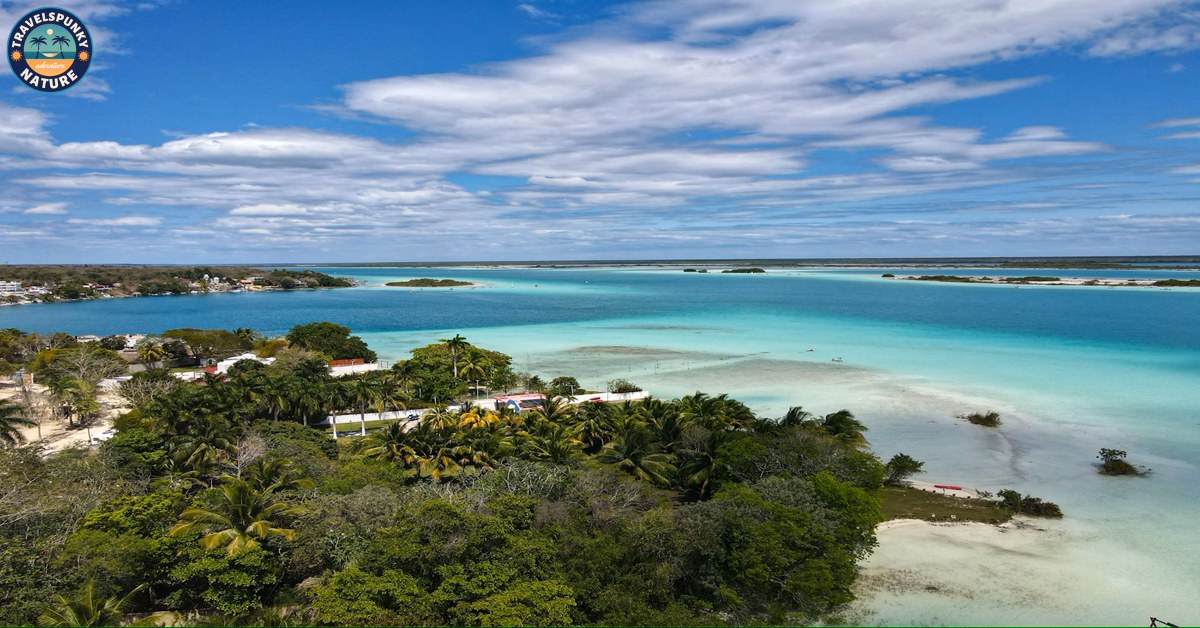
Bacalar is a small town in the south of Quintana Roo, about 40 km north of Chetumal and the Belize border, and it exists because of one thing. Beside it runs a freshwater lagoon about 42 km long and only 1 to 2 km wide, fed by cenotes and underground rivers. The water runs through shades of blue and green so clear that the lagoon is called the Laguna de los Siete Colores, the Lagoon of Seven Colors. Bacalar has been a Pueblo Mágico, one of Mexico’s listed magic towns, since 2006.
This guide lists the ten things that matter most on a first trip, with what each one costs, how to reach it and where it falls short. Prices are in pesos unless we say dollars. Three rules run through the whole guide, because the lagoon is fragile. No sunscreen goes in the water, not even the kinds sold as reef safe. The pale mounds in the shallows are stromatolites, living formations built by microbes over thousands of years, and they are never to be touched or stood on. And on Wednesdays the boats stay off the lagoon, so plan around that day.
At a glance
| No. | Experience | Where | Best for | Known for |
|---|---|---|---|---|
| 1 | Take a boat tour of the lagoon | Piers along the Costera | A first morning in Bacalar | The cenotes, Bird Island and the Pirates’ Canal in one trip |
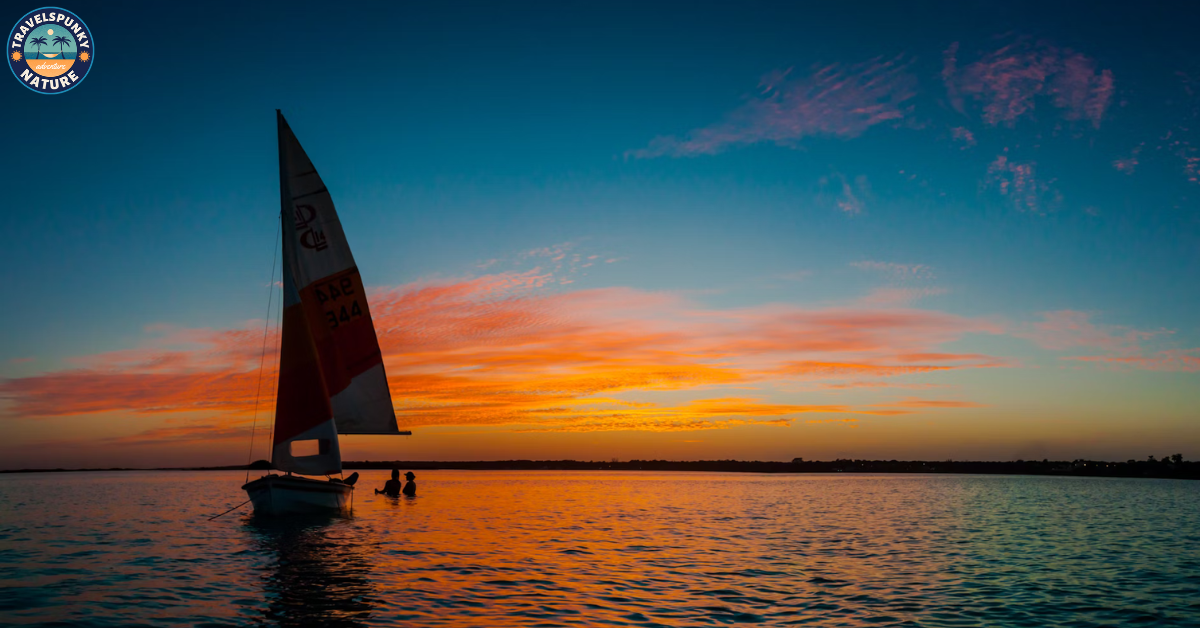
| 2 | Sail the lagoon | Marinas on the Costera | Quiet time on the water | A small catamaran, no engine noise and long swim stops |
| 3 | Paddle at sunrise | The lagoon off the town piers | Early risers | Glassy water, birds and breakfast on a paddleboard |
| 4 | Float Los Rápidos | About 12 km south of town | Swimming and a lazy river | A natural current running past living stromatolites |
| 5 | Swim at Cenote Cocalitos | About 4 km south of the centre | A slow half day | Hammocks in the water at the stromatolite sanctuary |
| 6 | Swim in Cenote Azul | Just south of town, off Highway 307 | A deep, cool swim | One of the deepest cenotes in Mexico, about 90 m down |
| 7 | Visit the Canal de los Piratas | The south of the lagoon | History with a swim | The old channel the pirates used to reach Bacalar |
| 8 | Explore the Fuerte de San Felipe | The main square, on the waterfront | History | The 1733 fort and its piracy museum above the lagoon |
| 9 | Wander the town centre | Around the main square | An easy evening | The church, the Bacalar letters, murals and lakefront food |
| 10 | Day trip to Kohunlich | About 65 km west of Chetumal | Maya history | The Temple of the Masks in the jungle |
1. Take a boat tour of the lagoon
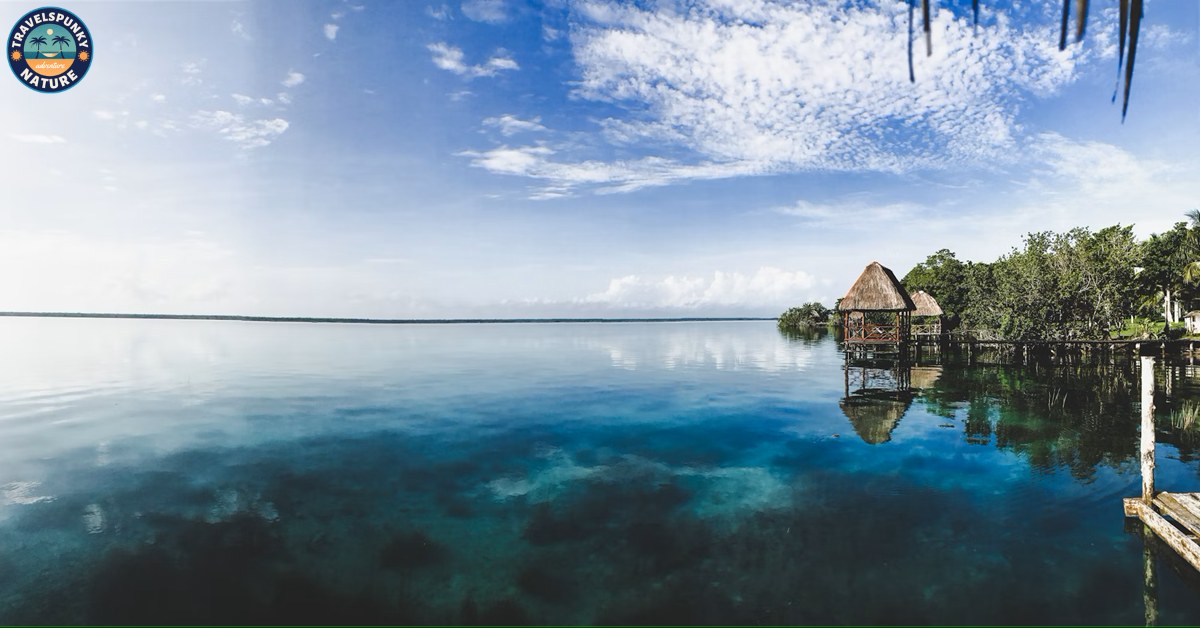
The standard first morning in Bacalar is a shared boat tour. Most tours run on pontoon boats with shade, last about two and a half to three hours, and follow the same circuit of stops in the southern lagoon. You swim at Cenote Esmeralda, peer into the dark water of Cenote Negro, also called Cenote de la Bruja, the Witch’s Cenote, which drops more than 90 m below the surface, and pass Isla de los Pájaros, Bird Island, a protected island where the boats slow down and keep their distance from the nesting birds. The last stop is usually the Canal de los Piratas, covered in its own section below.
Cost: Shared tours booked online run about $25 to $35 per person, roughly 450 to 650 pesos, with water and fruit included on most boats. Longer five-hour tours towards Los Rápidos cost more.
Booking: Boats leave from piers and small marinas along the Avenida Costera, the road that runs beside the lagoon. Book a day or two ahead in the busy months.
Worth knowing: No boat tours run on Wednesdays. The lagoon has a weekly rest day, in place since 2020, when motor boats stay at their piers and commercial trips stop. Swimming and paddling from the shore still go on.
The honest downside: The circuit is the same for every boat, so the swim stops can hold several groups at once by late morning. The earliest departures are the calmest.
2. Sail the lagoon
Sailing is the quiet way to see the same water. Small catamarans and sailboats carry groups of about ten or fewer, move under wind power for most of the trip, and stop for long swims away from the pontoon circuit.
Cost: Shared sailing tours of about three hours run from about $45 to $100 per person, depending on the boat and what is included. Private boats for a small group start at about $180 for the boat.
Worth knowing: Some sailing tours set a minimum age of about 12, so check before booking with young children.
The honest downside: Sailing costs two to three times the pontoon tour, and a still, windless morning can mean more motoring and less sailing than the name promises.
3. Paddle at sunrise
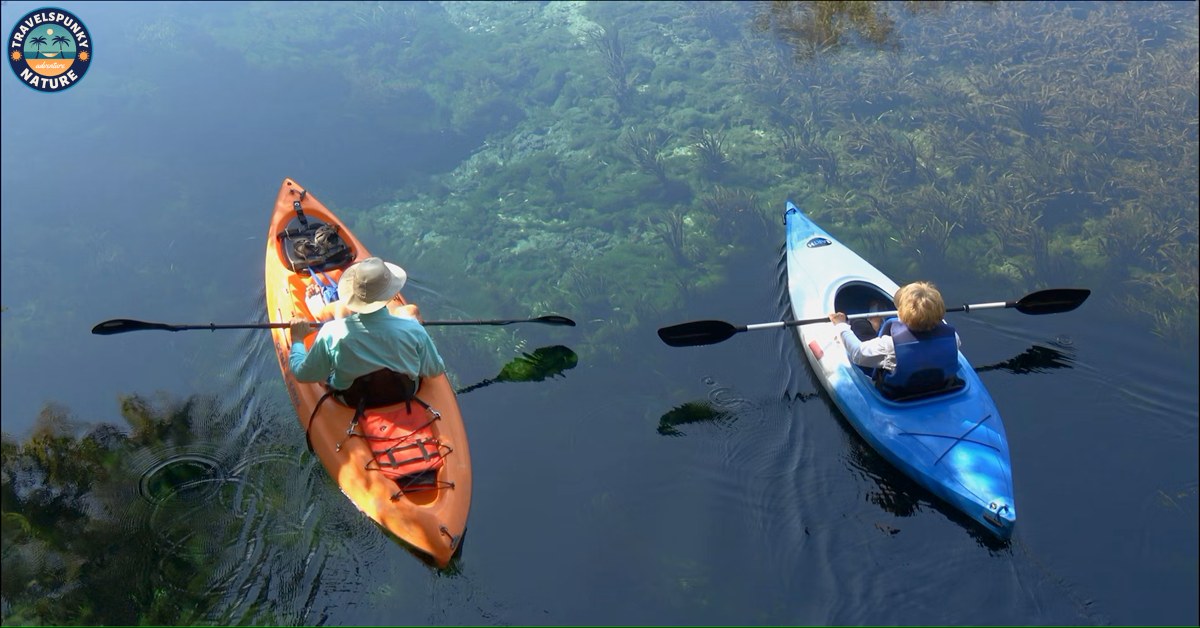
The lagoon is at its best before breakfast, when the water is flat, the light is low and the boats have not started. Guided sunrise tours put you on a paddleboard or in a kayak at about 5:30 AM and paddle for about three hours, calling at Cenote Esmeralda, Bird Island or the Pirates’ Canal depending on the operator, with coffee, fruit and bread served on the water or back at the pier. Hotels and rental shops along the Costera also rent kayaks and paddleboards by the hour.
Cost: Guided sunrise tours run about $28 to $35 per person, roughly 500 to 650 pesos, with equipment, a guide and breakfast bits included on most.
Worth knowing: Sunscreen is not allowed in the lagoon, on these tours above all. Wear a rash guard and a hat instead.
The honest downside: The start is before dawn, and a cloudy morning takes the sunrise away while keeping the early alarm. Tours also cancel when the wind picks up overnight.
4. Float Los Rápidos
South of town, the lagoon narrows into a shallow channel, and the water speeds up. Los Rápidos, the Rapids, is a natural lazy river. You put on a life jacket, step in at the top and let the current carry you down a clear channel for a few minutes, then walk back and do it again. The site is run as a small beach club with a restaurant, loungers and kayak rental, about 12 km south of the centre on the road towards Xul-Ha.
The rocks in the channel are the point, and the problem. Many of them are stromatolites, living mounds built by microbes, among the oldest forms of life on earth. Bacalar holds one of the largest freshwater stromatolite formations in the world, running for more than 10 km along the lagoon shore, and Los Rápidos sits in the middle of it. Enter the water only at the marked steps, float rather than walk, and never stand on the mounds.
Cost: Entry costs about 200 pesos for an adult and about 150 pesos for a child aged 2 to 10, and life jackets are included. Kayaks cost about 200 pesos an hour for a single and about 400 for a double, and lockers cost about 50 pesos plus a refundable deposit.
Opening hours: The club opens daily from about 10 AM to 6 PM.
Rules: No sunscreen, lotions or makeup in the water, and no outside food or drink. Bring a rash guard, a hat and cash.
Worth knowing: The site has closed for stretches in recent years, and listings have shown it as temporarily closed. Check its current status before making the trip out.
The honest downside: It fills with day trippers by early afternoon, and the float itself is short. Come on a weekday morning and repeat the ride in peace.
5. Swim at Cenote Cocalitos
Cenote Cocalitos is a beach club on a wide, shallow shelf of the lagoon about 4 km south of the centre, and it is the easiest place to spend a slow half day in the water. Hammocks and swings stand in the shallows, the water is calm and clear, and there is grass, shade and food on shore. It was closed for about two years and has fully reopened, though older guides still report it shut.
Its second name is the Sanctuary of Stromatolites. Big living mounds grow in the shallows here, roped off and signed, the best place to look at them closely without a boat. The cenote itself drops to about 60 m out in the blue, so the colour changes sharply a short swim from shore.
Cost: Entry costs about 100 pesos for an adult and about 50 pesos for a child, paid in cash. Chairs, tables and hammocks cost extra.
The honest downside: It is a managed club, not a wild cenote, and on sunny weekends it feels it. A few of the famous in-water swings have been out of action at times, so treat them as a bonus, not a promise.
6. Swim in Cenote Azul
Cenote Azul is the odd one out in Bacalar, a big round open cenote that stands apart from the lagoon, just south of town beside Highway 307. It is about 90 m deep, one of the deepest cenotes in Mexico, and the water is a dark, cool blue, very different from the warm lagoon shallows. There is a restaurant on the rim, and the swimming area is roped.
Cost: Entry costs about 50 pesos per person, paid in cash, and there is no ATM on site. Reports in the last two years have ranged from 35 to 50 pesos, so carry small notes and confirm at the gate.
Opening hours: The cenote opens daily from about 10 AM to 6 PM.
Rules: Sunscreen and lotions are not allowed in the water here either. Life jackets can be rented, and weak swimmers should take one, because the water is deep from the edge.
The honest downside: There is little shade in the middle of the day and almost no shallow shelf for small children. It is a swimmer’s cenote, best in the morning.
7. Visit the Canal de los Piratas
The Canal de los Piratas, the Pirates’ Canal, is a narrow channel cut through the south of the lagoon. Local history says the Maya dug it to link the lagoon with the river routes that lead to the sea, and in colonial times pirates used the same cut to slip in from the coast and raid Bacalar for its dyewood. That history is why the town needed its fort.
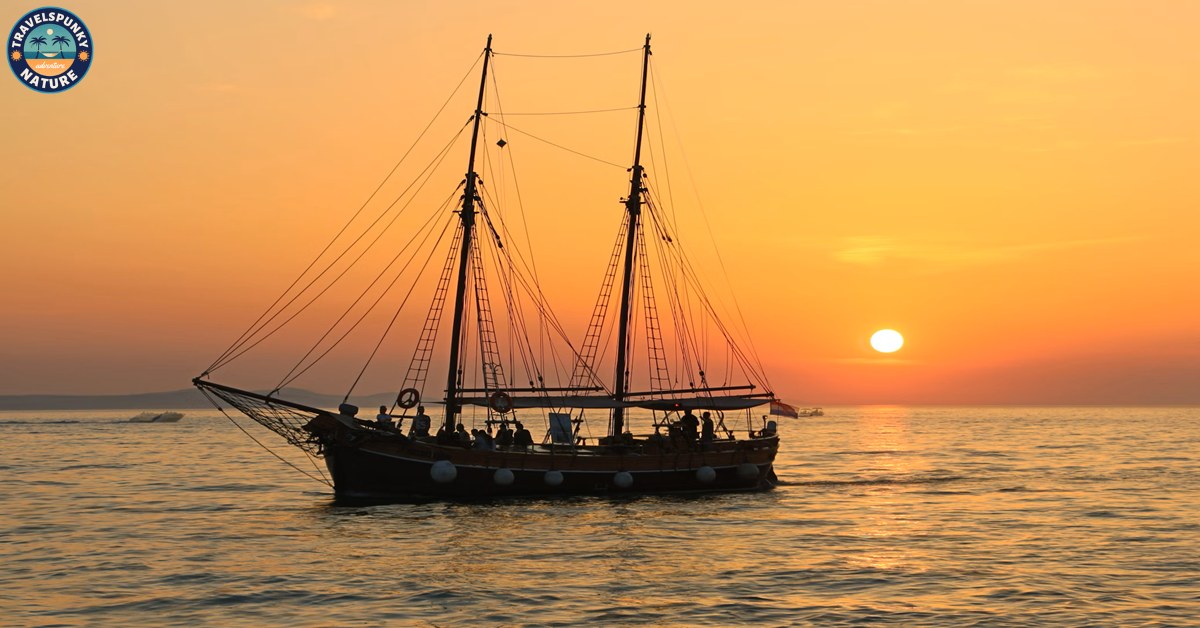
Today the channel is a swim stop with strikingly clear, pale water, reached by boat on the standard tour or by kayak from town. Guides once offered the soft clay of its banks as a skin treatment. The current advice is to leave the banks alone, so look, swim and move on.
Cost: There is no entry fee for the channel itself. The cost is the boat tour or the kayak rental that gets you there.
The honest downside: On its own it is a short stop, not a destination, and by midday it can hold a line of boats. It works best as part of the morning tour or an early paddle.
8. Explore the Fuerte de San Felipe
The Fuerte de San Felipe stands on the waterfront beside the main square, a small stone fort of four bastions built between 1725 and 1733 to defend Bacalar against the pirates who came through the channel for dyewood and captives. Inside is the Museo de la Piratería, the Piracy Museum, with displays on the fort, the pirate years, the Maya past of the region and the Caste War that emptied the town in the 1800s. The real reward is the walk around the ramparts, with the whole southern lagoon laid out below.
Cost: Entry costs about 110 pesos for a foreign visitor and about 55 pesos for a Mexican national, with students, teachers and children at about 30 pesos.
Opening hours: The fort opens Tuesday to Sunday from 9 AM to 7 PM and is closed on Mondays.
The honest downside: The museum is small and takes well under an hour. Come for the view and the story together, early or late in the day when the light on the water is best.
9. Wander the town centre
Bacalar’s centre is a few streets around the main square, and an hour’s wander covers it. The square holds the church of San Joaquín, the colourful Bacalar letters that everyone photographs, and benches in the shade. Street art covers walls on the streets running down to the water.

The waterfront is the other half of the town. Public piers give free access to the lagoon, among them the Balneario Municipal El Aserradero a few blocks south of the square and the municipal pier at Calle 36 further north, and the Ecopark boardwalk runs over the mangroves for about 20 pesos. Most paid entrances belong to the beach clubs and restaurants along the Costera, where a long lunch at a place such as La Playita, on the central waterfront since 2012, doubles as your swim spot, with no entry fee beyond what you eat and drink.
Cost: The town itself is free. Budget for food, ice cream and the small Ecopark fee.
The honest downside: The centre is quiet by design and sleeps early. Anyone looking for nightlife is in the wrong town, and that is Bacalar’s charm and its limit in one.
10. Day trip to Kohunlich
About an hour to an hour and a half west of Bacalar, in jungle off Highway 186, stands Kohunlich, a Maya city of plazas, a ball court and an acropolis, shaded by cohune palms. Its famous building is the Temple of the Masks, a pyramid of about 500 AD whose central staircase is flanked by huge stucco masks, each about 2 m tall, showing the sun god Kinich Ahau and the city’s deified rulers. Traces of their red paint survive.
Cost: Entry costs about 100 pesos. Recent reports put the fee between 85 and 100 pesos, so confirm at the gate.
Opening hours: The site opens daily from 8 AM to 5 PM, with last entry at about 4:30 PM.
How to reach it: There is no useful public transport to the ruins. Drive, hire a taxi for the day, or join a tour from Bacalar or Chetumal. The drive from Bacalar takes about an hour to an hour and a half.
The honest downside: It is a half day of driving for a site most visitors walk in two hours, and the jungle is hot and full of mosquitoes. Go early, carry water and repellent for the paths, and pair it with a lagoon afternoon.
Best time to visit Bacalar
The dry season, from about November to April, gives the lagoon its famous colours, when the blues show best under a clear morning sky. This is also the busy season, and prices and crowds peak around Christmas, Easter and Mexican public holidays.
The rainy season runs from about June to October. Rain usually falls in heavy afternoon bursts, and the lagoon can lose its colours for days after big storms wash soil in, as happened across much of the lagoon in 2020. September and October carry the highest storm risk. Whatever the month, build your days around the mornings, and remember the Wednesday rest day.
How to reach Bacalar, and getting around
Bacalar sits on Highway 307, the coast road of Quintana Roo. Almost everyone arrives by bus, by the Tren Maya or through Chetumal.
By bus: ADO runs first-class buses to Bacalar’s small terminal on the highway at the edge of town. From Cancún the ride takes about five and a half hours, with fares from about 590 pesos, and southbound buses leave from the downtown Cancún terminal rather than the airport. From Tulum the ride takes about two and a half to three hours. From Chetumal it is under an hour.
By train: The Tren Maya has a station a few kilometres outside Bacalar, linked to the centre by taxi, and trains connect it with Chetumal, Tulum and Cancún Airport. Services on this southern stretch are few each day and have run unreliably at times, so check the current timetable and keep the bus as your backup.
By air: The nearest airport is Chetumal, about 40 km and 30 to 40 minutes away, with flights from Mexico City only. Cancún’s airport is the big gateway, four to five hours away by road.
Getting around: The centre is small and flat, and walking and hired bicycles cover it. Taxis are cheap for the cenotes south of town, and colectivos run down the highway towards Xul-Ha for Los Rápidos. There is no ride-hailing in Bacalar.
Where to stay in Bacalar
Most visitors sleep either in the centre or on the Costera, the road along the lagoon. This table matches each area to the trip it suits.
| No. | Area | Best for | Good to know |
|---|---|---|---|
| 1 | The town centre | The fort, the square and eating out | Cheapest beds and the ADO terminal nearby, and the lagoon is a short walk |
| 2 | The Costera in town | A pier of your own | Lagoon-front hotels and hostels with docks, at a walk from the square |
| 3 | The Costera south | Cenote Cocalitos and Los Rápidos | Quieter and greener, and you will want a bike or taxis for dinner |
| 4 | The Costera north | Space and quiet | Larger lagoon-front properties, furthest from the centre |
FAQs
1. Why does the lagoon show seven colours?
The shades come from the bottom changing under very clear water. White sand, limestone, mangrove edges and the deep blue holes of the cenotes each give a different colour, and the light changes them through the day. A sunny, calm morning shows the strongest range.
2. Can you take a boat tour on a Wednesday?
No. Wednesday is the lagoon’s rest day, in place since 2020, and motor boats and tours stay off the water outside the main holiday seasons. Swimming from the piers and paddling still go on, and it is a good day for Cenote Azul, the fort or Kohunlich.
3. How many days do you need in Bacalar?
Two to three nights cover the list without rushing. One day for the boat tour and the town, one for Los Rápidos and the cenotes, and a spare morning for a sunrise paddle. Day trips from Tulum exist, but they spend much of the day on the road.
4. Is Bacalar on the sea?
No. The lagoon is fresh water, fed by cenotes and underground rivers, and it never gets the sargassum seaweed that covers Caribbean beaches in some months. You swim from piers, docks and boats, because there is almost no natural beach.
5. What are the stromatolites, and why the strict rules?
They are living mounds built layer by layer by microbes, kin to the oldest life forms on earth, and Bacalar holds one of the largest freshwater formations in the world. They grow very slowly and die where they are crushed or poisoned, so the rules are simple. No sunscreen in the water, and never touch or stand on them.
6. What is the best month to visit Bacalar?
February and March, if one window has to be named. The dry season is settled, the water shows its full range of colours, and the Easter crowds have not yet arrived. November and April run them close.
Researched and verified: November 2026. This guide is research-based, compiled from official visitor information, maps and traveller reports. Prices, hours and road conditions change, so confirm them locally before travelling.