South Africa is a big country, and its landmarks are not one kind of thing. One trip can take in a flat-topped mountain, a prison island, a great game park, a green canyon and the caves where some of the oldest human fossils ever found were buried. Five of the eleven landmarks in this guide are UNESCO World Heritage Sites, or part of one.
This guide lists the eleven that matter most on a first trip, with what each one costs, how to reach it and where it falls short. Prices are in rand, written as R. Park fees are set by SANParks and rise every November, so treat every price here as a guide and confirm it before you book.
At a glance
| No. | Landmark | Where | Best for | Known for |
|---|---|---|---|---|
| 1 | Table Mountain | Cape Town | The classic city view | The flat top above the city and the rotating cable car |
| 2 | Robben Island | Table Bay, off Cape Town | History | The prison that held Nelson Mandela for 18 years |
| 3 | Cape of Good Hope and Cape Point | Cape Peninsula | Scenery and a full day out | Cliffs, an old lighthouse and the famous Cape sign |
| 4 | V&A Waterfront | Cape Town | Eating, boats and an easy base | A working harbour with the Two Oceans Aquarium |
| 5 | Kruger National Park | Mpumalanga and Limpopo | Safari | The Big Five in a park of about 19,500 km² |
| 6 | Blyde River Canyon | Mpumalanga | Viewpoints | One of the largest canyons in the world, covered in green |
| 7 | The Garden Route and Tsitsikamma | Western and Eastern Cape | A coastal road trip | Forest, lagoons and the Storms River suspension bridge |
| 8 | Apartheid Museum | Johannesburg | Modern history | The rise and fall of apartheid in 20-plus exhibition areas |
| 9 | Cradle of Humankind | Near Johannesburg | Deep history | Fossil caves, including the home of Mrs Ples and Little Foot |
| 10 | The Drakensberg | KwaZulu-Natal | Hiking and mountain scenery | The Amphitheatre cliff and the Tugela Falls |
| 11 | iSimangaliso Wetland Park | KwaZulu-Natal coast | Wetlands and wildlife | Lake St Lucia, hippos, crocodiles and turtle beaches |
1. Table Mountain

Table Mountain is the flat wall of rock behind Cape Town, and almost every first day in the city starts with it. Its highest point, Maclear’s Beacon, stands 1,085 m above the sea, and the level top runs for about 3 km. The mountain belongs to Table Mountain National Park and the Cape Floral Region World Heritage Site, and in 2011 it was named one of the New7Wonders of Nature.
The Aerial Cableway has run since 1929. The ride takes about five minutes, in a car whose floor slowly turns. Fit visitors can walk up instead, most directly by the Platteklip Gorge route, in about two to three hours.
Cost: A return ticket costs about R475 online and about R530 at the ticket office, and one-way costs about R300. Children pay less. Online tickets are valid for seven days.
How to reach it: The lower cable station stands on Tafelberg Road, a short taxi or bus ride from the city centre. Parking fills up early in season.
The honest downside: Wind closes the cableway with little warning, and the famous tablecloth of cloud can cover the top for hours. Check the live status on the morning of your visit. The cableway also closes for a few weeks of maintenance most winters.
2. Robben Island

Robben Island sits in Table Bay, about half an hour by ferry from Cape Town, and for centuries it was a place of banishment, holding a leper colony in the 1800s and, under apartheid, the maximum security prison for political prisoners. Nelson Mandela was held here for 18 years, from 1964 to 1982, and his small cell is the centre of the tour. The prison closed in 1996, and UNESCO listed the island in 1999.
The visit runs to a set pattern. A ferry leaves the Nelson Mandela Gateway at the V&A Waterfront, a bus tours the island, and a guide then walks you through the prison. The prison guides are often former political prisoners. Allow about three and a half hours for the whole trip.
Cost: The standard tour costs about R600 for a non-South African adult and about R400 for a South African adult, and children pay less. The ferry is included in the ticket.
Booking: Book on the museum’s own site, well ahead. Tours sell out in the main season, and same-day tickets are rare.
The honest downside: Ferries are cancelled when the sea is rough, and a cancelled sailing can break a tight itinerary. Book the tour early in your Cape Town stay, so a spare day remains if the weather intervenes.
3. Cape of Good Hope and Cape Point
The southwestern tip of the Cape Peninsula holds two headlands about 2 km apart, both inside the Cape of Good Hope section of Table Mountain National Park. The Cape of Good Hope is the famous name and the famous sign, and it is the most southwestern point of Africa. Cape Point, next door, is the higher and wilder headland, with cliffs and an old lighthouse.
One correction is worth making. The Cape of Good Hope is not the southernmost point of Africa, and it is not where two oceans officially meet. That point is Cape Agulhas, further east. The drive is still one of the great day trips from Cape Town, about an hour and a half each way, with ostriches, antelope and baboons along the road.
Entry: Park entry costs about R590 for an international adult from November 2026, and South Africans with ID pay far less. The gate takes cards only. The Flying Dutchman funicular up to the old lighthouse costs about R115 return, and walking up is free.
Opening hours: The gate opens from 6:00 AM to 6:00 PM from October to March, and from 7:00 AM to 5:00 PM from April to September.
The honest downside: The baboons are bold and treat an open car as a food store, so keep doors and windows closed. And this is a full day out, not a quick photo stop on the way to somewhere else.
4. V&A Waterfront
The Victoria and Alfred Waterfront is Cape Town’s working harbour, rebuilt as the city’s main eating, shopping and boat trip district, and it is free to wander. Harbour cruises leave from its quays, the Zeitz Museum of Contemporary Art Africa fills a converted 1920s grain silo, and the Nelson Mandela Gateway here is where the Robben Island ferries board.
Its biggest single attraction is the Two Oceans Aquarium. It holds a kelp forest, a shark exhibit and a penguin colony, and it is the easiest rainy-day plan in the city.
Cost: The Two Oceans Aquarium costs about R280 for an adult, and opens daily from 9:30 AM to 6:00 PM.
The honest downside: It is polished and commercial, and its restaurants charge harbour prices. Enjoy it as a base and eating district, not as a sight with a single big moment.
5. Kruger National Park
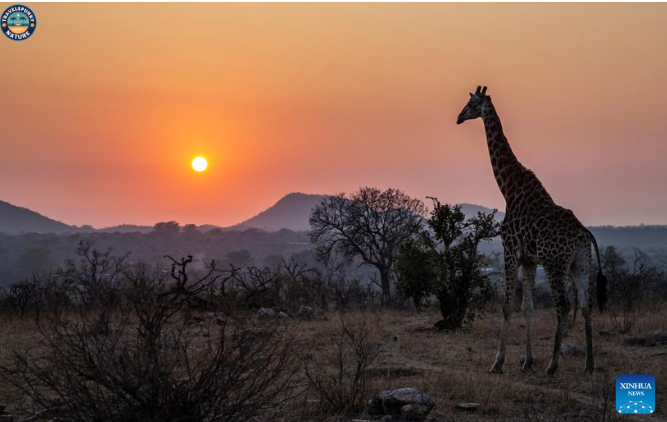
Kruger is one of the great game parks of the world, about 19,500 km² of bush in the northeast of the country, a national park since 1926. It is home to the Big Five of lion, leopard, elephant, buffalo and rhino, and to cheetahs, wild dogs, giraffes and hippos besides. Most visitors drive themselves on the park’s tar and gravel roads and sleep in the fenced rest camps run by SANParks. Guided game drives can be booked at the camps.
The system rewards patience. Animals move at dawn and late afternoon, the middle of the day is for the camp, and no sighting is ever guaranteed. The south of the park is the easiest to reach and the richest in game. Private reserves on the western boundary, such as the Sabi Sand, add luxury lodges at far higher prices.
Cost: The daily conservation fee is about R690 for an international adult from November 2026, and children pay about half. On a trip of a week or more, an annual SANParks Wild Card can cost less than paying the fee day by day.
How to reach it: Fly to Kruger Mpumalanga International Airport near Mbombela, or to Skukuza inside the park itself. Driving from Johannesburg to the southern gates takes about five to six hours.
The honest downside: Kruger is a malaria area, with the risk highest in the wet summer months, so talk to a doctor about preventive medicine first. The park is also vast, and two nights only scratch its southern corner.
6. Blyde River Canyon and the Panorama Route
The Blyde River Canyon cuts about 26 km through the Mpumalanga escarpment, and it is one of the largest canyons in the world. Its cliffs are covered in subtropical forest, and it is often described as the largest green canyon on earth. The way to see it is the Panorama Route, a self-drive loop of viewpoints along the canyon rim.

The Three Rondavels viewpoint looks across at three peaks shaped like round huts, with the canyon and the Blyde Dam below. God’s Window is a cliff-edge gap in the forest with a view that drops away to the Lowveld. At Bourke’s Luck Potholes, the meeting of two rivers has carved smooth cylinders and bowls into the rock.
Cost: Each viewpoint charges its own small fee, roughly R20 to R100 per stop in 2026. Carry some cash, because card machines at the smaller stops are not guaranteed.
How to reach it: Base yourself in Graskop, the town at the start of the loop. The route pairs easily with Kruger, about an hour from Hazyview and the southern gates.
The honest downside: Mist is the enemy here. The escarpment clouds over fast, and God’s Window can show nothing but white. Go early, on the clearest morning of your stay.
7. The Garden Route and Tsitsikamma
The Garden Route is a coastal drive of about 300 km along the N2, from Mossel Bay in the west to the Storms River in the east. It runs through lagoon towns such as Knysna, beach towns such as Plettenberg Bay and thick indigenous forest. It is less a single landmark than a string of them.
Its wildest stop is Tsitsikamma, a section of the Garden Route National Park where the forest runs down to a rocky shore. From the Storms River Mouth rest camp, a boardwalk of about 1 km leads to a 77 m suspension bridge across the river mouth. Nearby, the Bloukrans Bridge carries a bungee jump of 216 m, among the highest in the world, and the famous Otter Trail starts here, for hikers who booked months ahead.
Cost: Day entry to the Storms River Mouth section costs about R420 for an international adult from November 2026, and South Africans pay about R85. Activities such as the bungee jump and canopy tours are charged on top.
How to reach it: Fly to George or to Gqeberha and hire a car, or drive the full route from Cape Town, which takes about six to seven hours to the Storms River end.
The honest downside: One day is not enough for this coast. Give it three or four days, and expect the towns and the bridge walk to be busy in December and January.
8. Apartheid Museum

The Apartheid Museum stands in Ormonde, in the south of Johannesburg, next to Gold Reef City, and it opened in 2001. It tells the story of apartheid, the system of racial separation that ran South Africa from 1948 to 1994, and of the struggle that ended it. Film, photographs, documents and personal stories carry the visitor through more than 20 exhibition areas.
Your ticket randomly marks you as white or non-white, and you enter through the gate your ticket assigns, a small and unsettling taste of the classification system that once governed every part of life. A large Mandela exhibition anchors the second half.
Entry: An international adult pays about R240, with an audio guide included, and South African adults pay about R170 with ID.
Opening hours: The museum opens from 9:00 AM to 5:00 PM and is closed on Mondays. Check the museum site before you go, because public holidays can change the pattern.
How to reach it: The museum is about 8 km south of the city centre. Most visitors come by car or taxi, or on a Soweto tour that also visits Mandela House.
The honest downside: This is a heavy visit, and the museum advises that it is not suitable for children under 11. Allow at least two hours, and three is better.
9. Cradle of Humankind
About 50 km northwest of Johannesburg, the dolomite hills of the Cradle of Humankind hold a network of caves that have produced more than a third of all the early hominin fossils ever found. UNESCO listed the area in 1999.
Two sites carry the visit. The Sterkfontein Caves are the working excavation where Mrs Ples, a fossil skull more than two million years old, was found in 1947, and where the near-complete skeleton known as Little Foot, more than three and a half million years old, was uncovered. The Maropeng Visitor Centre, about 10 km away, tells the story inside a grass-covered mound, with an underground boat ride at its start.
Cost: Each site charges roughly R150 to R200 for an adult, and a combined ticket at about R320 to R350 covers both. Book online before you go, because cave tours run at set times and fill up on weekends.
Worth knowing: The cave tours are guided only, and the Sterkfontein Caves are closed on Mondays. The passages are low and narrow in places, with many stairs.
The honest downside: There is no useful public transport to the Cradle. You need a hire car or a booked tour, and the day needs planning rather than a late start.
10. The Drakensberg
The Drakensberg, uKhahlamba in Zulu, is a long basalt escarpment along the border with Lesotho, and the highest ground in southern Africa. UNESCO listed the park in 2000 for two things at once, its mountain scenery and its San rock art, more than 35,000 paintings in about 600 rock shelters.
The famous view is in Royal Natal National Park, in the north. The Amphitheatre is a cliff wall about 5 km long, and the Tugela Falls drop about 948 m from its top in five leaps, usually ranked the second tallest waterfall in the world. Hiking runs from short gorge walks to the chain ladders that climb the Sentinel at its side. On the drive up from Durban, the Mandela Capture Site outside Howick makes a short stop. Fifty steel columns mark the spot of Mandela’s arrest in 1962.

Cost: Entry to Royal Natal costs about R120 for an international adult per day, and South Africans pay about half.
How to reach it: Royal Natal is about four hours by road from Johannesburg and about three to four hours from Durban. A car is essential, because the trailheads sit far from any town.
The honest downside: The Tugela Falls depend on rain, and after a dry winter they can shrink to a trickle. Mountain weather also turns fast in every season, and snow closes high paths in winter.
11. iSimangaliso Wetland Park
iSimangaliso was South Africa’s first World Heritage Site, listed in 1999, and it protects about 332,000 hectares along roughly 220 km of the KwaZulu-Natal coast, from St Lucia in the south to the Mozambique border. Lakes, estuaries, swamp forest, grassland, high dunes and coral reefs sit side by side here.
Lake St Lucia is its heart, the largest estuarine system in Africa, holding roughly 800 hippos and about 1,200 Nile crocodiles. Boat cruises from St Lucia town drift past both. Game drives run on the park’s shores, the uMkhuze section adds rhino and big game, and from about November to March, loggerhead and leatherback turtles nest on the northern beaches.
Cost: Each section of the park charges its own daily fee, roughly R60 to R130 per adult, plus a fee per vehicle. Check the fee for the section you plan to visit, because they differ.
Gate times: Gates open from 5:00 AM to 7:00 PM from November to March, and from 6:00 AM to 6:00 PM from April to October.
The honest downside: This is a whole coastline, not a single sight, and its sections are far apart, so pick one or two rather than rushing the map. In St Lucia town, hippos wander the streets at night to graze, so walk carefully after dark and never approach one.
Best time to visit South Africa’s landmarks
The country is too big for one best season, so match the month to the region. Cape Town and the Cape are at their best from about November to March, dry, warm and windy, while the winter months from May to August bring rain and more cableway closures. Kruger, the Panorama Route and the low country are best in the dry winter, from about May to September, when game viewing peaks and the viewpoints are clearest.
The Garden Route works in most months and is busiest in December and January. The KwaZulu-Natal coast is warm all year, with turtle nesting in summer and whales in winter and spring. If one window has to be named, choose May or September, mild in the Cape and dry in the east.
How to reach South Africa, and getting around
Most visitors land at Cape Town, at OR Tambo in Johannesburg, or at King Shaka near Durban. Domestic flights link the three cities, and Cape Town to Johannesburg takes about two hours in the air.
By car: A hire car is the practical tool for much of this list. The Panorama Route, the Garden Route, the Drakensberg and the Cradle of Humankind all need one, and Kruger is built around self-driving.
In the cities: Use hotel shuttles, metered taxis or ride-hailing apps to move between sights, and keep valuables out of sight in parked cars.
Entry rules: Visitors from many countries, including the US, the UK and the EU, receive up to 90 days in South Africa without a visa. Rules differ by passport, so check yours before you book.
Money: The currency is the rand. Park gates take cards, but small Panorama Route stops may still want cash.
Where to base yourself for each landmark
This table matches each base to the landmarks it covers best.
| No. | Base | Landmarks it covers | Good to know |
|---|---|---|---|
| 1 | Cape Town | Table Mountain, Robben Island and the V&A Waterfront | Give it at least four nights, the weather needs a spare day |
| 2 | The Cape Peninsula | Cape Point and the Cape of Good Hope as a day trip | Simon’s Town is the handy overnight stop on this side |
| 3 | Johannesburg | Apartheid Museum, and the Cradle of Humankind as a day trip | Stay in Sandton or Rosebank and day trip from there |
| 4 | Kruger rest camps or Hazyview | Kruger National Park | Sleeping inside the park puts you at the gate at opening time |
| 5 | Graskop | Blyde River Canyon and the Panorama Route | The viewpoints start minutes from the town |
| 6 | Knysna or Storms River | The Garden Route and Tsitsikamma | Two bases, one at each end, beat one in the middle |
| 7 | The northern Drakensberg | The Amphitheatre and the Tugela Falls | Lodges near Royal Natal suit hikers best |
| 8 | St Lucia town | iSimangaliso Wetland Park | The estuary cruises leave from the town jetty |
FAQs
1. What is the most famous landmark in South Africa? Table Mountain. Its flat top is the symbol of Cape Town and one of the most recognised mountain silhouettes in the world, and the cableway makes it the easiest landmark in the country to visit.
2. How many days do you need for these landmarks? About ten to fourteen days covers the classic circuit of Cape Town, a safari, the Panorama Route or the Garden Route, and Johannesburg.
3. Do Table Mountain and Robben Island tickets sell out? Yes, both do. Robben Island tours sell out days or weeks ahead in the main season, and the Table Mountain cableway queues for hours on clear summer days. Book both online as soon as your dates are fixed, and keep a spare day for weather.
4. How much does a Kruger safari cost per day? The fixed cost is the conservation fee, about R690 per international adult per day from November 2026, plus your bed and fuel. Self-driving and sleeping in SANParks rest camps is the cheapest way in. Private reserve lodges cost far more.
5. Is the Cape of Good Hope the southernmost point of Africa? No. The Cape of Good Hope is the most southwestern point of the continent. The southernmost point is Cape Agulhas, further east, which is also where the two oceans are officially said to meet.
6. What is the best month to visit South Africa? September, if one month has to be named. The Kruger bush is still dry and game viewing is strong, the Cape is warming up after winter, the whales are along the coast, and the December crowds have not yet arrived.
Researched and verified: November 2026. This guide is research-based, compiled from official visitor information, maps and traveller reports. Prices, hours and road conditions change, so confirm them locally before travelling.