Switzerland packs an unusual number of genuine icons into a small country. One trip can take in the most famous mountain silhouette on earth, a railway station at 3,454 metres, a castle standing in a lake and the most powerful waterfall in Europe. Four of the landmarks below are UNESCO World Heritage Sites, and almost all are reached by train.
This guide lists the eleven that matter most on a first trip, with what each one costs, how to reach it and where it falls short. Swiss fares change with the season, so prices are honest ranges, and the rail pass section below shows where the Swiss Travel Pass pays for itself.
At a glance
| No. | Landmark | Where | Best for | Known for |
|---|---|---|---|---|
| 1 | The Matterhorn | Zermatt, Valais | The classic Alpine view | The pyramid peak, seen from the Gornergrat railway |
| 2 | Jungfraujoch | Bernese Oberland | A high-Alpine day trip | The highest railway station in Europe, at 3,454 m |
| 3 | The Aletsch Glacier | Valais | Glacier scenery | The longest glacier in the Alps, about 20 km |
| 4 | Château de Chillon | Lake Geneva, near Montreux | History | The most visited historic monument in Switzerland |
| 5 | Lake Geneva and Lavaux | Geneva to Montreux | Lakeside touring | The largest lake in Western Europe, with UNESCO vineyard terraces |
| 6 | Gruyères Castle | Canton Fribourg | A medieval day trip | The counts’ castle above a car-free village |
| 7 | Chapel Bridge | Lucerne | The classic photo stop | The oldest covered wooden bridge in Europe, built in 1333 |
| 8 | Bern Old Town | Bern | Medieval streets | A UNESCO old town with 6 km of arcades and the Zytglogge clock |
| 9 | Rhine Falls | Near Schaffhausen | Raw natural power | The largest waterfall in Europe by volume |
| 10 | Grossmünster | Zurich | City history | The twin-towered church where the Swiss Reformation began |
| 11 | St. Gallen Abbey Library | St. Gallen | Books and baroque art | The oldest library in Switzerland, in a UNESCO abbey district |
1. The Matterhorn and Zermatt
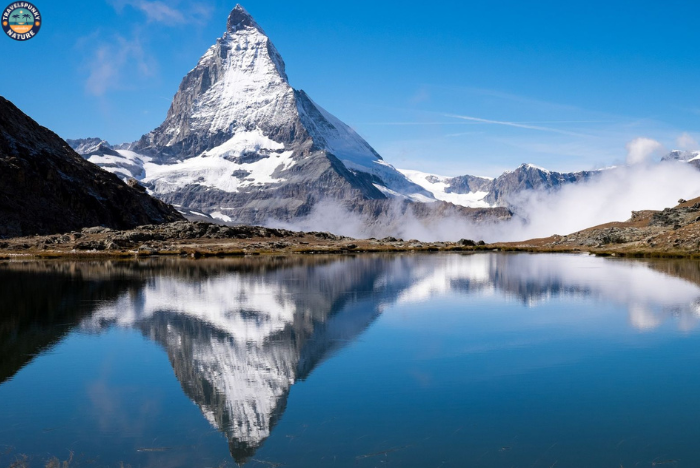
The Matterhorn is the mountain the world draws when it draws a mountain, a near-perfect pyramid rising to 4,478 m on the border with Italy. It was first climbed only in 1865, and four of Edward Whymper’s party died on the descent. Almost nobody visits to climb it, they come to stand in front of it, from Zermatt, the car-free village below.
Two viewpoints do the work. The Gornergrat cog railway climbs in about 33 minutes to a ridge at 3,089 m facing the peak head-on, with the Monte Rosa massif and the Gorner Glacier below it. The cable cars in the other direction reach the Matterhorn Glacier Paradise at 3,883 m, the highest cable car station in Europe, with snow all year.
Cost: The Gornergrat return costs about CHF 132 in summer and about CHF 102 in winter. The Glacier Paradise return runs from about CHF 105 to CHF 140 by season. Swiss Travel Pass and Half Fare Card holders pay half on both, and fares should be confirmed when you book.
How to reach it: Zermatt is car-free, so everyone arrives by train, about 3 hours 15 minutes from Zurich with a change at Visp. Drivers park at Täsch, one stop down the valley, and ride the shuttle train in.
The honest downside: The Matterhorn hides. Cloud can cover the peak for days, and there is no refund on a viewpoint ticket bought for a grey day. Give Zermatt at least two nights for a fair chance of a clear morning.
2. Jungfraujoch, the Top of Europe

The Jungfraujoch is a saddle between the Mönch and Jungfrau peaks, and the station cut into it at 3,454 m is the highest in Europe. The Jungfrau Railway climbs through a tunnel inside the Eiger, and the Eiger Express gondola from Grindelwald Terminal has cut the fastest route to about 1 hour 30 minutes from Grindelwald and about 2 hours from Interlaken. At the top, a lift rises to the Sphinx Observatory terrace at 3,571 m, looking down on the Aletsch Glacier.
The complex holds an ice palace carved into the glacier, viewing platforms and, in summer, snow activities outside. It runs all year, in almost any weather.
Cost: A full-fare return from Interlaken Ost costs about CHF 225 to CHF 270 by season, the most expensive day trip in Switzerland, and starting from Grindelwald or Wengen cuts the fare. The Swiss Travel Pass gives only 25 percent off the mountain section, and from May to October a seat reservation of about CHF 10 is compulsory on top. Confirm the fare for your date before you commit.
How to reach it: Trains run from Interlaken Ost to Grindelwald or Lauterbrunnen, then the Eiger Express or the Wengernalp Railway to Eigergletscher, where the Jungfrau Railway takes over.
The honest downside: At 3,454 m the air is thin, and arriving from sea level the same morning can bring on headaches and nausea. Add total cloud, which happens often, and an expensive ticket can buy a view of fog. Check the summit webcam first.
3. The Aletsch Glacier
The Great Aletsch Glacier is the longest river of ice in the Alps, about 20 km flowing down from the Jungfrau region, and the heart of the Swiss Alps Jungfrau-Aletsch UNESCO World Heritage Site. It is best seen from the side, from the viewpoints on the sunny plateau above the Rhone valley.
Three lifts do the work. The Eggishorn, at 2,869 m above Fiesch, is the highest viewpoint and the only one showing the whole glacier, including its great bend at Konkordiaplatz. The Bettmerhorn, at 2,647 m above car-free Bettmeralp, gives the classic side view, and the Moosfluh above Riederalp is the third option.
Cost: A return to one viewpoint costs about CHF 50 to CHF 55. The Aletsch Explorer Pass, a day ticket at about CHF 55, covers all the arena lifts and makes more sense if you ride more than one.
How to reach it: Trains run up the Rhone valley to Fiesch and Betten, where cable cars climb to Fiescheralp and Bettmeralp. Brig is the hub at the valley bottom, about 40 minutes from Fiesch.
The honest downside: The lifts are seasonal, roughly June to October in summer and through the ski season in winter, with gaps when the viewpoints cannot be reached. The glacier is also visibly retreating, and thinner than old postcards suggest.
4. Château de Chillon

Chillon is the castle Switzerland puts on its postcards, a medieval fortress on its own rocky island at the eastern end of Lake Geneva, a few minutes from Montreux. It was the lakeside residence of the Counts of Savoy, then a Bernese stronghold, and its most famous prisoner, François Bonivard, chained in the dungeon in the 1530s, inspired Lord Byron’s poem The Prisoner of Chillon. It is the most visited historic monument in Switzerland, drawing over 400,000 visitors a year.
Entry: Adults pay CHF 15 and children aged 6 to 15 pay CHF 7. Entry is free with a Swiss Travel Pass.
Opening hours: The castle opens daily except 25 December and 1 January, from 9:00 AM to 7:00 PM from April to September and from 10:00 AM to 5:00 PM from November to February.
How to reach it: Trains from Geneva reach Montreux in about 1 hour. From there, a local train to Veytaux-Chillon, a bus or a lake boat stop a short walk from the gate.
The honest downside: It is a compact castle and it fills up. Summer afternoons bring queues and crowded halls, so arrive at opening time or late in the day.
5. Lake Geneva and the Lavaux Vineyards
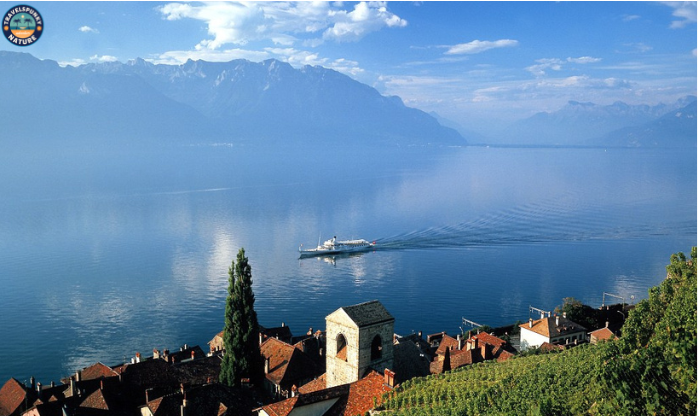
Lake Geneva, Lac Léman in French, is the largest lake in Western Europe, about 580 km² of water shared between Switzerland (about 60 percent) and France (about 40 percent), and about 310 m deep at its deepest. The Rhône flows in at one end and out at Geneva, where the Jet d’Eau fountain throws its plume about 140 m above the harbour.
The northern shore is the visitor’s shore, its towns linked by train and paddle steamer. Between Lausanne and Vevey the hillside is covered by Lavaux, terraced vineyards first built up by monks from the 11th century onwards and UNESCO-listed since 2007. Paths thread through the terraces between the wine villages, where the local Chasselas white wine is poured in the cellars.
Cost: Walking the Lavaux paths is free, and the lake boats are covered by the Swiss Travel Pass. Wine tastings are charged by the glass or bottle, so agree the price before you sit down.
How to reach it: Trains run along the north shore from Geneva through Lausanne to Montreux, and CGN boats connect the same towns more slowly in season.
The honest downside: A lake is a shore to tour, not a single sight, and it rewards slow travel. The water is cold for swimming outside high summer, and the prettiest stretches need walking, not a train window.
6. Gruyères Castle
At the top of a car-free village street in the Fribourg Pre-Alps stands the castle of the Counts of Gruyère, a 13th-century fortress home to nineteen counts, now holding eight centuries of regional history, from the Knights’ Hall and medieval stained glass to paintings by Corot. Below it sit two surprises, the HR Giger Museum, devoted to the Swiss artist who designed the creature in Alien, and, at the foot of the hill in Pringy, La Maison du Gruyère, the demonstration dairy where the famous cheese is made.
Entry: The castle charges CHF 13 for adults, and a combined ticket with the HR Giger Museum costs about CHF 20. It opens daily, from 9:00 AM to 6:00 PM from April to October and from 10:00 AM to 5:00 PM from November to March.
How to reach it: Trains reach Gruyères station in about 1 hour from Montreux on the GoldenPass line, and the village is a short bus ride or uphill walk from the station. It also works as a day trip from Bern or Fribourg.
The honest downside: The village is small and its main street fills with tour groups by midday in summer. Come before 10:00 AM or stay late.
7. Chapel Bridge, Lucerne
The Kapellbrücke is a covered wooden footbridge crossing the River Reuss in Lucerne at a diagonal, and it has been doing so since 1333, which makes it the oldest covered wooden bridge in Europe. It was built as part of the city fortifications, and the octagonal Water Tower beside it, older still at about 1300, has served as a treasury, an archive and a prison. Under its roof hangs a series of triangular paintings from the 17th century, showing scenes from the history of Lucerne and its patron saints.
In August 1993 a fire destroyed two thirds of those paintings and much of the bridge itself. Lucerne rebuilt it within eight months, reopening it in April 1994, and some charred panels were left as a deliberate scar. It pairs naturally with the old town, the Lion Monument and a lake boat.
Cost: The bridge is a public footbridge and crossing it is free, at any hour.
How to reach it: Lucerne station is about five minutes away on foot, and trains from Zurich take about 45 minutes.
The honest downside: On its own it is a short experience, and it is crowded at midday in summer. Cross early or in the evening, when the light on the Reuss is best anyway.
8. Bern Old Town and the Zytglogge
Bern is Switzerland’s federal city, and its old town is the finest medieval centre in the country, founded in 1191 on a narrow hill inside a loop of the River Aare and rebuilt in local sandstone after a great fire in 1405. UNESCO listed the whole old city in 1983. Its signature is the Lauben, about 6 km of covered arcades running past eleven Renaissance fountains with painted figures.
The Zytglogge, the clock tower at its centre, began as the city’s west gate and received its astronomical clock in 1530, and its mechanical figures perform a few minutes before each hour. Two streets away, at Kramgasse 49, is the flat where Albert Einstein lived from 1903 to 1905 and wrote the papers that changed physics. The Bern Minster, with the tallest church tower in Switzerland, watches over the peninsula.
Cost: Walking the old town is free. Guided tours inside the Zytglogge and entry to the Einstein House are charged separately, so confirm current prices on the day.
How to reach it: The old town begins at Bern station. Trains from Zurich take about 1 hour, and from Interlaken about 50 minutes.
The honest downside: Bern is a working government city, not a resort. Shops close early, Sundays are quiet, and its pleasures are slow ones, walking, fountains and arcades rather than big-ticket sights.
9. Rhine Falls

The Rhine Falls, on the river between Neuhausen and Laufen near Schaffhausen, are the largest waterfall in Europe by volume. They are 150 m wide and 23 m high, and an average of about 373 m³ of water pours over the rock shelf every second, rising to 600 m³ or more during the snowmelt of May and June. Over a million people come each year, and at close range the falls are loud, wet and thrilling.
The two banks give two different visits. The Neuhausen side, on the north bank, is free, gives the wide classic view and is where the boats leave. The south bank is crowned by Laufen Castle, where a lift drops to the Känzeli platform, bolted to the rock at water level. From April to October, boats also run out to the rock in the middle of the falls, with steps to a small platform above the torrent.
Cost: Viewing from the banks and paths is free. The Laufen Castle platforms cost CHF 5 for adults and CHF 3 for children, and boat trips run from about CHF 10 to CHF 20 depending on whether the boat lands at the rock. Confirm prices on the day.
How to reach it: Trains from Zurich reach Neuhausen Rheinfall or Schloss Laufen stations in about 1 hour.
The honest downside: At 23 m, this is a waterfall about power, not height, and anyone expecting an Alpine cascade will misread it. The flow also drops sharply in winter.
10. Grossmünster, Zurich
The Grossmünster is the church on every Zurich postcard, a Romanesque minster built between about 1100 and 1220 on the east bank of the Limmat, whose twin towers are the city’s symbol. Its real fame is what happened inside it. From 1519, Huldrych Zwingli preached here and launched the Swiss Reformation, and the plain interior, stripped of images and ornament, is that history made visible. The stained glass today is modern.
The Karlsturm, the south tower, rises 187 steep and narrow steps to a platform over the old town rooftops, the river and the lake, with the Alps on the horizon in clear weather.
Cost: Entry to the church is free. The Karlsturm climb costs CHF 5 for adults and CHF 2 for children and students, and it is free with a Zürich Card.
How to reach it: The church stands in Zurich’s old town, about ten minutes on foot from the main station.
The honest downside: Renovation work is running through 2026 and 2027, and parts of the church or the towers may be closed or scaffolded during your visit. Check the church’s website before building a Zurich day around the climb.
11. St. Gallen Abbey and Its Library
In the east of Switzerland, the Abbey of St. Gall grew from a hermit’s cell in the 8th century into one of the great monasteries of Europe, and its district has been a UNESCO World Heritage Site since 1983. The cathedral beside it is a late baroque church, free to enter.
The Abbey Library is the oldest library in Switzerland and one of the oldest in the world. Its Rococo hall, built in the 1750s and 1760s, holds about 170,000 volumes behind glass-fronted shelves, including manuscripts more than a thousand years old. Visitors shuffle through in oversized felt slippers provided at the door, to protect the parquet floor, and photography inside the hall is not allowed. The visit takes about an hour.
Entry: The combined ticket for the library, the vaulted cellar and the exhibition space costs CHF 18 for adults. Entry is free with a Swiss Travel Pass.
How to reach it: Trains from Zurich reach St. Gallen in about 1 hour, and the abbey district is a walk of about 15 minutes from the station.
The honest downside: St. Gallen sits apart from the classic Swiss circuit, and the library alone will not fill a day. Pair it with the cathedral and the old town, or treat it as a stop between Zurich and the Appenzell hills.
Best time to visit Switzerland’s landmarks
The mountain landmarks run on the lift calendar. The Aletsch viewpoints and the hiking season around Zermatt work from about June to October, and September is often the sweet spot, with lifts running and crowds thinning. The Gornergrat, the Glacier Paradise and the Jungfraujoch run all year.
The Rhine Falls are at their strongest in May and June, when the snowmelt peaks. The castles, old towns and churches are year-round sights, and Chillon and Gruyères are far more pleasant in April, May and October than in the crush of July and August. Mountain weather decides more than the calendar does, so keep one flexible day for the big summit trip.
How to reach Switzerland, and getting around
Almost every landmark in this guide is reached by train. The SBB network links Zurich, Lucerne, Bern, Interlaken and Geneva with trains at least every hour, Zurich Airport is the main gateway, with direct trains from the terminal, and Geneva Airport covers the west.
The Swiss Travel Pass: The pass gives unlimited travel on trains, buses and boats, plus city transport in more than 90 towns, for 3, 4, 6, 8 or 15 consecutive days. In 2026 the second class prices run from CHF 254 for 3 days to CHF 499 for 15 days. It also includes free entry to more than 500 museums, covering Chillon and the St. Gallen Abbey Library in this guide.
What the pass does not do: Mountain railways and cable cars are discounted rather than free, typically by 50 percent, and at the Jungfraujoch only by 25 percent. Scenic trains such as the Glacier Express need a seat reservation on top.
The alternative: The Swiss Half Fare Card costs CHF 150 and halves almost every fare for a month. On a slow trip with a few long journeys it can beat the Travel Pass.
By car: A car is the worst way to work through this list. Zermatt and the Aletsch Arena villages are car-free, old town parking is scarce and expensive, and the trains go everywhere.
Where to base yourself for each landmark
Switzerland is small enough that most visitors use two or three bases rather than moving every night. This table matches each base to the landmarks it covers best.
| No. | Base | Landmarks it covers | Good to know |
|---|---|---|---|
| 1 | Zurich | Grossmünster, Rhine Falls and St. Gallen as day trips | The main airport and the widest choice of hotels |
| 2 | Lucerne | Chapel Bridge, and a hub for onward trains | The most central base in the country |
| 3 | Bern | Bern Old Town, and Gruyères as a day trip | A middle point between Zurich and the Oberland |
| 4 | Interlaken or Grindelwald | Jungfraujoch | Grindelwald shortens the summit day and cuts the fare |
| 5 | Zermatt | The Matterhorn, Gornergrat and Glacier Paradise | Car-free, and worth at least two nights for the weather |
| 6 | Brig or the Aletsch Arena villages | The Aletsch Glacier viewpoints | The plateau villages of Bettmeralp and Fiescheralp are car-free |
| 7 | Montreux | Chillon, Lake Geneva, Lavaux and Gruyères | The lakeside base with the castle on its doorstep |
| 8 | Geneva | Lake Geneva and the Jet d’Eau | The second airport, at the far end of the lake |
FAQs
1. What is the most famous landmark in Switzerland?
The Matterhorn. Its pyramid shape is recognised worldwide, and the experience is about viewing it, from Zermatt, the Gornergrat or the Glacier Paradise, rather than climbing it, for experienced mountaineers only.
2. How much does the Jungfraujoch cost in 2026?
A full-fare return from Interlaken Ost costs about CHF 225 to CHF 270 depending on the season. Starting from Grindelwald or Wengen costs less, the Swiss Travel Pass takes 25 percent off the mountain section, and from May to October a seat reservation of about CHF 10 is compulsory on top.
3. Is the Swiss Travel Pass worth it for these landmarks?
Usually, yes, on a trip that moves between bases. The pass covers every journey in this guide, gives free entry to Chillon and the St. Gallen Abbey Library among more than 500 museums, and halves most mountain fares. Its weak point is the Jungfraujoch, at only 25 percent off.
4. Can you visit Zermatt and the Matterhorn as a day trip?
You can, but it is a long day. Zurich to Zermatt is about 3 hours 15 minutes by train each way, and Bern is about 2 hours away. A day trip also gambles everything on one day’s cloud cover, which is why we suggest at least one night in Zermatt.
5. Which famous landmarks in Switzerland are free?
More than visitors expect. Chapel Bridge, Bern’s old town, the Lavaux footpaths and the banks of the Rhine Falls are all free, the Grossmünster and St. Gallen Cathedral charge nothing to enter, and Chillon and the St. Gallen Abbey Library are free with a Swiss Travel Pass.
6. What is the best month to visit Switzerland’s landmarks?
September, if one month has to be named. The mountain lifts are still running, the Rhine Falls still carry good water, the old towns and castles have emptied after August, and the Lavaux vineyards turn gold before the harvest.
Researched and verified: November 2026. This guide is research-based, compiled from official visitor information, maps and traveller reports. Prices, hours and road conditions change, so confirm them locally before travelling.