Greece holds more famous ancient landmarks per kilometre than almost anywhere on earth. Gods, athletes, kings and philosophers all left their mark here, and their ruins still stand in the same bright light.
This guide lists the twelve landmarks worth planning a trip around, with what each one costs, how to reach it and where it falls short. Prices are given in euros and hedged as “about” figures, because Greece repriced almost every state site in April 2025.
At a glance
| No. | Landmark | Where | What it costs | Known for |
|---|---|---|---|---|
| 1 | Acropolis of Athens | Athens | About €30 | The Parthenon above the city |
| 2 | Ancient Agora of Athens | Athens | About €20 | The best preserved Greek temple |
| 3 | Delphi | Mount Parnassus | About €20, museum included | The oracle of Apollo |
| 4 | Ancient Olympia | Western Peloponnese | About €20, two museums included | The original Olympic Games |
| 5 | Meteora Monasteries | Thessaly, near Kalambaka | About €5 per monastery | Monasteries on top of rock pillars |
| 6 | Epidaurus | Argolis, Peloponnese | About €20 | The finest theatre of the ancient world |
| 7 | Mycenae | Argolis, Peloponnese | About €20 | The Lion Gate and Agamemnon’s citadel |
| 8 | Palace of Knossos | Crete, near Heraklion | About €20 | Europe’s oldest palace city |
| 9 | Rhodes Old Town | Rhodes | Streets free, palace about €20 | The medieval town of the Knights |
| 10 | Santorini’s Caldera and Akrotiri | Santorini | Caldera free, Akrotiri about €20 | A drowned volcano and a buried town |
| 11 | Corinth Canal | Isthmus of Corinth | Free to view | A canal cut through solid rock |
| 12 | Vergina and the Royal Tombs of Aigai | Macedonia, near Thessaloniki | About €20 | The tomb treasures of Philip II |
1. Acropolis of Athens
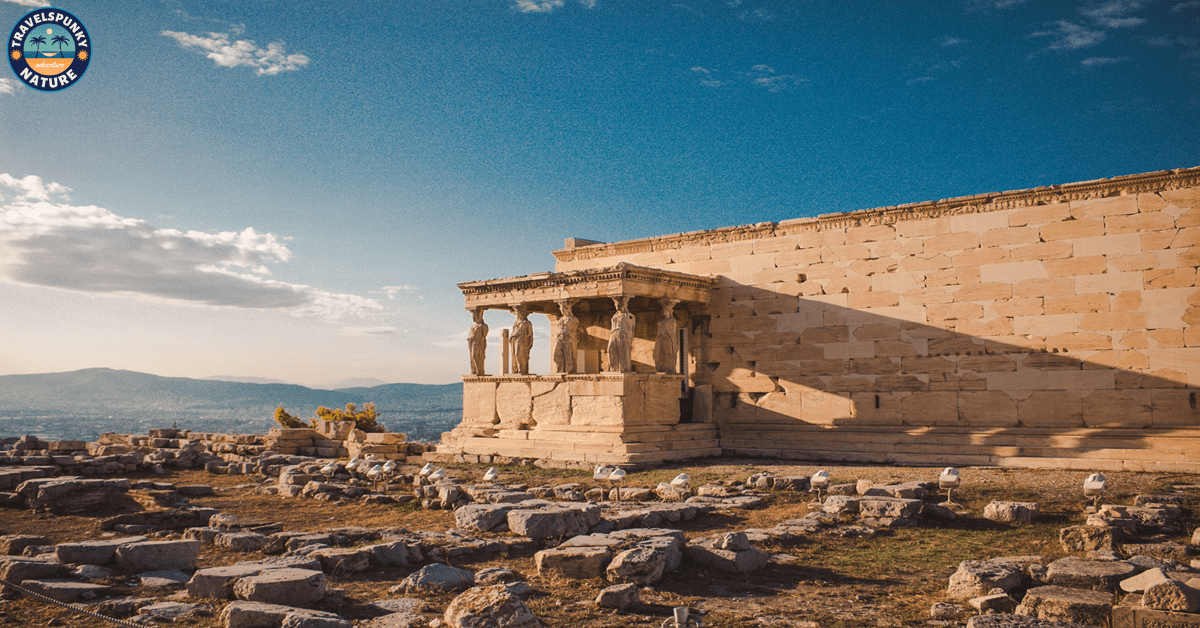
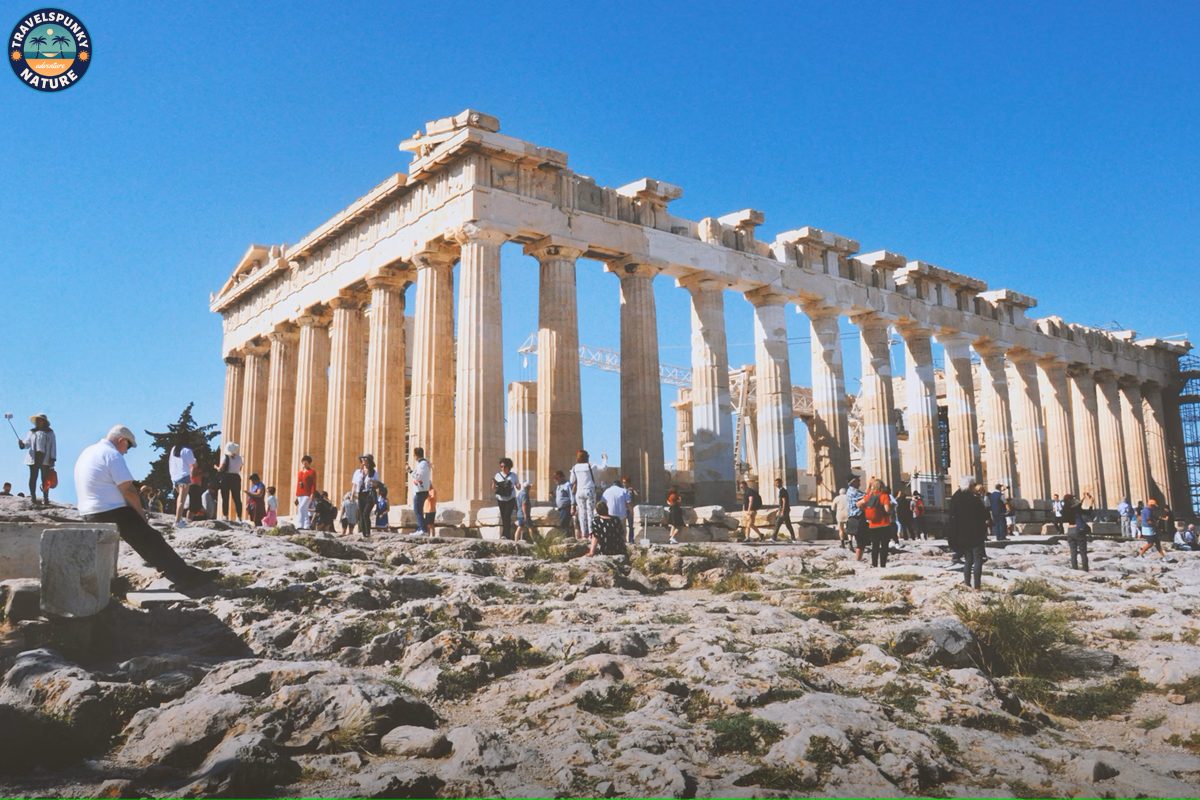
The Acropolis is the flat topped rock that rises about 150 m over Athens, crowned by the Parthenon, the marble temple to Athena built between 447 and 432 BC. Around it stand the Propylaea gateway, the small temple of Athena Nike and the Erechtheion, whose porch is held up by the famous Caryatid statues. The slopes below are included in the same ticket, and the site has been a UNESCO World Heritage Site since 1987.
How to reach it: Akropoli metro station leaves you a short walk from the south east entrance, the calmer way in. The main west gate, above the Plaka lanes, draws the biggest queues.
Best months: April to May and late September to October bring warm days without the worst heat or crowds. In summer, book the first entry slot and be on the rock early.
Good to know: Entry costs about €30 all year since the April 2025 repricing, and every ticket carries a timed entry slot booked on the official Hellenic Heritage platform. Numbers are capped at 20,000 visitors a day, so summer slots can sell out days ahead. The old Athens combined ticket was abolished in April 2025, so every site now needs its own ticket, and the Acropolis Museum is separate again at about €20.
The honest catch: There is almost no shade on the rock, the worn marble paths are slippery, and by mid morning the Parthenon stands in a slow moving crowd. In a heatwave the site can also close for the hottest hours.
2. Ancient Agora of Athens
The Agora was the marketplace and civic heart of ancient Athens, where Socrates argued, juries voted and democracy happened under colonnades. Its star is the Temple of Hephaestus, built between 449 and 415 BC and still the best preserved ancient Greek temple anywhere, roof and columns intact. The rebuilt Stoa of Attalos holds the site museum, full of the everyday objects of Athenian life.
How to reach it: Thiseio and Monastiraki metro stations are both a few minutes away on foot, and the site makes an easy pair with the Acropolis on the same day.
Best months: The shoulder seasons suit it best, and late afternoon light flatters the temple. In winter it closes earlier.
Good to know: Entry costs about €20 and includes the museum in the Stoa. Since July 2025 visitors enter only through the Thiseio Square gate while the main Adrianou Street entrance is rebuilt, so plan your walk around that.
The honest catch: Most of the Agora is foundations at ankle height, and it rewards imagination more than eyesight. Since November 2025 the upper floor of the Stoa and the Church of the Holy Apostles have been closed, so the ticket covers a little less than it used to.
3. Delphi
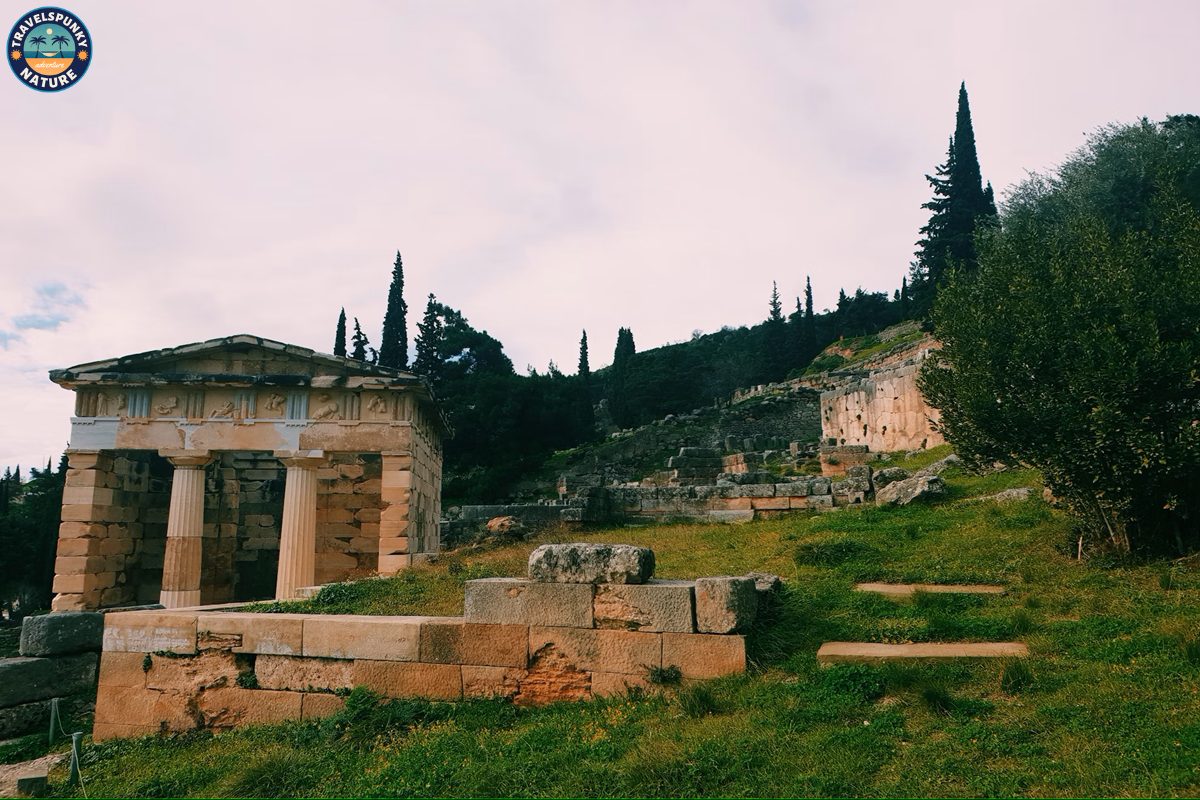
Delphi was the most sacred sanctuary in the Greek world, home to the oracle of Apollo, whose priestess answered questions from kings and cities for over a thousand years. The Greeks placed the centre of the world here, marked by a carved stone called the omphalos. The ruins climb the slopes of Mount Parnassus in terraces, up a Sacred Way to a theatre and a stadium, and the museum holds the bronze Charioteer, one of the great survivals of classical sculpture.
How to reach it: Delphi sits about 180 km north west of Athens. KTEL buses from the Liosion Street terminal take about three hours, and many visitors stay the night in the modern town or in nearby Arachova.
Best months: April to June and September to October give clear mountain air and manageable crowds. Winter days are short, and the site closes by mid afternoon.
Good to know: One ticket of about €20 covers the site and the museum together, and they cannot be bought apart. Treat the museum as half the visit, not an extra, because the Charioteer and the Sphinx of Naxos are the finest things here.
The honest catch: The sanctuary is a steep climb in full sun, and day trip coaches bunch in the middle of the day. Arrive at opening time, or stay overnight and walk up early.
4. Ancient Olympia
Olympia was a sanctuary of Zeus that hosted the original Olympic Games every four years from 776 BC until AD 393. Visitors still walk through the vaulted tunnel into the original stadium, where the stone starting line survives. The Temple of Zeus once held Phidias’s gold and ivory statue of the god, one of the Seven Wonders of the Ancient World, and the sculptor’s workshop stands nearby. The Olympic flame for the modern Games is lit here, in front of the Temple of Hera, before every edition.
How to reach it: Olympia lies in the western Peloponnese, about four and a half to five hours from Athens by bus through Pyrgos. Cruise passengers visit from Katakolo port, about 40 minutes away.
Best months: April to May and September to October. The valley is green in spring and the site is at its most peaceful outside the cruise and coach peaks of summer.
Good to know: One integrated ticket of about €20 covers the site, the Archaeological Museum and the Museum of the History of the Olympic Games. The Archaeological Museum is essential, because it holds the Hermes of Praxiteles and the Temple of Zeus pediments.
The honest catch: The ruins are mostly low foundations in an open field, and the wonder is split between the stadium, the setting and the museum. It is also the longest day trip in this guide, so it works better as an overnight stop.
5. Meteora Monasteries
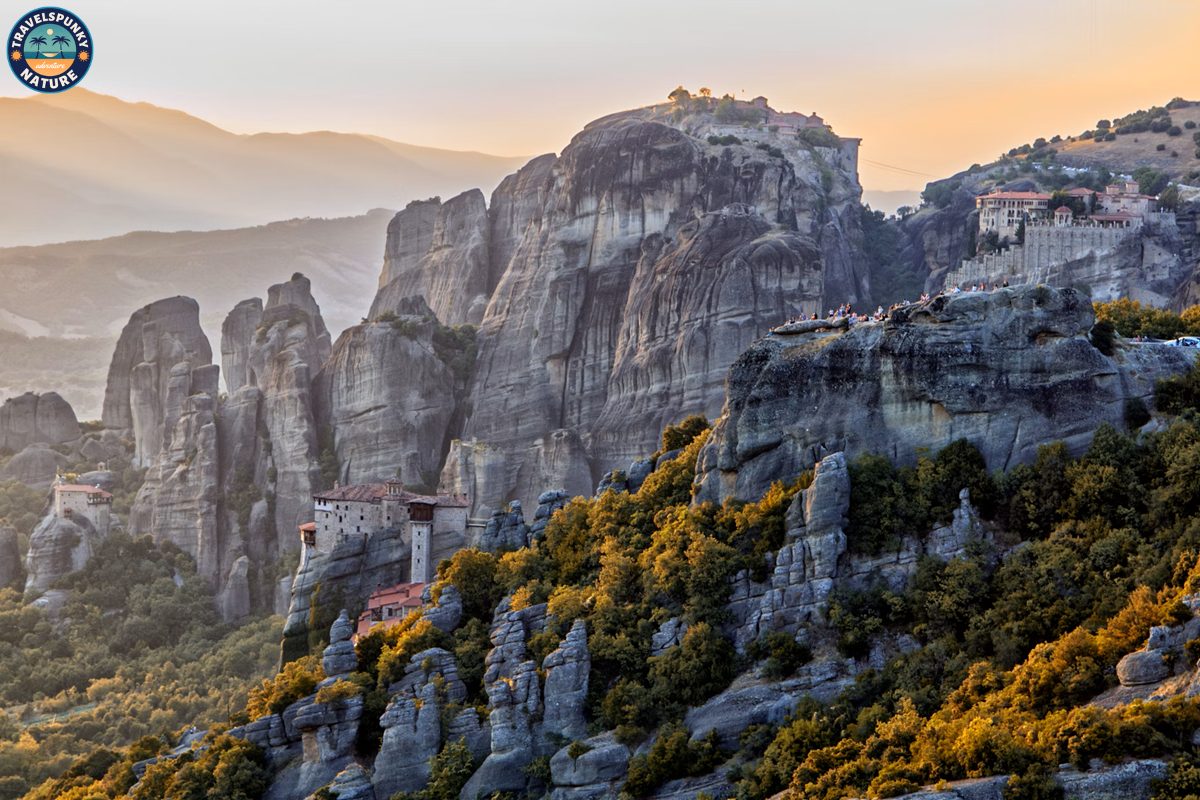
At Meteora, six working monasteries sit on top of sheer sandstone pillars over the Thessalian plain. Monks began building here in the 14th century and eventually raised 24 monasteries, reached in the early days only by ladders and by nets hauled up on ropes. Six survive today, four of monks and two of nuns, and the whole landscape is a UNESCO World Heritage Site. The Great Meteoron is the largest and oldest of them.
How to reach it: Kalambaka, the town at the foot of the rocks, is about four to five hours from Athens by train or bus. The rail line has had long repair closures in recent years, so check the timetable before relying on a train. Local buses and taxis run up to the monasteries.
Best months: April to June and September to November, on weekdays where you can. Weekends are the only days all six monasteries are scheduled to open, but they are also the busiest.
Good to know: Each monastery charges about €5 at its own door, in cash, and there is no combined ticket. Every monastery closes on a set weekday, the Great Meteoron on Tuesdays in summer and on more days in winter, so check the pattern before you fix your day. The dress code is strict, long trousers for men and long skirts and covered shoulders for women, and wrap skirts are lent at the doors.
The honest catch: Reaching each monastery means hundreds of steps, opening hours are short and change with feast days, and a day trip from Athens spends as long on the road as among the rocks. One night in Kalambaka transforms the visit.
6. Epidaurus
Epidaurus was the ancient world’s most famous healing centre, a sanctuary of Asklepios where the sick came to be cured. Its glory is the theatre, built around 330 BC by Polykleitos the Younger and still the finest surviving theatre of classical Greece. It seats about 14,000 people, and its acoustics are so exact that a coin dropped on the stage can be heard in the highest row. The theatre still hosts ancient drama every summer, as part of the Athens and Epidaurus Festival.
How to reach it: Epidaurus is about two hours from Athens by road, and KTEL buses serve the site from Athens and Nafplio. Most visitors pair it with Mycenae and a night in Nafplio.
Best months: May, June and September for the site itself. In July and August, come for an evening festival performance instead.
Good to know: Entry costs about €20 and covers the theatre, the sanctuary ruins and the small museum. Festival performances are ticketed separately and the famous productions sell out, so book those ahead.
The honest catch: The theatre is so good that the rest of the sanctuary can feel like an afterthought. Tour groups run the coin dropping test all morning, so the famous silence is easier to find early or late in the day.
7. Mycenae
Mycenae was the stronghold of Agamemnon, the king who led the Greeks against Troy in Homer’s Iliad, and the centre of the Bronze Age civilisation named after it. Visitors enter through the Lion Gate, built around 1250 BC, where two lionesses carved in relief stand over a lintel of staggering weight. Inside the Cyclopean walls lie the royal shaft graves of Grave Circle A, where Schliemann’s excavations in 1876 uncovered gold masks and treasure. A short walk away stands the Treasury of Atreus, a beehive tomb whose stone dome stayed the largest of its kind for well over a thousand years.
How to reach it: Mycenae is about 90 minutes from Athens by car, and KTEL buses run to the modern village near the site. It combines naturally with Epidaurus and Nafplio in one Argolis trip.
Best months: April to May and September to October. The citadel is an exposed hilltop and summer midday heat up there is punishing.
Good to know: One ticket of about €20 covers the citadel, the site museum and the Treasury of Atreus, which stands apart from the main gate, so do not drive off without seeing it. The famous gold from the graves is displayed in Athens, not here.
The honest catch: There is almost no shade and little standing architecture above waist height in places. Readers who know a little of the Iliad get far more from Mycenae than those who arrive cold.
8. Palace of Knossos, Crete
Knossos was the largest palace of the Minoan civilisation, the seagoing culture that flourished on Crete long before classical Greece. The palace in its grandest form dates from about 1700 BC, a sprawling complex around a central court, and its maze-like plan sits behind the Greek myths of the labyrinth, the Minotaur and King Minos. The Throne Room, the Grand Staircase and the giant storage jars survive, and in 2025 Knossos joined the UNESCO list as part of the Minoan Palatial Centres.
How to reach it: The site lies about 5 km south of Heraklion, and city buses run out to it from the centre. Crete is reached by overnight ferry from Piraeus or by a short flight from Athens.
Best months: April to June and September to October. In summer, go at opening time, because the site has little shade and coach groups arrive from mid morning.
Good to know: Entry costs about €20. The old combined ticket with the Heraklion Archaeological Museum was discontinued in the 2025 reform, and the museum now costs about €20 on its own. The original frescoes and finds are in the museum, while the palace walls carry copies.
The honest catch: Much of what you see was rebuilt in the early 1900s by the excavator Arthur Evans, in concrete and bright paint, following his own reading of the evidence. Some visitors love the help, others feel they are touring one man’s theory.
9. Rhodes Old Town
Rhodes Old Town is one of the best preserved medieval towns in Europe, a living walled city built by the Knights of St John, who ruled the island from 1309 to 1522. Four kilometres of walls ring a maze of lanes, and the Street of the Knights climbs to the Palace of the Grand Master at the top. The town has been a UNESCO World Heritage Site since 1988, and unlike many old towns it is still home to thousands of residents.
How to reach it: Rhodes Town is the island’s hub, with an airport a short drive away and ferries docking beside the walls. The Old Town is walked, not driven.
Best months: May to June and September to October, when the lanes are lively but not packed and the heat is kinder for climbing the walls and towers.
Good to know: Walking the streets costs nothing. The Palace of the Grand Master charges about €20, and the same pricing applies at the Acropolis of Lindos, about an hour south, which moved to timed entry in 2026. Many visitors rate Lindos as the island’s second essential sight.
The honest catch: The palace is largely a grand rebuild from the Italian occupation of the 1930s rather than a medieval survivor, and the main lanes fill with cruise crowds at midday. The quiet back streets a few turns away are the real reward.
10. Santorini’s Caldera and Akrotiri
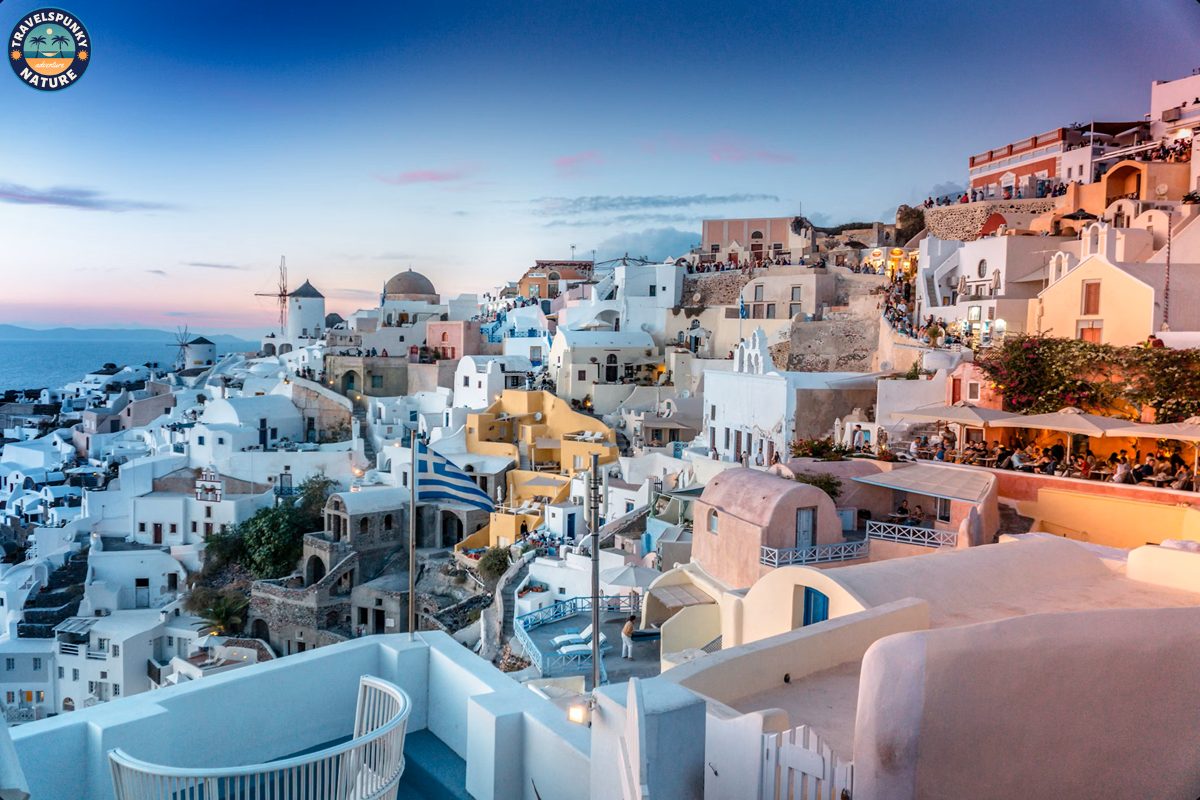
Santorini is the rim of a drowned volcano. An eruption around 1600 BC blew out the island’s centre, left the crescent of cliffs that ring the caldera today, and buried the town of Akrotiri under ash, preserving whole streets and houses. The white villages of Fira and Oia cling to the cliff edge above the flooded crater. This guide gives the short version, because the island deserves, and on this site already has, a full guide of its own.
How to reach it: Ferries from Piraeus and other islands arrive at Athinios port, and the island also has an airport. Local buses link Fira with Oia and Akrotiri.
Best months: May, June, September and early October. The light is still golden, the sea is warm and the worst of the crowds and prices have eased.
Good to know: The caldera views themselves are free. Akrotiri costs about €20 and sits under a protective roof, which makes it one of the few Greek sites that works at midday. Cruise passengers now pay a disembarkation levy of €20 in the peak season, and daily cruise numbers are capped at 8,000.
The honest catch: Oia at sunset in summer is shoulder to shoulder, prices are among the highest in Greece, and the cable car queue from the old port can swallow an hour. Stay overnight and the island calms down every evening.
11. Corinth Canal
The Corinth Canal is a single straight cut through the narrow Isthmus of Corinth, finished in 1893 after a line of ancient rulers, from Periander to Nero, had dreamed of it or dug at it. The channel runs for 6.34 km between near vertical rock walls that rise to about 90 m, yet it is only about 24.6 m wide at the top, too narrow for modern shipping. Today it carries yachts and tourist boats, and at each end a submersible bridge sinks beneath the water to let them pass.
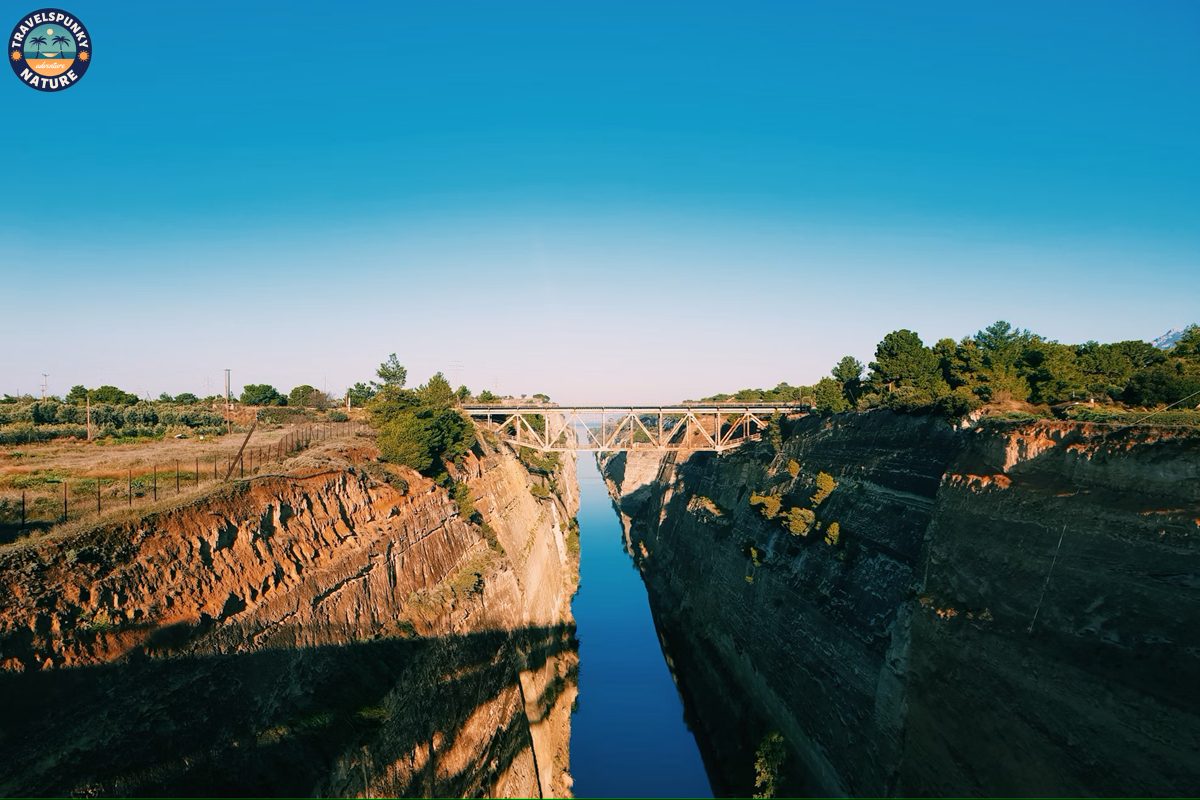
How to reach it: The canal is about an hour from Athens by car, bus or train towards Corinth and Loutraki. Most visitors see it as a stop on the drive between Athens and the Peloponnese.
Best months: Any month works, because this is a short stop rather than a day out. Morning light shows the cut and the water at their clearest.
Good to know: Looking down from the bridges is free, and the main road bridge has the classic view along the channel. Boat trips through the canal run in season from Loutraki and Isthmia.
The honest catch: Twenty to thirty minutes is enough for most visitors. The canal has also had long closures to boats after rockfalls in recent years, so a trip through it can never be promised in advance.
12. Vergina and the Royal Tombs of Aigai
Aigai, at modern Vergina, was the first capital of the Macedonian kingdom, where its kings were crowned and buried. In 1977 excavations under a great grass mound uncovered royal tombs that had never been robbed, one of them believed to be the tomb of Philip II, father of Alexander the Great. The finds are displayed where they were found, inside an underground museum built into the mound, and they include the golden larnax that held the king’s ashes and a golden oak wreath of astonishing detail. The vast Palace of Aigai stands a short walk away.
How to reach it: Vergina is about an hour from Thessaloniki by car or bus. It pairs easily with Pella, the later Macedonian capital, in one day trip.
Best months: April to June and September to October for the region as a whole, though the tombs museum is indoors and works in any weather, including the depths of winter.
Good to know: One unified ticket of about €20 covers the tombs museum, the main museum building of Aigai, the palace and the ancient theatre. The tombs museum is kept deliberately dark and cool to protect the treasures, and photography is not allowed inside it.
The honest catch: Vergina sits off every standard tourist route and takes a deliberate trip from Thessaloniki. That is also why it stays calm, and why travellers who make the effort rank it among the finest sights in Greece.
Best time to visit Greece
For most of this list, April to June and September to October are the sweet spots. The days are warm, sites and ferries run full timetables, and the crowds are thinner than in high summer. Spring also brings wildflowers to the ruins.
July and August are hot, busy and expensive, and in heatwaves the big open sites can close for the middle of the day, so plan sightseeing for early morning and evening. Winter brings shorter site hours and thinner ferry schedules, but Athens, Delphi, Meteora and Vergina all work well then. State sites also open free on set dates each year, including 6 March, 18 April, 18 May, the last weekend of September, 28 October and the first and third Sundays from November to March.
How to reach Greece and getting around
Most visitors arrive at Athens International Airport, and Crete, Rhodes and Santorini also have airports with seasonal direct flights from across Europe. Ferries from Piraeus and Rafina, the two ports of Athens, link the islands, and the overnight ferry to Crete doubles as a night’s accommodation.
On the mainland: KTEL, the regional bus network, is the backbone for Delphi, Olympia, Mycenae, Epidaurus and Meteora, and it is cheap and reliable. Trains serve only a few of these routes well, so buses usually win. Renting a car suits a Peloponnese loop of Corinth, Mycenae, Epidaurus and Olympia best of all.
Tickets and money: State sites sell timed tickets on the official Hellenic Heritage platform, and buying the Acropolis ahead is close to essential in season. Since April 2025 there is no national combined ticket, so budget site by site. EU citizens under 25 enter state sites free with ID, and visitors under 18 from outside the EU are also free.
Island travel: Book summer ferries ahead, and keep an eye on the meltemi wind in July and August, which can delay boats in the Aegean.
FAQs
1. How many days do you need to see these landmarks?
Seven to ten days covers Athens and a mainland loop to Delphi, Meteora, Mycenae and Epidaurus. Two weeks lets you add Olympia properly and give one island, Crete, Rhodes or Santorini, the time it deserves.
2. How much do Greece’s landmarks cost in 2026?
Greece repriced its state sites in April 2025 and scrapped the old combined tickets and winter discounts. The Acropolis costs about €30, most headline sites such as Delphi, Olympia, Knossos and Mycenae cost about €20, and the Meteora monasteries charge about €5 each in cash. EU citizens under 25 pay nothing at state sites.
3. Is the Athens combined ticket still worth buying?
It no longer exists. The pass that covered the Acropolis and six other Athens sites was abolished in April 2025, and any website still selling it is out of date or unofficial. Buy each site separately on the official Hellenic Heritage platform, and book the Acropolis slot first.
4. Which landmark makes the best day trip from Athens?
Delphi and Meteora are the classic full day trips, and Mycenae with Epidaurus makes a strong paired day in the Argolis. Olympia is the longest haul of the four, so it rewards an overnight stay.
5. Do you need a visa to visit Greece?
Greece is in the Schengen area. EU citizens need no visa, and visitors from the United States, the United Kingdom, Canada and Australia can enter visa free for up to 90 days in any 180 day period. Everyone else should check the Schengen rules for their passport before travelling.
6. What is the single best month for this trip?
Late May and late September are the strongest all round choices. The sea is warm enough to swim, every site and ferry route is running, and the crowds have not reached, or have just left, their summer peak.
Researched and verified: November 2026. This guide is research-based, compiled from official visitor information, maps and traveller reports. Prices, hours and rules change, so confirm them locally before travelling.