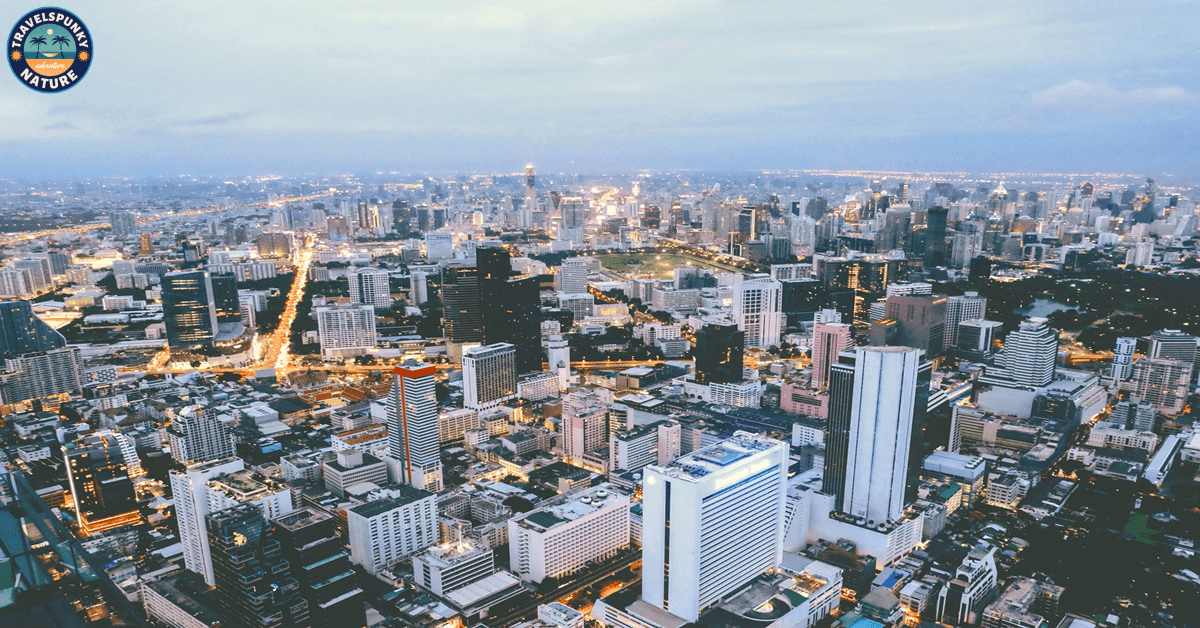
Bangkok is the capital of Thailand, a huge river city in Southeast Asia built around temples, markets, canals and street food. It can overwhelm a first visit, because the famous sights sit in very different corners of the city and the traffic between them is slow.
This guide lists the twelve experiences worth planning a trip around, with what each one costs, when it opens and where it falls short. Prices are given in baht and hedged as ranges where they change often.
At a glance
| No. | Experience | Where | What it costs | Known for |
|---|---|---|---|---|
| 1 | The Grand Palace and Wat Phra Kaew | Old town, by the river | 500 baht for visitors | The Emerald Buddha and the royal palace complex |
| 2 | Wat Pho | Old town, next to the palace | 300 baht | The 46 m Reclining Buddha and traditional Thai massage |
| 3 | Wat Arun | Across the river from Wat Pho | About 200 baht | The porcelain covered tower above the river |
| 4 | The Chao Phraya River and the Thonburi Canals | River piers and the west bank | Day pass about 150 baht | Seeing the city from the water |
| 5 | Chatuchak Weekend Market | North Bangkok | Free entry | More than 15,000 stalls, open in full at weekends |
| 6 | Chinatown and Yaowarat Street Food | Yaowarat Road | Free to wander | Street food after dark |
| 7 | Jim Thompson House | Near National Stadium station | 250 baht | Teak houses, silk and a famous disappearance |
| 8 | Lumpini Park | Silom | Free | Green space and giant monitor lizards |
| 9 | Mahanakhon SkyWalk | Silom, Chong Nonsi | About 1,000 to 1,200 baht | Thailand’s highest viewing deck and a glass floor |
| 10 | Muay Thai at Rajadamnern Stadium | Edge of the old town | About 1,000 to 2,500 baht | Real fights, every night of the week |
| 11 | The Floating Markets Day Trip | 80 to 100 km out of the city | Tours about 700 to 1,000 baht | Boats selling food and fruit on the canals |
| 12 | The Ayutthaya Day Trip | About 80 km north | Train from about 15 baht | The ruined old capital of Siam |
1. The Grand Palace and Wat Phra Kaew
The Grand Palace is the sight every first trip to Bangkok is built around. It is a walled complex of golden halls, spires and courtyards beside the Chao Phraya River, and for generations it was the home of Thailand’s kings. Inside the same walls stands Wat Phra Kaew, the Temple of the Emerald Buddha, the most sacred Buddhist temple in Thailand. The Emerald Buddha itself is small and sits high in a dark, richly decorated hall.
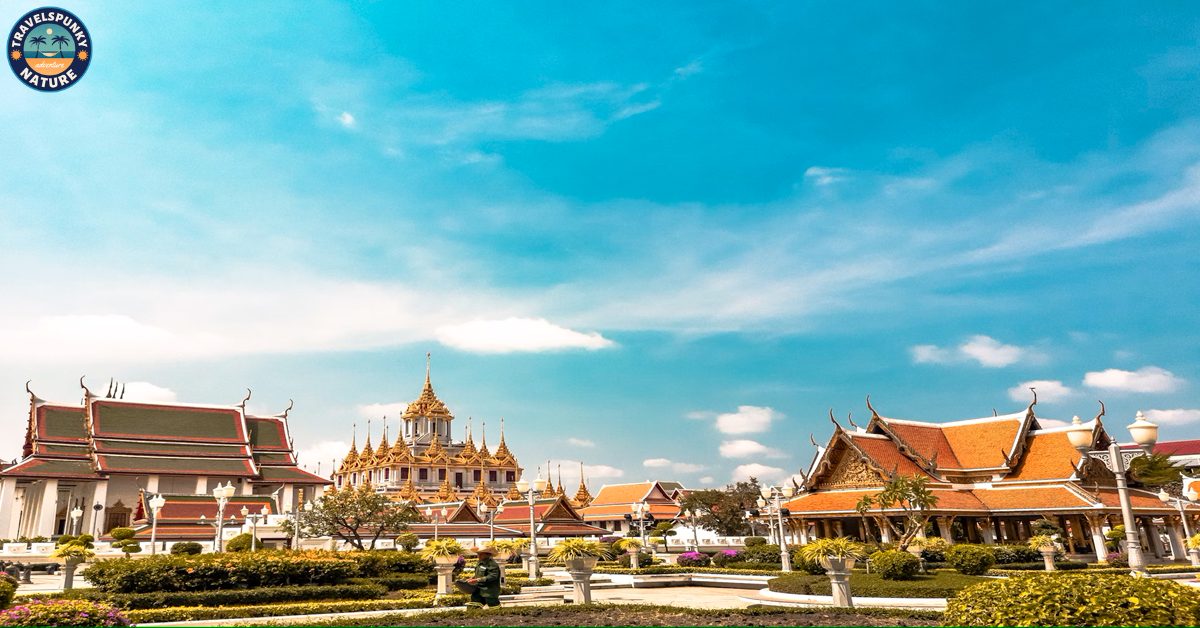
Cost: Entry costs 500 baht for foreign visitors, and the ticket also covers the Queen Sirikit Museum of Textiles inside the complex. Thai nationals enter free.
Opening hours: The palace opens daily from 8:30 AM. Ticket sales stop at 3:30 PM, and the grounds close at 4:30 PM. Entry is now through the Mani Noppharat Gate.
Dress code: This is the strictest dress code of any sight in Thailand, and staff check at the gate. Shoulders and knees must be covered. Shorts, sleeveless tops, see through clothing, torn pants and tight leggings are all turned away. Clothing can be rented near the entrance if you arrive dressed wrong.
Watch out: Anyone near the palace who tells you it is closed today for a ceremony or a special Buddha day is running a scam. The palace opens every day. The story ends at gem shops and tailor shops that pay the driver a commission, and there is no government gem sale. Walk to the gate and check for yourself.
The honest downside: The complex is hot, crowded and short on shade by late morning. Arrive at the 8:30 AM opening, allow about 2 hours, and pair it with Wat Pho, a short walk away.
2. Wat Pho and the Reclining Buddha
Wat Pho stands a short walk south of the Grand Palace, and it holds the Reclining Buddha, a gold covered statue 46 m long and 15 m high. Its feet are inlaid with mother of pearl panels, and along the hall behind it sit 108 bronze bowls, into which visitors drop a coin each for luck. The wider grounds are a working temple, with rows of statues, small gardens and far fewer crowds than the palace next door.
Cost: Entry costs 300 baht for foreign visitors, and the ticket includes a bottle of water. The fee rose from 200 baht in January 2024, so older guides printing 100 or 200 baht are out of date.
Opening hours: The temple opens daily at 8:00 AM. The halls close earlier than the grounds in the evening, so arrive by about 5:30 PM at the latest to see the Reclining Buddha.
Thai massage: Wat Pho is the birthplace of traditional Thai massage, and its massage school still treats visitors. A session costs about 340 baht for 30 minutes and about 520 baht for an hour. Confirm the current price list at the school desk.
How to reach it: Sanam Chai MRT station, exit 1, is a few minutes away on foot, and Tha Tien pier is closer still.
The honest downside: The Reclining Buddha hall is narrow, and the statue is too long to take in at once or photograph whole. The calm temple grounds around it are the quieter half of the visit.
3. Wat Arun, the Temple of Dawn
Wat Arun stands on the west bank of the river, directly across from Wat Pho, and it is the temple on every Bangkok skyline photo. Its central tower is a steep prang covered in pieces of coloured porcelain, and a staircase climbs partway up it to a terrace with views back across the water to the Grand Palace. Despite the name, the temple photographs beautifully at both sunrise and sunset, when the light catches the porcelain.
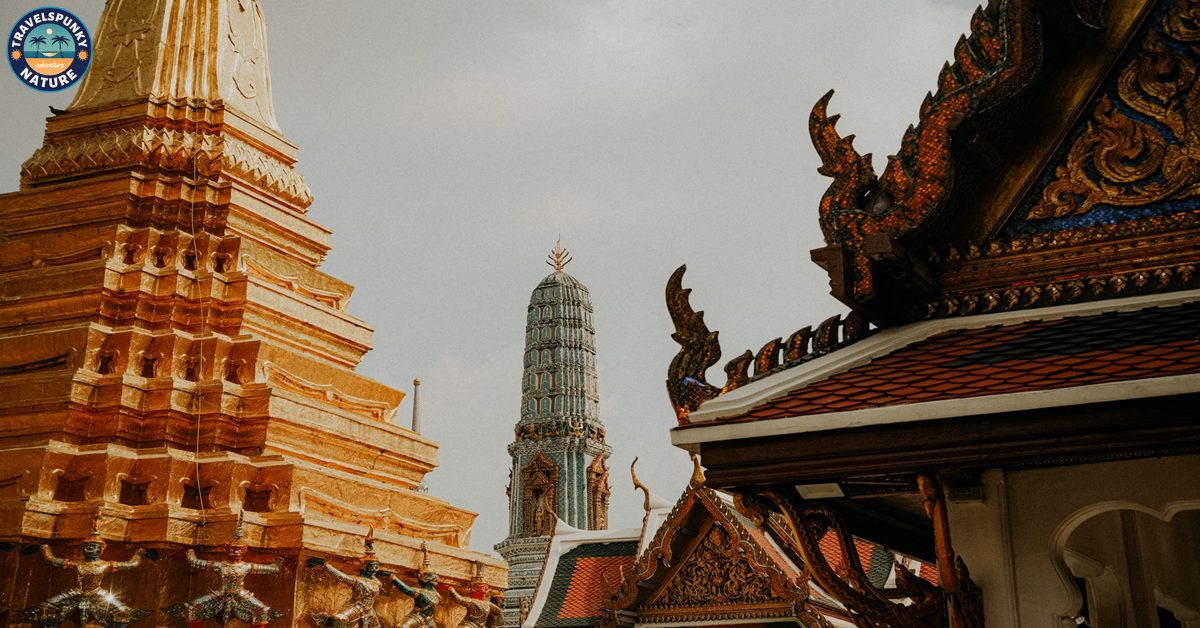
Cost: Entry costs about 200 baht for foreign visitors. Some older listings still print 100 baht, so confirm the price at the gate.
Opening hours: The temple opens daily from 8:00 AM to 6:00 PM, with last entry at about 5:30 PM.
How to reach it: Take the cross river ferry from Tha Tien pier, beside Wat Pho. The crossing takes about two minutes and costs about 5 baht.
Dress code: Wat Arun is a working temple, so shoulders and knees must be covered here too.
The honest downside: The steps are steep and narrow, and the visit is short once you have climbed up and looked around. It pairs best with Wat Pho on the same morning, before the heat builds.
4. The Chao Phraya River and the Thonburi Canals
The river is Bangkok’s oldest main road, and it is still the pleasantest way to cross the old town. The blue flag Chao Phraya Tourist Boat runs between Sathorn pier, beside Saphan Taksin BTS station, and Phra Arthit pier near Khao San Road. It stops at the piers that matter, including ICONSIAM, Ratchawong for Chinatown, Pak Khlong Talat, Wat Arun, Tha Tien for Wat Pho and Tha Chang for the Grand Palace. Boats run about every 30 minutes through the day.
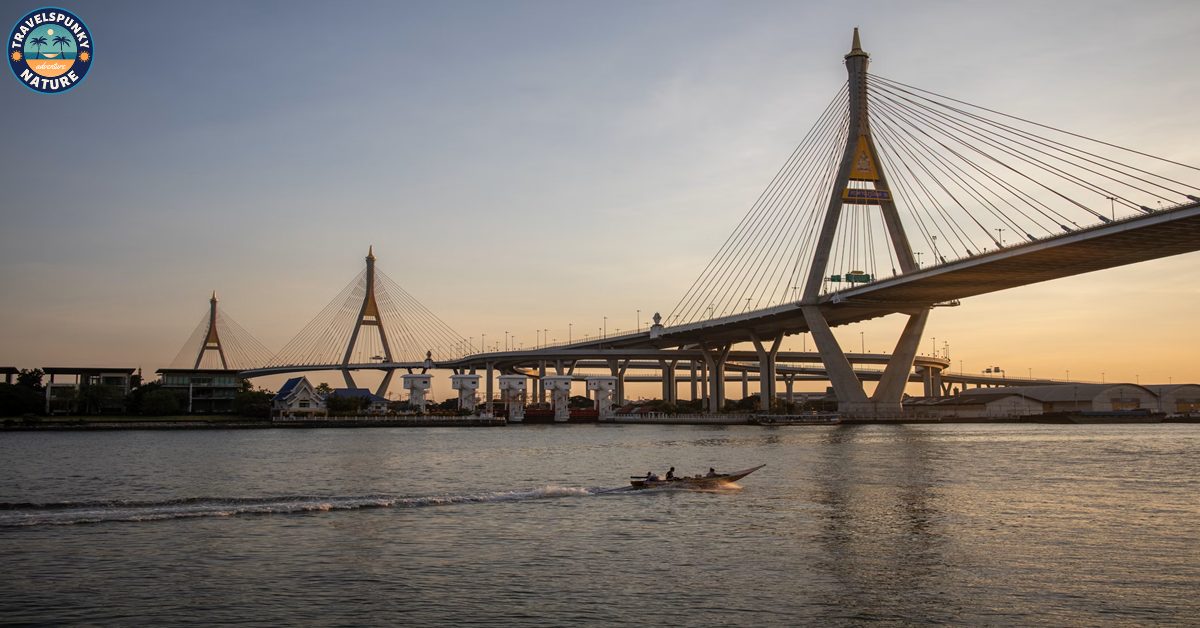
Cost: A day pass for the tourist boat costs about 150 baht (a discounted rate against a 225 baht list price), and a single trip costs about 40 baht. The pass pays for itself after about four rides. Local orange flag express boats cost about 19 baht a trip, and the small cross river ferries cost about 5 baht.
The canals: From Tha Chang or Tha Tien pier, hire a longtail boat into the canals of Thonburi, on the west bank. The classic loop runs along Khlong Bangkok Noi and Khlong Bangkok Yai, past stilt houses, orchards, small temples and the Royal Barge Museum.
Canal boat cost: A private longtail boat costs about 1,200 to 2,500 baht per boat for one to two hours, not per person. Agree the price, the route and the length of the trip before you board.
Watch out: Touts away from the official piers quote 3,000 baht and more for the same boat. Hire at the pier, where the rates are posted.
The honest downside: Longtail boats are loud, low and splashy, and boarding means a step down into the boat. Anyone with limited mobility will find the big river boats easier.
5. Chatuchak Weekend Market
Chatuchak is one of the largest weekend markets in the world. More than 15,000 stalls fill 27 sections over about 35 acres, selling clothes, antiques, ceramics, furniture, plants, pets and a great deal of food. Around 200,000 visitors come across a single weekend, and the market is a sight in itself. The clock tower at the centre is the landmark everyone navigates by, and free paper maps are handed out at the gates.
When: The full market runs on Saturday and Sunday only, from 9:00 AM to 6:00 PM, and entry is free. A wholesale session runs on Friday night, and Wednesday and Thursday bring a plant market only, not the full market.
How to reach it: Take the MRT to Kamphaeng Phet station, exit 2, which surfaces inside the market. Mo Chit BTS station and Chatuchak Park MRT station are also a short walk away. Go by train, because weekend road traffic around the market barely moves.
The honest downside: The market is huge, hot and easy to get lost in, and the inner lanes peak between 11:00 AM and 2:00 PM. Arrive at the 9:00 AM opening, carry water and cash in small notes, and agree a meeting point at the clock tower.
6. Chinatown and Yaowarat Street Food
Yaowarat Road is the main street of Bangkok’s Chinatown, and after dark it becomes the city’s most famous street food strip. Stalls set up along the pavements from late afternoon, the neon signs come on, and grills, noodle carts and dessert sellers take over the street. Look for kuay jab, rolled rice noodles in a peppery broth. Add oyster omelettes, roast duck and grilled seafood, and finish with mango sticky rice. Graze across several stalls rather than filling up at the first one.
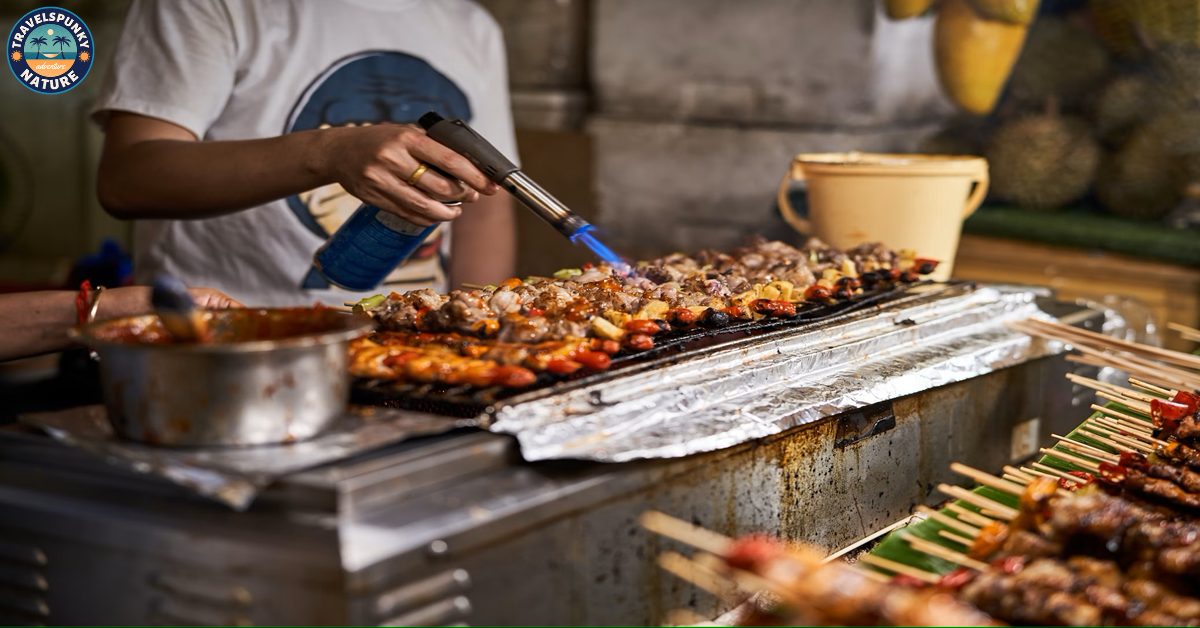
When: Come in the evening, from about 6:00 PM, when the full line of stalls is out. Many stalls close on Mondays, when a city rule keeps street vendors off the pavements, so plan any other night of the week.
Cost: Street dishes are cheap, and a full evening of grazing costs about 300 to 600 baht per person. Carry small notes, because most stalls take cash only.
A daytime extra: At the edge of Chinatown stands Wat Traimit, home to a solid gold Buddha image. Entry costs about 100 baht, and the temple opens from about 8:00 AM to 5:00 PM.
How to reach it: Wat Mangkon MRT station drops you in the middle of the district. Do not come by taxi in the evening, because Yaowarat Road jams solid after dark.
The honest downside: The street is loud, crowded and hot, and the pavements narrow to a shuffle at peak hours. That noise and crush is also the atmosphere people come for.
7. Jim Thompson House
The Jim Thompson House is a group of six antique teak houses, brought from around Thailand and joined together in 1958 and 1959 on the bank of Khlong Saen Saep. It was the home of Jim Thompson, the American who built Thailand’s most famous silk company, and it is filled with his collection of Thai and Southeast Asian art. Thompson disappeared while walking in Malaysia in 1967 and was never found, and the house has been a museum ever since, with a silk shop and a leafy garden below it.
Cost: Entry costs 250 baht for adults and 150 baht for visitors aged 10 to 21 with ID. Children under 10 enter free with an adult.
Opening hours: The museum opens daily from 10:00 AM to 5:00 PM.
Know before you go: The main house can only be seen on a guided tour. The tour is included in the ticket, takes about 35 to 40 minutes and runs in several languages. The garden, the shop and the cafe can be explored freely.
How to reach it: National Stadium BTS station is about four minutes away on foot.
The honest downside: You cannot wander through the house at your own pace, and tours leave when a group fills, so there can be a wait at busy times.
8. Lumpini Park
Lumpini Park is Bangkok’s first public park, about 57 hectares of lakes, lawns and shaded paths between the Silom and Sukhumvit districts. In the early morning it fills with joggers, tai chi groups and outdoor aerobics classes, and it is the easiest green break in the city. Its famous residents are the Asian water monitor lizards, some more than two metres long, which swim in the lakes and sunbathe on the banks as if they owned the place.
Cost: Entry is free. Swan shaped paddle boats on the lake cost a small fee.
Opening hours: The park opens daily from about 4:30 AM to about 9:00 PM. Early morning and late afternoon are the best times, when the air is cooler and the park is alive.
How to reach it: Lumphini and Si Lom MRT stations sit at its corners, and Sala Daeng BTS station is a short walk away.
The honest downside: The lizards are wild animals, protected by law. Keep your distance, never feed them, and give any lizard crossing a path the right of way. The middle of the day is hot and quiet, so time the visit for the ends of the day.
9. Mahanakhon SkyWalk
The King Power Mahanakhon tower is the pixelated skyscraper in Silom, and its SkyWalk is Thailand’s highest observation deck. A fast lift takes you to an indoor deck on the 74th floor, and above it sits an open air deck on the 78th floor. The headline feature is a glass floor set into the roof at 310 m above the street, and you look straight down through it. The highest point of the deck, called the Peak, stands at 314 m.
Cost: Tickets cost about 1,000 baht for daytime entry and about 1,200 baht for the sunset entry band, and one ticket covers both the indoor deck and the rooftop glass floor. Prices and packages change, so check the official site before you go.
Opening hours: The SkyWalk opens daily from 10:00 AM. The sunset slots are the busiest of the day, so book ahead if you want the evening light.
How to reach it: Chong Nonsi BTS station, exit 3, connects straight into the building.
The honest downside: This is one of the priciest sights in this guide, and the rooftop and the glass floor close in rain or strong wind. On a hazy day, which Bangkok has often, the view shrinks fast.
10. Muay Thai at Rajadamnern Stadium
Muay Thai is Thailand’s national sport, and Rajadamnern Stadium, staging fights since 1945, is its classic venue. A fight night runs through a card of bouts, each opened by the fighters’ traditional ritual dance to live music, and the atmosphere builds through the evening as the local betting crowd gets louder. Saturday is the biggest night of the week, when the Rajadamnern World Series brings the best known fighters and a full production.
Cost: Tickets run from about 1,000 baht for third class seats to about 2,500 baht at ringside, with club class seats at about 1,800 baht in between. Buy from the stadium or its official sellers.
When: Fights run every night of the week. Gates open at 5:00 PM or 6:00 PM depending on the night, and the main bouts come later in the evening.
Watch out: Scalpers outside the stadium charge well over the door price for the same seats. Book ahead, or buy at the official counter inside.
The honest downside: Fight cards change at short notice and tickets are usually non-refundable, so book once your plans are fixed. The cheapest seats sit high and far from the ring.
11. The Floating Markets Day Trip
The floating markets sit outside the city, where canals are still working waterways lined with orchards and stilt houses. Damnoen Saduak, about 100 km southwest of Bangkok, is the famous one, a daily market where boats sell fruit, noodles and souvenirs along crowded canals. Amphawa, about 80 km away, runs from Friday to Sunday only, builds through the afternoon and is known for grilled seafood and for firefly boat trips after dark.
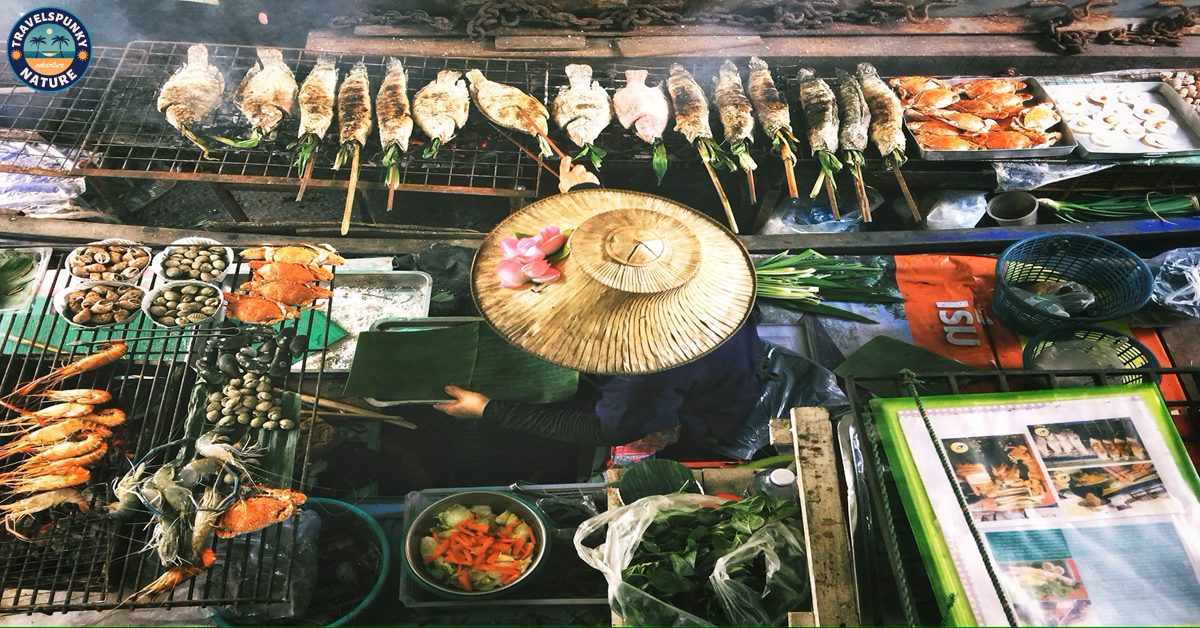
Cost: Entry to the markets is free, and boats and food are the cost. At Damnoen Saduak, a short paddle boat ride hired at the official pier should cost a few hundred baht per boat. Organised half day tours from Bangkok cost about 700 to 1,000 baht per person and often add the Maeklong Railway Market. At Amphawa, shared firefly boats cost about 50 to 150 baht per person.
Watch out: Touts at car parks outside Damnoen Saduak steer visitors to boat piers away from the market and quote 2,000 to 3,000 baht for a boat. Hire your boat at the market itself, and agree the price and the length of the ride before you board.
The honest downside: Damnoen Saduak is a tourist scene as much as a working market, and its canals jam by mid morning. Arrive before 9:00 AM, or choose Amphawa on a weekend for a calmer and more local feel.
12. The Ayutthaya Day Trip
Ayutthaya was the capital of Siam from 1350 to 1767, when a Burmese army destroyed it. Its ruined temples stand on a flat island where three rivers meet, about 80 km north of Bangkok, and UNESCO listed the historic city in 1991. Wat Mahathat holds the famous Buddha head tangled in the roots of a banyan tree. Wat Phra Si Sanphet, the old royal temple, keeps its row of three great chedis. Wat Chaiwatthanaram, across the river, is the favourite for late afternoon light.
Cost: Temples charge about 50 to 80 baht each for foreign visitors, and a combined pass covering the main temples costs about 220 to 300 baht. Prices have changed recently, so confirm at the first gate. A few sights, such as the big reclining Buddha at Wat Lokaya Sutha, are free.
How to reach it: Trains leave from Krung Thep Aphiwat Central Terminal, and some ordinary trains still use Hua Lamphong station. Third class fares cost about 15 to 20 baht, and the ride takes about 1 hour 30 minutes to 2 hours. Guided day tours from Bangkok cost about 1,000 to 1,800 baht, with transport and lunch included.
Getting around: The ruins spread across the island, too far apart to walk between in the heat. Hire a bicycle near the station for about 50 to 100 baht a day, or hire a tuk tuk by the hour at about 200 to 300 baht.
The honest downside: It is a full and hot day out. One day covers four to six temples comfortably, not the whole island, so pick the famous ones and do not rush.
Best time to visit Bangkok
November to February is the kindest season, drier and a little cooler, and the best months for walking between sights. March to May is the hot season, when afternoons push sightseeing into the morning and the evening. June to October is the rainy season, when heavy downpours arrive on most afternoons and usually clear within an hour or two.
The temples, markets and stadiums in this guide run all year. Whatever the month, start the old town early, because the Grand Palace gates open at 8:30 AM and the heat builds fast. If your trip includes a weekend, keep it free for Chatuchak, and keep Monday free of Yaowarat, when many of its stalls rest.
How to reach Bangkok, and getting around
Most visitors land at Suvarnabhumi Airport, the main international gateway. The Airport Rail Link runs from the airport basement to Phaya Thai station in about 30 minutes and costs 45 baht, with a change there onto the BTS. Don Mueang Airport handles many budget flights and relies on buses, taxis and the Red Line train.
Trains in the city: The BTS Skytrain and the MRT subway together cover every sight in this guide. BTS rides cost about 17 to 65 baht and MRT rides cost about 17 to 45 baht, and trains run from about 6:00 AM to midnight.
Cards: A Rabbit card works on the BTS but not on the MRT, which takes contactless bank cards at the gate. There is no single ticket across both systems yet, so expect to pay again when you change between them.
Taxis and tuk tuks: Taxis must use the meter by law. If a driver refuses and quotes a flat fare, close the door and take the next one, or use a ride hailing app, which shows the fare before you ride. A tuk tuk ride offered at 20 baht is never just a ride, because it ends at shops that pay the driver.
Where to stay: This guide covers what to do, not where to sleep. The river and the old town suit a first trip built around the temples, and Sukhumvit suits a trip built around trains, malls and nightlife. Our separate Bangkok where to stay guide covers the areas and the hotel choices in full.
FAQs
1. How many days do you need in Bangkok?
Three to four days covers this guide well. Give one day to the old town temples, one to the river, the canals and Chinatown, and one to a day trip. Add a weekend morning for Chatuchak if your dates allow it.
2. How much does the Grand Palace cost, and what should you wear?
Entry costs 500 baht for foreign visitors. Cover your shoulders and knees, and avoid shorts, sleeveless tops, torn pants and tight leggings, because staff check at the gate and turn people away.
3. Is it true that the Grand Palace closes on some days?
No. It opens daily, with ticket sales until 3:30 PM. Anyone who tells you it is closed today is steering you towards shops that pay him a commission. Walk to the gate and see for yourself.
4. What is the best way to get around Bangkok?
Use the BTS and MRT trains for distance, the river boats for the old town, and metered taxis or ride hailing apps for the gaps. Traffic jams are the city’s worst feature, and the trains and boats simply skip them.
5. When is Chatuchak Weekend Market open?
The full market runs on Saturday and Sunday only, from 9:00 AM to 6:00 PM, and entry is free. Arrive at opening time for cooler lanes and the best choice of stock.
6. Which day trip should you choose, Ayutthaya or the floating markets?
Choose Ayutthaya for history, because its ruined temples are the real thing. Choose the floating markets for colour and food, and accept that Damnoen Saduak is a tourist scene. Both trips need an early start, so give each one its own day if you do both.
Researched and verified: November 2026. This guide is research-based, compiled from official visitor information, maps and traveller reports. Prices, hours and boat fares change, so confirm them locally before travelling.