Bangkok is a huge city, and its sights, malls and nightlife sit in very different corners of it. The temples stand in the old town by the river. The big malls and most of the hotels line up along the Skytrain routes further east. Traffic between the two can eat an hour of a day, so the area you sleep in shapes the whole trip.
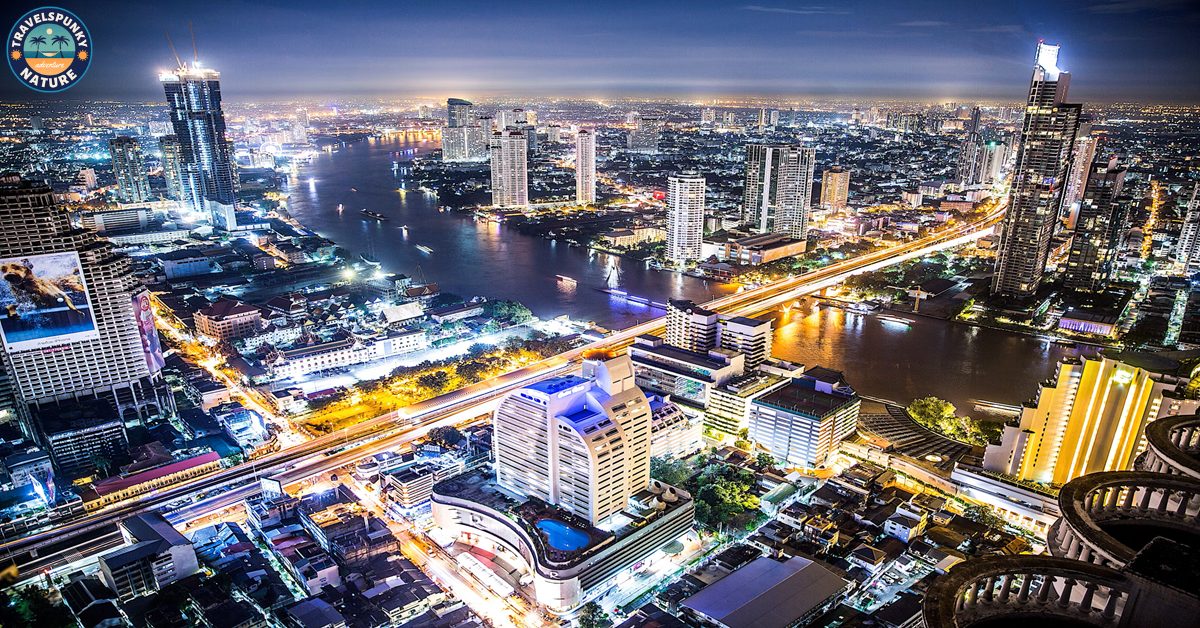
This guide compares the nine areas visitors actually stay in, with what each one suits, how it connects to the trains, the boats and the airports, and what a room there costs in 2026. Prices are in baht, per night for a double room, and printed as about ranges, because hotel rates move with the season and the day of the week.
One rule sits above all the others. Stay near a station. A hotel within about five to ten minutes on foot of a BTS or MRT station, or of a river pier, saves more time than any other choice in this guide. Listings that say near the BTS can mean a 20 minute walk in the heat, so check the walking distance on a map before you book.
At a glance
| No. | Area | Best for | Getting around | What rooms cost |
|---|---|---|---|---|
| 1 | Sukhumvit, Nana to Phrom Phong | First trips, food and nightlife | BTS and MRT together at Asok | Mid-range about 1,800 to 4,500 baht |
| 2 | Siam and Pratunam | Shopping and families | BTS Siam, where both lines meet | Mid-range about 2,000 to 5,000 baht |
| 3 | Silom and Sathorn | A bit of everything, business trips | BTS Sala Daeng and MRT Si Lom | Mid-range about 1,800 to 4,000 baht |
| 4 | The Riverside | Couples, views and temple days | BTS Saphan Taksin and the river boats | Mid-range about 2,500 to 6,000 baht |
| 5 | Old Town and Khao San Road | Tight budgets, temples on foot | MRT Sanam Chai and Phra Arthit pier | Guesthouses about 500 to 1,200 baht |
| 6 | Chinatown, Yaowarat | Food lovers and repeat visitors | MRT Wat Mangkon | Small hotels about 800 to 2,500 baht |
| 7 | Thonglor and Ekkamai | Dining, bars and longer stays | BTS Thong Lo and Ekkamai | Boutique rooms about 1,800 to 4,500 baht |
| 8 | Ari | Quiet streets, cafés, long stays | BTS Ari | Small hotels about 1,200 to 3,000 baht |
| 9 | Near the Airports | One night, early flights, stopovers | Airport Rail Link and hotel shuttles | Most rooms about 700 to 2,500 baht |
1. Sukhumvit, Nana to Phrom Phong
Sukhumvit Road runs east from the centre with the BTS Skytrain above it, and this stretch holds the widest choice of hotels in the city, from hostel bunks to five star towers. Asok is the transport heart of the area, where the BTS crosses the MRT, giving direct trains to Chinatown, the old town and Chatuchak Weekend Market. Phrom Phong, two stops east, is calmer, with big malls, a large Japanese community and a more residential feel. Nana, at the western end, is the busy late night end of the road.
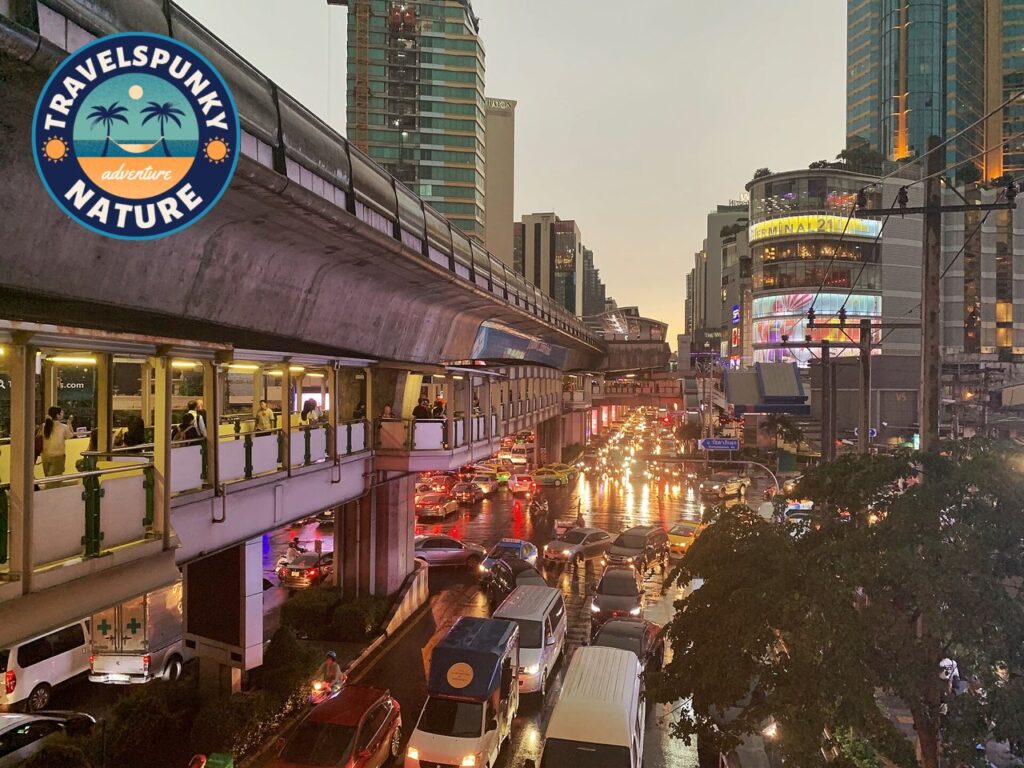
Best for: First trips, and anyone who wants the most choice. Food from every corner of the world, malls, bars and clinics all sit along the road, and no other area covers so many kinds of trip at once.
Getting around: BTS Nana, Asok and Phrom Phong, with the MRT interchange at Sukhumvit station by Asok. From Suvarnabhumi Airport, ride the Airport Rail Link to Makkasan and change to the MRT, or ride to Phaya Thai and change to the BTS.
What it costs: The widest spread in the city. Budget rooms cost about 600 to 1,500 baht, mid-range hotels about 1,800 to 4,500 baht, and five star towers start at about 5,500 baht.
The honest downside: The Grand Palace is far away by road, so ride the MRT to Sanam Chai station instead of taking a taxi. The streets around Nana carry adult nightlife and stay loud late, which families may want to avoid.
2. Siam and Pratunam
Siam is where the two BTS lines cross, around the malls of Rama I Road, Siam Paragon, CentralWorld and MBK, all linked by raised walkways. It is the easiest base in the city for shopping, and a good one for families, because food courts, pharmacies and air conditioning are never far away. Pratunam, a short walk north, is the wholesale clothing district, built around the Platinum Fashion Mall, and its many mid-range hotels cost clearly less than Siam itself.
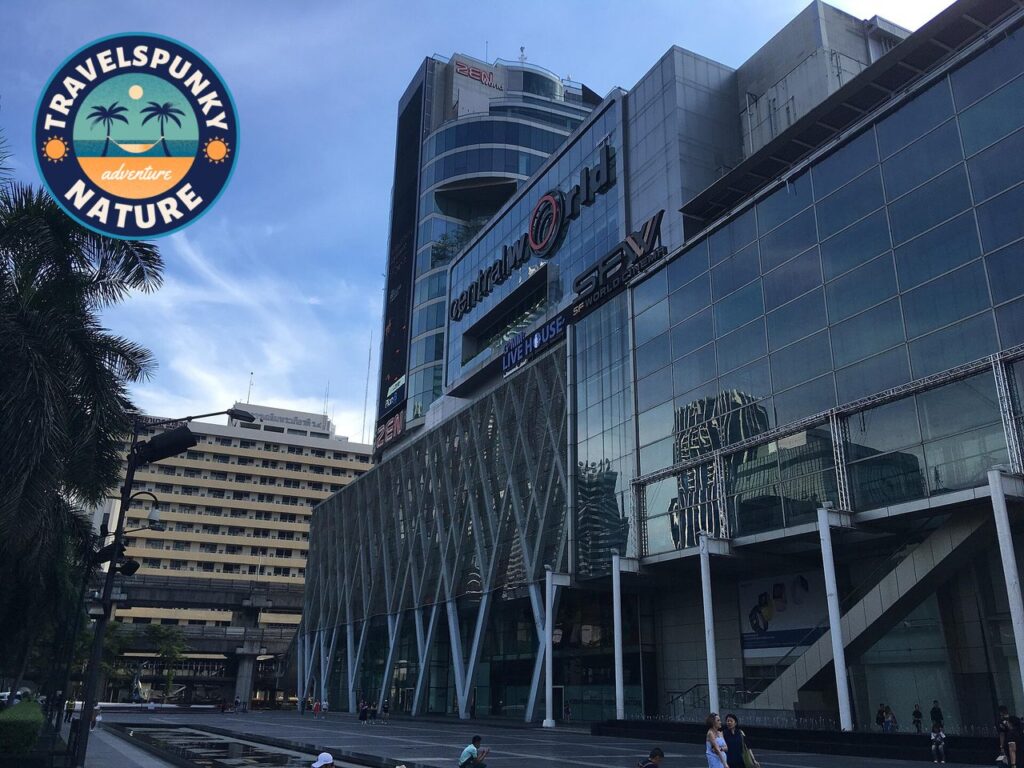
Best for: Shoppers and families on short stays, who want the whole city one train ride away.
Getting around: BTS Siam is the interchange of both Skytrain lines, with Chit Lom one stop east and National Stadium one stop west. The Airport Rail Link stops at Ratchaprarop, in the middle of Pratunam.
What it costs: Siam is the priciest district in the city on average, with mid-range rooms at about 2,500 to 5,000 baht and the big mall hotels above that. Pratunam undercuts it, with many solid rooms at about 900 to 2,500 baht.
The honest downside: Siam is malls more than street life, and it empties in the evening when the shops close. Pratunam’s streets are among the most congested in Bangkok, so plan to walk and ride trains, not take taxis.
3. Silom and Sathorn
Silom and the parallel Sathorn Road form Bangkok’s main business district, office towers by day and food stalls, markets and bars by night. Lumphini Park, the city’s best known green space, sits at the top of Silom Road, and both rail systems meet here. The old version of this post called Silom probably the best area in Bangkok, and the research for this draft agrees it is one of the strongest all-round bases, with the river and the old town both close.
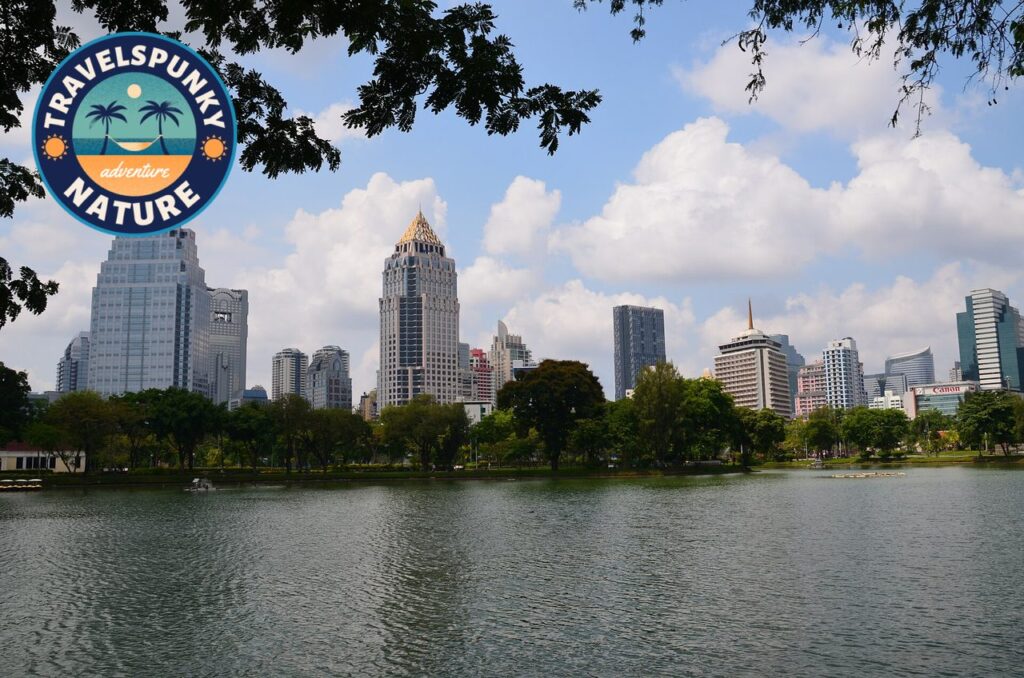
Best for: A first trip that mixes temples with city life, and business trips that still want evenings out.
Getting around: BTS Sala Daeng, Chong Nonsi and Surasak, and MRT Si Lom, Lumphini and Sam Yan. The river piers are four BTS stops away at Saphan Taksin, and the MRT reaches the Grand Palace at Sanam Chai with no change.
What it costs: Mid-range rooms cost about 1,800 to 4,000 baht, and five star hotels start at about 5,000 baht. True budget beds are thinner on the ground here than in Khao San or Pratunam, though hostel bunks near the park start at about 400 baht.
The honest downside: The office blocks go quiet after dark and at weekends. The Patpong strip, one short street of night market stalls and go-go bars, is a pocket some visitors will want to walk around rather than stay beside.
4. The Riverside
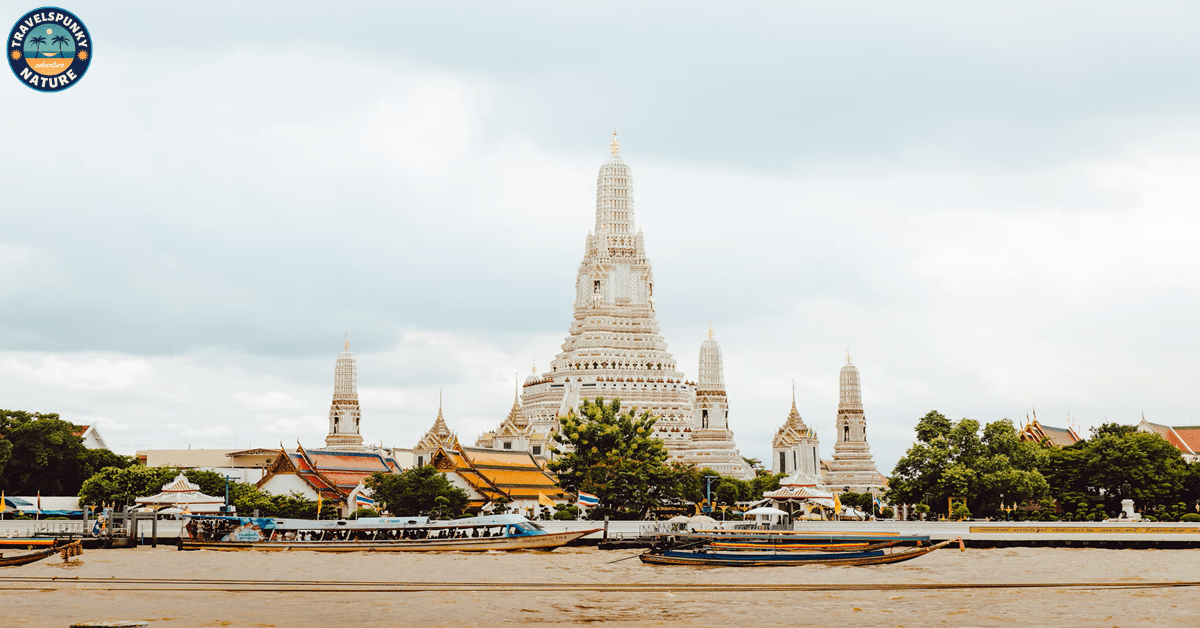
Hotels line both banks of the Chao Phraya River, from the grand old names near Saphan Taksin to the malls of ICONSIAM across the water. The draw is the river itself, with views from the room, hotel shuttle boats at the pier, and express boats running up to the Grand Palace, Wat Pho and Wat Arun. Behind the east bank, the old shophouses of Charoen Krung Road hold guesthouses and small hotels at gentler prices.
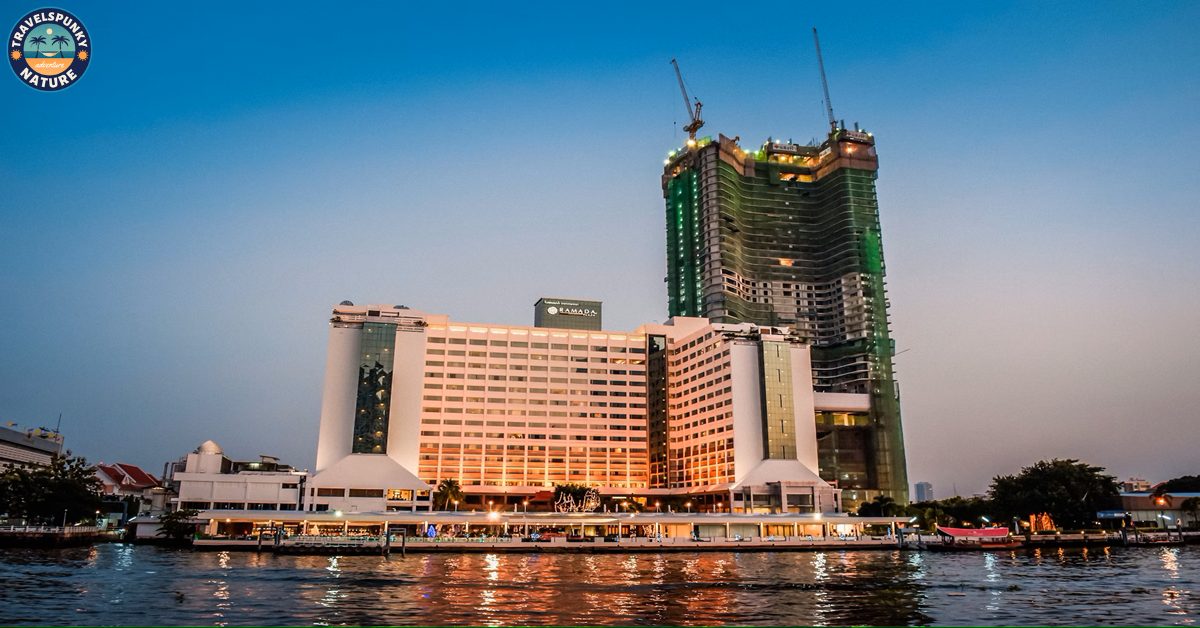
Best for: Couples, a splurge, and any trip built around the temples and the river.
Getting around: BTS Saphan Taksin sits beside Sathorn pier. The orange flag express boat charges a flat 19 baht, and the tourist boat day pass costs 150 baht. On the west bank, the Gold Line links ICONSIAM and its hotels to the BTS at Krung Thon Buri.
What it costs: Mid-range river hotels cost about 2,500 to 6,000 baht. The famous five star names run from about 8,000 baht to well over 20,000 baht a night. Guesthouses on Charoen Krung start at about 1,000 baht.
The honest downside: The boats stop running in the evening, so a night out in Sukhumvit ends with a long BTS ride or a taxi. Hotel shuttle boats run to their own timetables, and Oriental Pier was closed for renovation in late 2026, so check which pier your hotel boat uses before you book.
5. Old Town and Khao San Road
The old town, called Rattanakosin, holds the Grand Palace, Wat Pho and, across the river, Wat Arun, and staying here means walking to them before the crowds and the heat arrive. Khao San Road, at the northern edge of the old town, is the long-running backpacker strip of cheap rooms, bars, travel agents and street food. The quieter lanes around it, towards Phra Arthit Road and the river, hold guesthouses and small boutique hotels in old shophouses, with the same location and much more sleep.
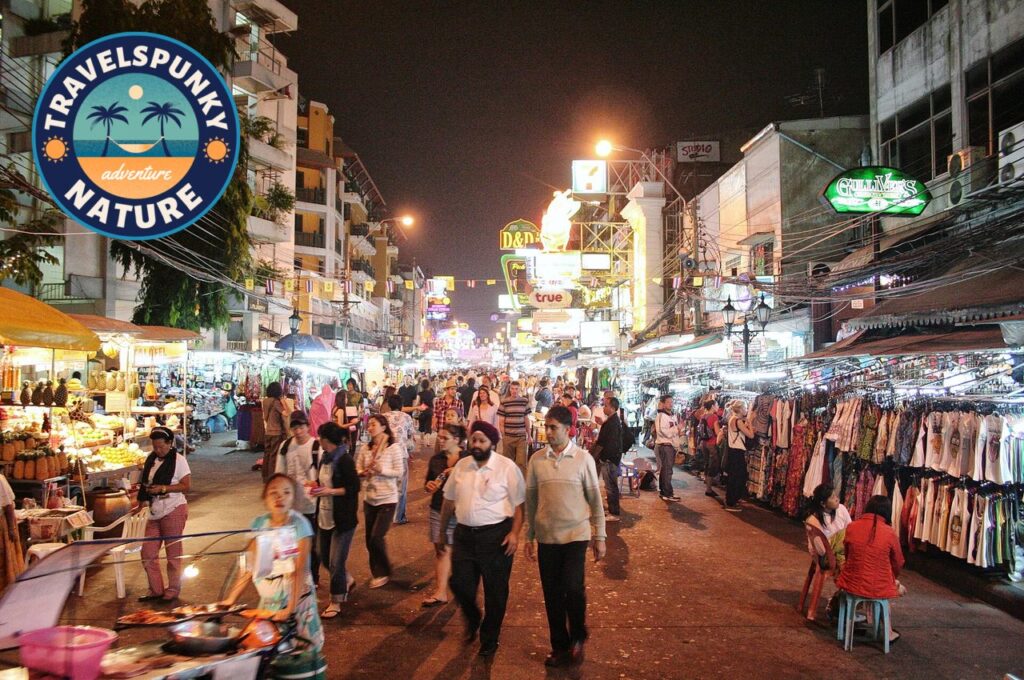
Best for: Tight budgets, and anyone whose trip is mostly temples.
Getting around: There is no BTS station in the old town. The MRT stops at Sanam Chai, beside Wat Pho, and at Sam Yot, and both are a walk from Khao San. Phra Arthit pier, pier N13, puts you on the river boats, and bus S1 from Suvarnabhumi and bus A4 from Don Mueang both run straight to this area.
What it costs: The cheapest rooms in central Bangkok. Dorm beds cost about 300 to 600 baht, guesthouse rooms about 500 to 1,200 baht, and small boutique hotels about 1,500 to 3,500 baht.
The honest downside: Khao San itself is loud until the early hours, and trips to Sukhumvit or Siam mean a slow taxi or a boat and train combination. Book a side street, not the main strip, if sleep matters.
6. Chinatown, Yaowarat
Chinatown is one of the oldest commercial districts in Bangkok, a dense grid of gold shops, Chinese temples, market lanes and wholesalers around Yaowarat Road. In the evening the road becomes one of the most famous street food strips in the city. Since the MRT opened at Wat Mangkon, the area has become an easy base as well as a food trip, with hostels, small hotels and boutique hotels converted from old shophouses.
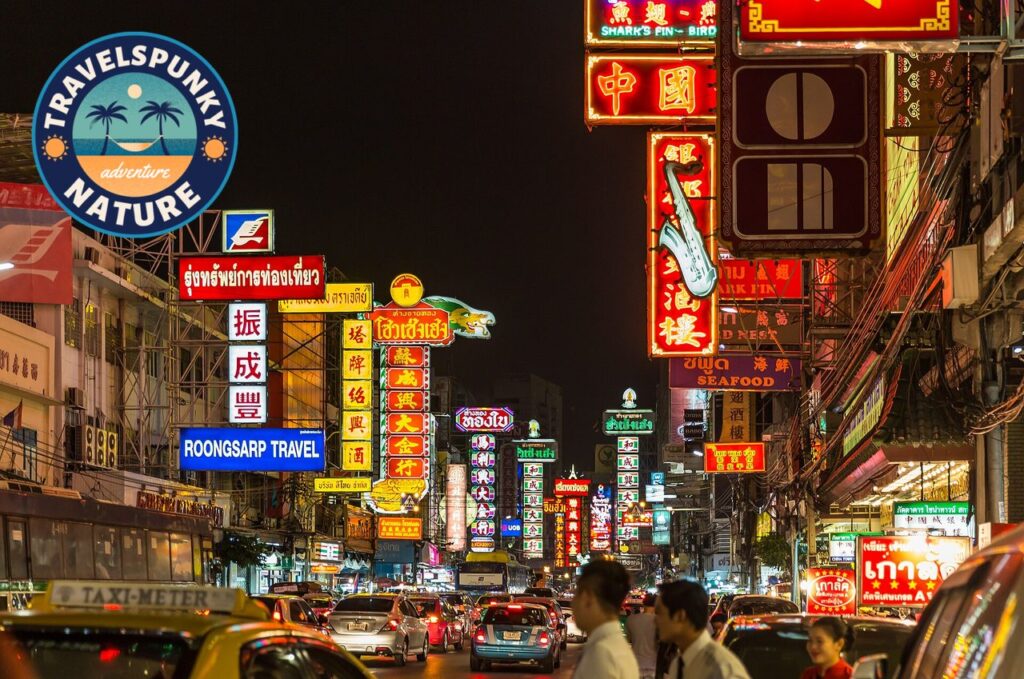
Best for: Food lovers, and repeat visitors who want a local district rather than a mall district.
Getting around: MRT Wat Mangkon station drops you on Yaowarat Road itself. Hua Lamphong, the old main railway station, sits at the edge of the district, and Ratchawong pier, pier N5, covers the river.
What it costs: Hostels and small hotels cost about 600 to 1,800 baht, and boutique shophouse hotels about 1,800 to 3,500 baht. Chinatown undercuts Sukhumvit and Siam for a similar standard of room.
The honest downside: The streets are narrow, crowded and noisy through the day, and many Yaowarat street stalls take Monday off. Light sleepers should ask for a room away from the main road.
7. Thonglor and Ekkamai
Thonglor, Sukhumvit Soi 55, and Ekkamai, Soi 63, are two long streets running north from Sukhumvit Road, a few stops east of Asok. Together they form the dining and nightlife district that Bangkok residents choose for themselves, full of cocktail bars, Japanese izakayas and ramen shops, brunch cafés and small lifestyle malls like The Commons. There are few classic hotels here. Most stays are boutique hotels and serviced apartments, which suits longer trips.
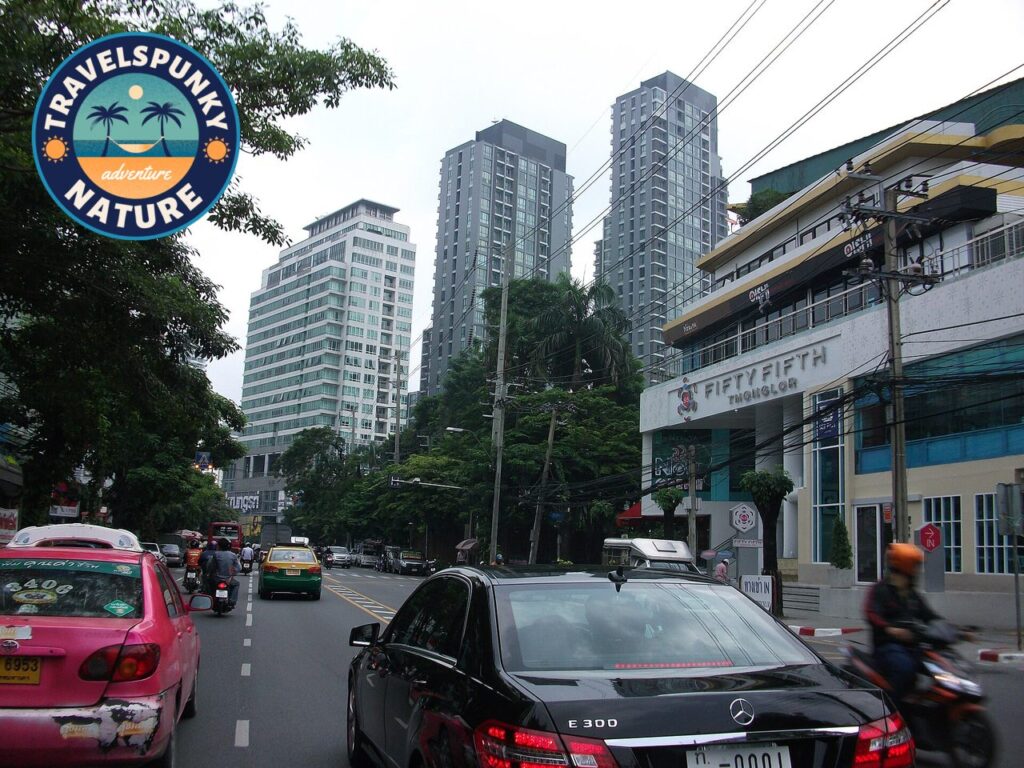
Best for: Food and drink trips, repeat visitors, and stays of a week or more.
Getting around: BTS Thong Lo and Ekkamai stations sit at the foot of the two streets. Both streets run long, Thonglor for more than two kilometres, so expect motorbike taxis and ride hailing apps for moving inside the area.
What it costs: Boutique rooms and serviced apartments cost about 1,800 to 4,500 baht, with high end residences above that. There is very little here at a true budget level.
The honest downside: There are no big sights in the area, and the temples of the old town are a long ride west. Traffic on the sois is bad at night, and the area rewards evenings out, not sightseeing mornings.
8. Ari
Ari is a leafy residential district in the north of the city, built for civil servants and now known for independent cafés, bakeries and local restaurants along Soi Ari and its side lanes. It shows everyday middle class Bangkok rather than tourist Bangkok, with quiet tree lined streets, a supermarket by the station and street food that serves the neighbourhood. It is not a hotel district. Stays here are small hotels, serviced apartments and monthly rentals.
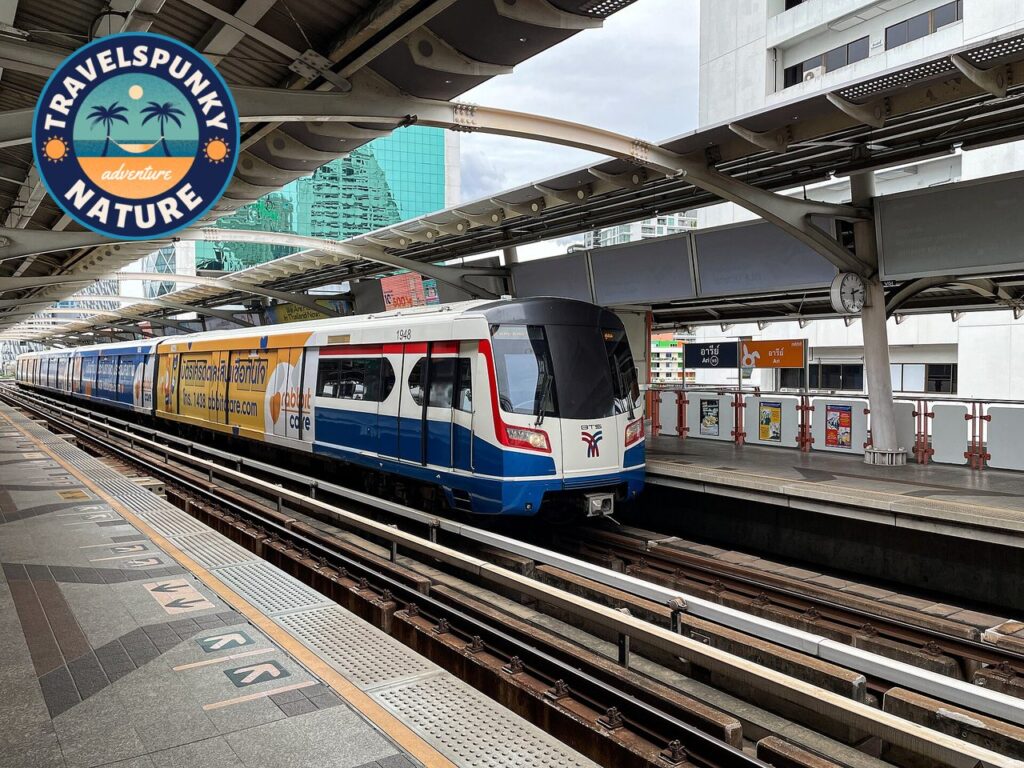
Best for: Longer stays, remote work, café lovers and repeat visitors who have done the big sights.
Getting around: BTS Ari, on the Sukhumvit Line, reaches Siam in about 12 minutes with no change. Chatuchak Weekend Market is two stops north, at Mo Chit station.
What it costs: Small hotels and serviced apartments cost about 1,200 to 3,000 baht, and monthly rentals undercut hotel rates clearly on stays of a few weeks. There is no luxury tier in Ari.
The honest downside: Ari has no temples, malls or famous sights of its own, and the river and the old town are a long ride south. Many of the independent cafés close on Mondays.
9. Near the Airports
Bangkok has two airports, and they are not close to each other. Suvarnabhumi, in the east, is the main international gateway, and its hotels cluster along Lat Krabang Road a short drive from the terminal, most of them running free shuttle buses. Don Mueang, in the north, handles many budget and regional flights, with hotels along the main road outside the airport. An airport hotel makes sense for one night only, before a very early flight, after a late arrival, or between two flights.
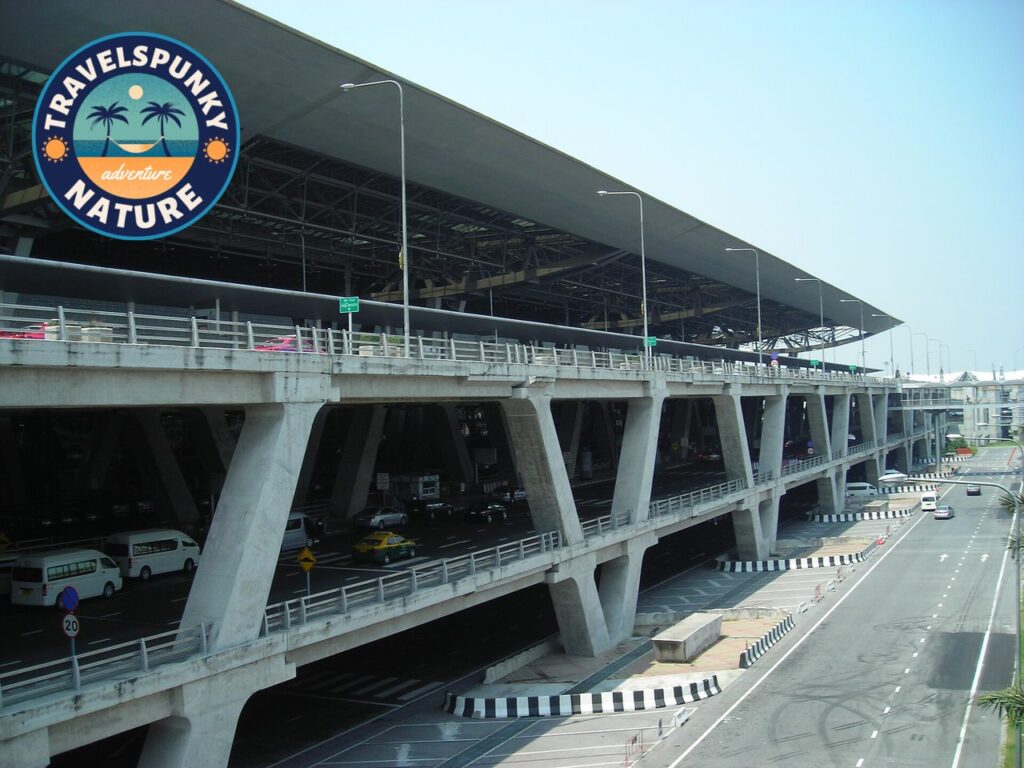
Best for: One night stopovers and early departures, not for a Bangkok holiday.
Getting around: The Airport Rail Link runs from Suvarnabhumi into the city from 05:30 to midnight. At Don Mueang, the Red Line train and the A series airport buses connect the airport to the northern BTS and MRT stations.
What it costs: Most airport hotels cost about 700 to 2,500 baht, well below central five star prices, and many include the shuttle ride in the rate. The hotel inside the Suvarnabhumi airport complex costs much more than the Lat Krabang Road hotels.
The honest downside: There is nothing to see or do around either airport. Every trip into the city costs the travel time the airport hotel was meant to save, so for two nights or more, stay in the city.
How to choose your area
Start from the trip, not from the hotel list. Once the area is picked, plan the days themselves with our guide to the best things to do in Bangkok, which covers the Grand Palace, the big temples, the markets and the day trips.
First trip: Sukhumvit around Asok or Phrom Phong, or Silom around Sala Daeng. Both put the BTS and the MRT at the door and reach everything else in the city.
Temples first: The old town if the budget matters, the riverside if it does not. Both start the day at the palace instead of on a train.
Tight budget: Khao San and the old town lanes for the cheapest rooms in the city, or Pratunam for cheap rooms beside the trains and the airport link.
Families: Siam for the malls and the BTS interchange, or Phrom Phong for a calmer Sukhumvit base. Avoid rooms on the Nana and Khao San strips themselves.
Couples: The riverside, where the view from the room and the boats to the temples do most of the work.
Food first: Chinatown for street food, Thonglor and Ekkamai for restaurants and bars, and Ari for cafés and local places.
Long stays: Ari, Thonglor and Ekkamai, where serviced apartments and monthly rentals beat nightly hotel rates and the streets feel like a neighbourhood.
Getting to your hotel
From Suvarnabhumi: The Airport Rail Link runs from the airport basement to Phaya Thai in about 30 minutes and costs 45 baht, stopping at Makkasan for the MRT on the way. It runs from 05:30 to midnight. A taxi from the official rank takes about 45 minutes to an hour to the centre, longer at rush hour, and bus S1 runs to Khao San and Sanam Luang.
From Don Mueang: The Red Line train runs to Krung Thep Aphiwat Central Terminal, where you change to the MRT Blue Line. Airport bus A1 runs to Mo Chit and A2 to Victory Monument, both for the BTS, A3 runs to Lumphini Park, and A4 runs to Sanam Luang, near Khao San.
In the city: BTS rides cost about 17 to 65 baht and MRT rides about 17 to 44 baht, and trains run from about 6:00 AM to midnight. A Rabbit card works on the BTS but not on the MRT, and the MRT gates take contactless bank cards.
Good to know before you book
Rates and taxes: Some Bangkok rates are quoted before tax and service charge, which together add about 17 percent. Always check the final price on the last booking screen, not the headline rate.
Seasons: Room rates peak from November to February, when the weather is driest. In the rainy months they can fall by about a third, and the same hotel can cost very different money in January and in September.
FAQs
1. What is the best area to stay in Bangkok on a first trip?
Sukhumvit around Asok or Phrom Phong, or Silom around Sala Daeng. Both give you the BTS and the MRT together, food at every price, and direct trains to the old town and Chinatown.
2. Which area is best for the Grand Palace and the temples?
The old town, where you can walk to the Grand Palace and Wat Pho. The riverside is the more comfortable version of the same plan, a short boat ride from the same sights.
3. Where should you stay in Bangkok on a tight budget?
Around Khao San Road and the old town lanes, where dorm beds start at about 300 baht and guesthouse rooms at about 500 baht. Pick a side street for sleep, and look at Pratunam if you want cheap rooms near the trains.
4. Is it better to stay by the river or in Sukhumvit?
Stay by the river if the trip is temples, views and slow mornings. Choose Sukhumvit if it is shopping, restaurants and nightlife. The two areas sit about half an hour apart by BTS.
5. Which area suits families with children?
Siam and Phrom Phong. Both have malls, food courts and short walks to the BTS, and neither sits on a nightlife strip.
6. Should you stay near the airport?
Only for one night, a very early flight or a stopover between flights. Airport hotels are good value and run shuttle buses, but trips into the city can take up to an hour each way by road, so a city hotel wins on any longer stay.
Researched and verified: November 2026. This guide is research-based, compiled from official transport information, hotel rate surveys and traveller reports. Prices and train times change, so confirm them before travelling.